
Buying led grill lights is one of those upgrades that feels instantly satisfying. You see the front end look sharper. The vehicle looks more “built.” The night presence changes. It’s easy to get hooked on that visual payoff.
But the longer you’ve owned a vehicle—or the more times you’ve had to fix someone else’s “easy mod”—the more you realize something slightly annoying:
The lights are only half the product. The rest is everything that keeps them working when life happens.
Heat cycles. Road vibration. Moisture. A hurried install because it got dark. A wire that’s routed “temporarily” and never revisited. That’s where most lighting kits start to separate into two categories:
- the ones that keep behaving like day one
- and the ones that slowly start negotiating with you
An unboxing photo is one of the few honest windows into that difference. It doesn’t just show what’s included—it shows the manufacturer’s attitude. Whether they thought about the install experience, or only the moment of purchase.
What a Good Unboxing Tells You (Before You Touch a Tool)
A clean unboxing isn’t about looking fancy. It’s about reducing uncertainty. When someone opens the package, they’re doing a quick, instinctive checklist—often without realizing it:
- Does this look like it was built for a car environment?
- Will this install cleanly without improvisation?
- Am I about to introduce electrical drama into my life?
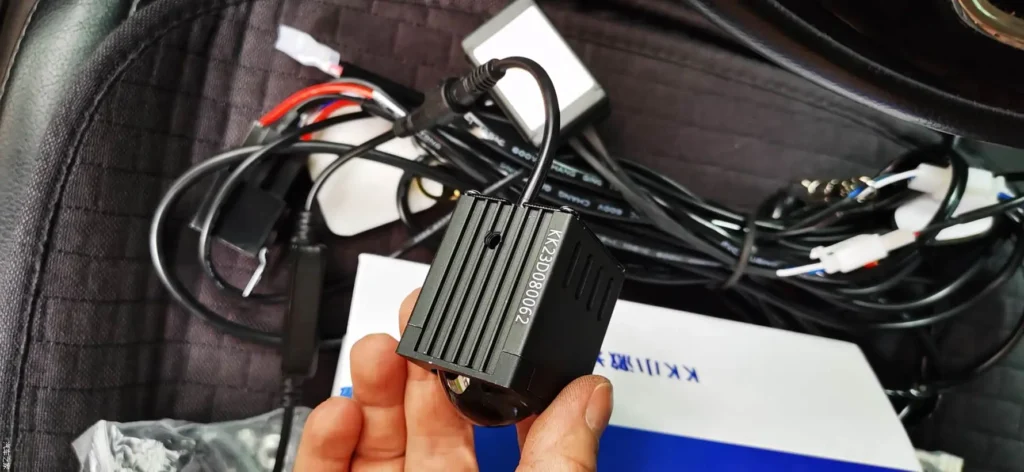
Wiring that feels “automotive” instead of “hobby”
There’s a specific feeling to proper automotive wiring. It’s flexible, but not flimsy. It bends without kinking. The insulation feels confident—like it won’t lose a fight with a sharp edge or a tight routing channel.
Bad wire often gives itself away immediately:
- too stiff, so it tugs at connectors and refuses to route nicely
- too thin, so it feels like it belongs in a desk lamp, not a vehicle
- inconsistent insulation, so one section looks and feels different from another
With led grill lights, the wiring is the part that spends its life near moving air, engine heat, vibration, and road grime. When the included wiring looks serious, the whole kit feels serious.
Connectors that don’t feel like a gamble
Most “random flicker” stories are connector stories. Not always, but often enough that experienced installers develop a habit: they check connectors before they admire the light output.
A good connector doesn’t just “fit.” It stays put when the vehicle is doing vehicle things:
- vibration
- temperature swings
- occasional moisture exposure
- repeated opening/closing of panels during other maintenance
When connectors are cheap, the failure mode is sneaky. It doesn’t always break immediately. It becomes intermittent. And intermittent issues are the worst because they waste time. You can’t reproduce them on demand. You can’t trust the system. It becomes a low-level annoyance that slowly kills the joy of the mod.
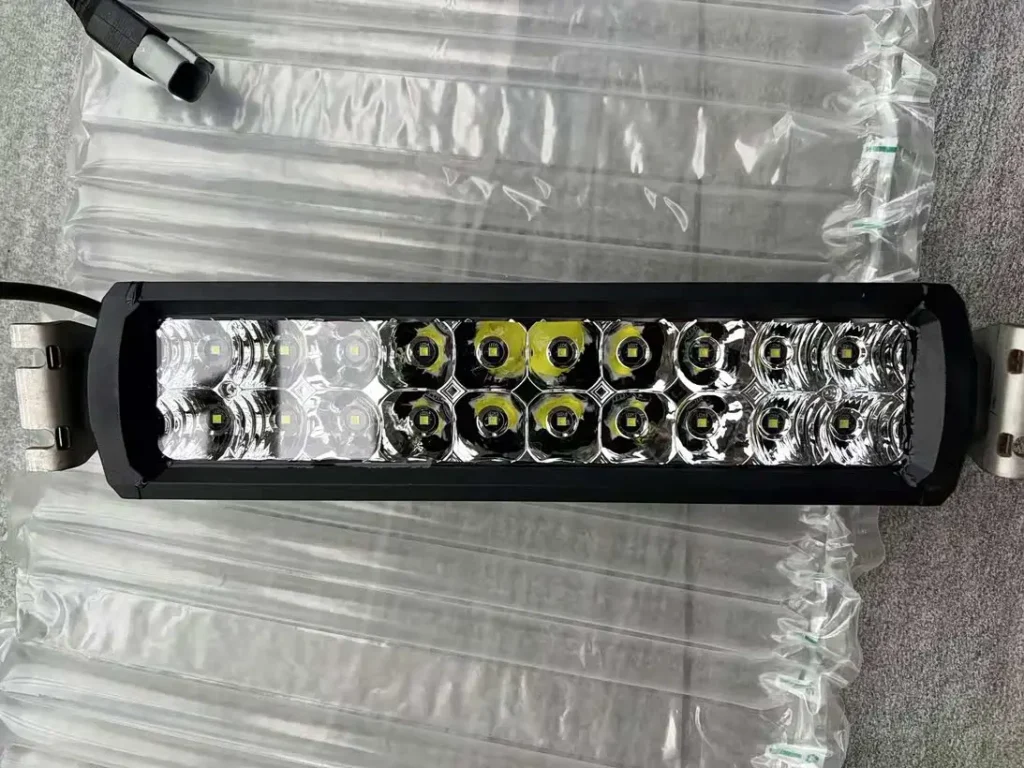
Packaging that respects the parts
This sounds small, but it matters: if a kit arrives packed like someone cared, it’s often a sign that the same mindset shows up in the product.
Neat packing reduces shipping damage, sure. But it also signals something else—process. A company that can pack consistently usually has more consistent assembly, better QC habits, and fewer “how did this leave the factory like this?” moments.
Why the Wiring Is the Difference Between “Looks Good” and “Lives Well”
There’s a phase every mod goes through:
- Phase 1: Installation day optimism
- Phase 2: First night drive satisfaction
- Phase 3: The long boring middle where reliability matters
People talk about Phase 1 and Phase 2. Phase 3 is where the wiring earns its keep.
Vibration is the quiet destroyer
Cars vibrate. Trucks vibrate more. Off-road rigs vibrate like they’re auditioning for a paint shaker.
A lighting kit that works perfectly while parked can start acting up after weeks of vibration if:
- the wire has no strain relief near connection points
- connectors rely on friction instead of positive retention
- routing causes constant micro-rubbing on plastic/metal edges
High-quality wiring doesn’t make a kit indestructible, but it raises the baseline. It gives you margin.
Heat cycles punish cheap materials
Under-hood temperatures rise and fall repeatedly. That expansion and contraction exposes weak points—especially at:
- connector housings
- crimp points
- wire insulation near bends
Good wiring and proper terminations resist becoming brittle or loose over time.
Moisture doesn’t need permission
A grille area isn’t a dry, protected little bedroom for electronics. It’s basically the splash zone.
This is why “works fine until it rains” is such a common complaint with bargain kits. Water doesn’t need to fully flood anything to cause trouble. A little moisture plus a mediocre connection can be enough to trigger corrosion, resistance changes, or intermittent behavior.
When your kit includes solid wiring, you’re not “buying waterproof magic.” You’re buying fewer weak links.
The “Clean Install” Is Not a Personality Trait—It’s a Product Feature
Some people can make anything look tidy. But most customers aren’t chasing perfection—they’re chasing not having to redo it.
A kit that helps you route cleanly is a kit that respects your time.
Why clean routing equals fewer future problems
Clean routing usually means:
- wires are not stretched tight
- wires are not pinched under trim
- slack exists where it should (so movement doesn’t stress a joint)
- cables avoid sharp edges and hot surfaces
This is also why customers love seeing included wiring in unboxing photos. It answers a question they might not know how to ask:
“Is this kit going to force me into hacks?”
If the wiring looks decent, the customer imagines a straightforward install. That’s not just comfort—it’s conversion fuel.
Police Grill Lights: The Look People Search For, and the Expectations That Come With It
Let’s address the keyword people type with one hand while looking over their shoulder: police grill lights.
In practice, most shoppers mean one of two things:
- a compact, aggressive strobe presence that looks “official” in style
- a bright, attention-getting warning light for work or off-road situations
What they usually don’t mean (and what you never want to encourage) is impersonation. But the search term exists because it’s the mental shortcut people know.
Why this category demands reliability
If a customer buys “police-style” lighting, they tend to use it more often—testing patterns, toggling modes, showing friends, running it during events, or using it on private property/work sites.
That repeated use makes any weak electrical link show up faster. So when you’re positioning police grill lights, the “boring” parts matter even more:
- stable connections
- decent wiring
- predictable behavior
The customer expectation isn’t just brightness. It’s consistency.
The brand tone matters here
This is also where you want to sound like a responsible seller, not like someone selling trouble.
A simple and effective stance:
- don’t claim universal road legality
- don’t over-promise “legal everywhere”
- encourage checking local rules for color and flashing modes
- be careful around red/blue messaging
That reads professional and reduces customer regret later.
Why This Angle Works (Even if Customers Don’t Say It Out Loud)
Customers rarely message a seller saying, “I purchased because your included wiring appears to be automotive grade.” They just feel calmer clicking “Buy.”
This kind of content does three things quietly:
1) It reduces perceived risk
Unboxing evidence lowers the fear of:
- missing parts
- cheap materials
- a frustrating install
When the fear goes down, conversion goes up.
2) It changes the comparison game
Many listings compete with flashy night shots. If you show what’s in the box—especially the quality of wiring—you’re competing on a harder-to-fake dimension: “this kit is built properly.”
3) It pre-empts the most expensive problems
Better expectations mean:
- fewer returns
- fewer angry “it flickers” messages
- fewer warranty claims that are really install/connection issues
Even when the product is great, showing the “supporting cast” (wires, connectors, organization) helps customers install it correctly and trust it afterward.
How to Use the Unboxing Photo Without Turning It Into a Sales Pitch
A lot of brands accidentally ruin good evidence by over-talking it. The unboxing photo already does most of the work. Your job is to frame it with a calm, confident voice.
Keep the message grounded
Instead of generic hype, aim for practical reassurance:
- neatly packed kit
- included quality wiring
- install-friendly presentation
- built for real vehicle conditions
When you speak like you’ve installed things before, customers relax. They don’t feel “sold.” They feel guided.
Avoid turning it into a step-by-step guide
You already have (or can have) a separate guide article like “What they do / how to choose / how to install / stay legal.” This unboxing + wiring piece should stay in its lane:
- “what you get”
- “why it matters long-term”
- “what it signals about reliability”
That’s how you prevent overlap and keep the content ecosystem clean.
Final Thought: Great LED Grill Lights Don’t Just Shine—They Behave
The best compliment a lighting kit can receive isn’t “wow, that’s bright.”
It’s silence.
No flicker. No weird intermittent outages. No re-routing wires three weeks later. No “it only works if I tap the connector.” Just a kit that behaves like it belongs on the vehicle.
That’s why showing the included wiring in your unboxing matters. It’s not a throwaway detail. It’s the hidden backbone of the upgrade—especially for customers searching led grill lights for daily looks, or police grill lights for that sharp, high-presence style (used responsibly and in line with local rules).
Because “cool on day one” is easy.
“Cool and still solid months later” is what people remember—and what they come back for.
The guide explained the what and how—this is the “what you’re actually getting,” and why it matters once the install is done.
If you want the full picture first—what grill lights do, how to choose the right type, install them cleanly, and stay legal on the road—start with our complete guide to car grill lights.
 English
  Español
  Tiếng Việt
  ไทย
ไทย  العربية
  Русский
  Bahasa Melayu
  Français
  Deutsch
  हिन्दी
  Bahasa Indonesia