
In today’s automotive world, lighting is no longer a simple matter of “bright enough or not.” Headlamps have become a major part of a vehicle’s design language, its energy strategy, and—most importantly—its safety system. At the center of this shift are projector headlights, a technology once seen mainly on premium cars but now evolving quickly across the market.
Projector headlights started as an optical solution: use a compact light source, shape it through a lens, and create a controlled beam with a sharp cutoff. That precision is still the core advantage. But what’s happening now is bigger. Projector modules are being re-engineered for intelligence, packaging, efficiency, and customization. Below are the key directions driving the trend.
1) Smarter Lighting That Supports Active Safety
Modern projector headlights are becoming part of an “eyes-and-brain” system rather than standalone lamps. The lens, light source, sensors, and control software work together to make lighting responsive to what’s happening ahead.
Adaptive Driving Beam (ADB) and matrix control
One of the clearest signs of this trend is the rise of intelligent matrix solutions, often discussed under ADB. Instead of switching simply between high beam and low beam, the headlamp can control multiple zones of light. With fine segmentation—enabled by compact optics like micro lenses or integrated reflectors—the system can:
- avoid glaring oncoming drivers,
- dim or cut light around vehicles and pedestrians,
- keep more high-beam coverage where the road is clear.
For night driving, especially during passing and overtaking, that “selective high beam” approach can add usable visibility without adding risk.
Road-surface projection and driver communication
Another direction is using advanced light sources and lens arrays to project information onto the road. With solid-state lighting and micro-optical structures, manufacturers are exploring ways to display navigation guidance, lane departure warnings, speed prompts, or pedestrian alerts directly in the driver’s forward field of view. This is sometimes described as a step toward “vehicle-to-road interaction,” where the headlamp becomes a communication tool, not just illumination.
Environment-adaptive beam shaping
Projector modules are also getting better at adjusting to real conditions automatically—weather, speed, road type, and steering input. Practical examples include:
- adding side illumination in corners,
- reshaping the beam for faster driving,
- improving penetration in rain or fog by tuning intensity and distribution.
This is where projector optics shine: because the beam is already precisely controlled, software-driven adjustments can be both noticeable and stable.
2) Thinner Modules and Better Use of Space
As electric vehicles push “slimmer” front-end styling, headlamp packaging has become a design battleground. The trend is clear: projector modules are getting thinner and more compact without sacrificing beam performance.
Micro-lens arrays and compact optics
New optical approaches—such as micro-lens array (MLA) concepts, integrated inner lenses, and improved anti-reflective coatings—are helping reduce module height dramatically. Where traditional projector setups might occupy around 30–40 mm in optical height, newer designs aim closer to 20 mm, and in some cases even lower. That reduction matters because it frees up space for:
- thinner lamp signatures,
- cleaner aerodynamic shapes,
- more room for sensors and cooling hardware.
Structural integration
Alongside thinning, there is a push to integrate components that used to be separate. Lens, reflector elements, and the light source are being packaged more tightly, often reducing part count. Fewer components can mean:
- improved optical efficiency (less loss at each interface),
- fewer tolerance stack-ups,
- easier assembly and potentially better long-term stability.
In other words, compact doesn’t just mean “smaller”—it often means “simpler and more efficient,” if executed well.
3) New Materials and Higher Energy Efficiency
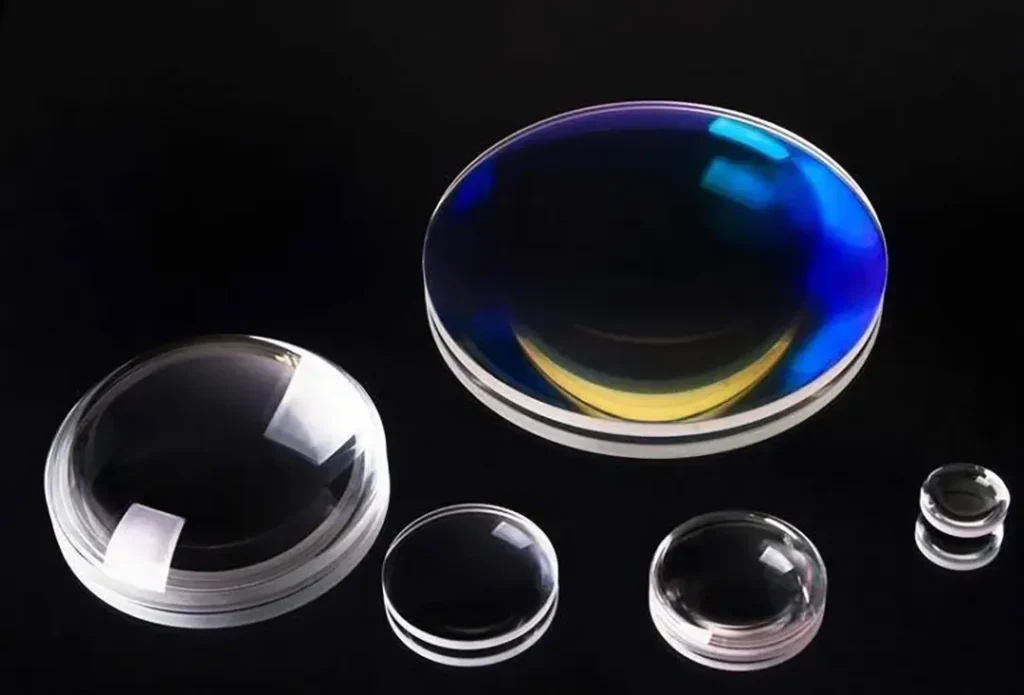
Efficiency is becoming a headline feature in lighting, especially as automakers optimize every watt for range and thermal load. Projector headlights are benefiting from both material upgrades and smarter mechanisms.
Lightweight lens materials replacing glass
Glass has excellent optical properties, but it’s heavier and less flexible for complex shapes. Increasingly, high-quality polymers are being adopted for projector optics. Materials such as PMMA and silicone-based lenses are attractive because they offer:
- high light transmission,
- low weight,
- easier molding and scalability for mass production.
This shift is especially relevant for high-power LED systems where weight, cost, and manufacturability matter.
Lower-power actuation and beam switching
Projector systems often rely on mechanical movement for beam switching or pattern control. The trend is toward much lower power consumption in these mechanisms—smarter motors, more efficient actuation, and reduced electrical overhead. Even small savings add up when you consider how often lights operate and how tightly modern vehicles manage energy use.
Better thermal management for high-output sources
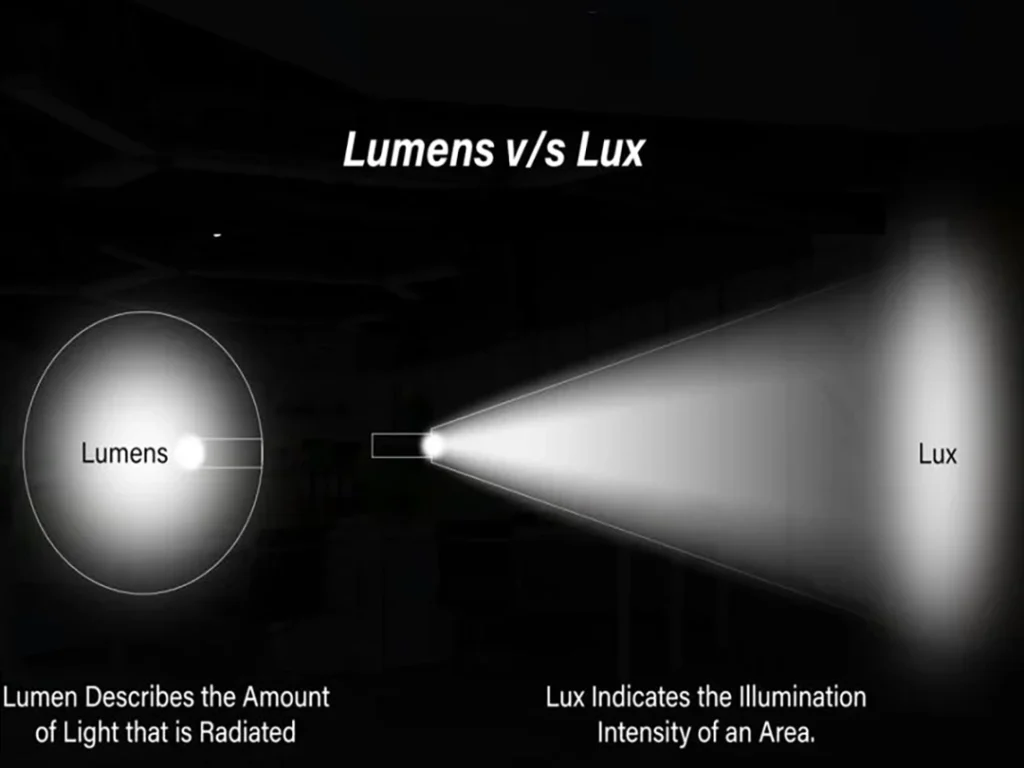
As headlamps become brighter and more feature-rich, heat becomes a limiting factor. Thermal solutions are improving, including stronger convection designs, more intelligent temperature control, and better heat path engineering. Reliable cooling keeps output stable, prevents rapid lumen drop, and protects sensitive optics and coatings over time.
4) Laser Lighting and Biomimetic Optical Design
While LEDs remain dominant, laser-based systems continue to influence the upper end of the market—and gradually shape what comes next for projector optics.
Laser light moving beyond flagship models
Laser lighting has real advantages: very high brightness potential, strong efficiency in certain setups, and long service life when properly engineered. Brands like BMW and Audi have already proven mass production at the premium level. The trend to watch is “technology trickle-down”—as costs fall and manufacturing matures, laser-assisted solutions may expand into more mid-range vehicles.
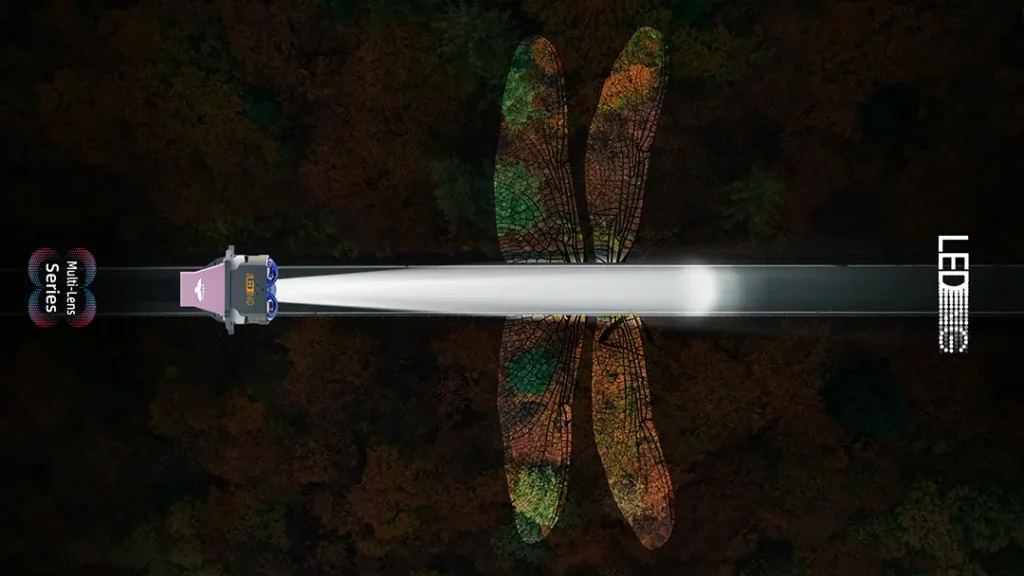
Biomimicry: the “compound eye” approach
A fascinating sub-trend is biomimetic optics: designing multi-unit lens structures inspired by compound eyes (like a dragonfly). Multi-cell optical layouts can run multiple light paths in parallel, which helps with precision control and can reduce losses or shadowing in certain configurations. Whether this becomes mainstream or stays niche, it signals where the industry is heading: more complex optics in smaller spaces, designed for controllability and safety.
5) Personalization and Vehicle-Specific Tuning
Not every vehicle needs the same beam strategy, and projector headlights are increasingly tuned for different segments and brand identities.
- Compact sedans tend to prioritize cost-effective performance: good brightness, clean cutoff, and balanced coverage.
- SUVs and off-road vehicles often need longer throw and wider peripheral vision, so projector setups may emphasize distance and lateral spread.
- Luxury vehicles use lighting as a signature: dynamic “light carpets,” welcome animations, and even brand-logo projections. Here, projector optics support both function and visual identity.
This is why “projector headlights” is no longer a single category. The term now covers a wide range—from practical bi-LED projectors to advanced multi-zone systems capable of shaping and communicating with light.
Where the Trend Is Going
The future of projector headlights is moving toward four ideas happening at once: intelligence, integration, efficiency, and personalization. Headlamps are evolving from “lights that illuminate the road” into systems that interpret conditions, adapt instantly, and even convey information.
For drivers, the promise is straightforward: better visibility with less glare, more confidence in bad weather and complex roads, and lighting that feels tailored to the way people actually drive. For the industry, projector technology remains one of the most flexible platforms to deliver that future—because when you can control the beam precisely, you can do far more than simply make it brighter.
 English
  Español
  Tiếng Việt
  ไทย
ไทย  العربية
  Русский
  Bahasa Melayu
  Français
  Deutsch
  हिन्दी
  Bahasa Indonesia