
Projector headlights have a reputation: cleaner cutoff lines, a more modern look, and the promise of better visibility without blinding everyone else. They can be a genuine upgrade—especially if you drive a lot on dark roads—but they’re not automatically “better” in every case. The real value depends on what you’re starting with, what you buy, and how carefully it’s installed and aimed.
If you’ve been shopping and seeing everything from bargain “projector kits” to premium OEM-style assemblies, you’re not alone. Let’s break down what you actually gain, what can go wrong, and whether budget projectors—yes, even the $200 ones—make sense.
Are projector headlights worth it?
What “worth it” looks like in real driving
Projectors are designed to shape light with more precision than many reflector housings. In practice, that usually means:
- A sharper cutoff (less stray light shooting upward)
- More controlled beam pattern (better placement of light where you need it)
- Potentially better foreground-to-distance balance (less “wall of light” right in front of the car)
But the key word is potentially. A great projector can outperform a mediocre reflector. A cheap projector can absolutely lose to a well-designed reflector. And a good projector aimed badly is still a glare machine.
The biggest reason people feel the difference
Most drivers notice projectors not because everything gets brighter, but because the light looks cleaner and more organized. Road signs don’t bloom as much, the cutoff reduces glare in fog/rain, and oncoming traffic is less likely to hate you—assuming the system is designed and aimed correctly.
When it’s not worth it
Projectors are usually not worth it if:
- Your current headlights are dim because of oxidized lenses or tired bulbs (restore/replace first).
- You’re buying a “projector look” setup that’s mostly aesthetic, with weak optics.
- You don’t plan to aim them properly (or pay someone who will).
What are the disadvantages of projector headlights?
Projectors aren’t magic. Here are the trade-offs people run into—especially with aftermarket swaps.
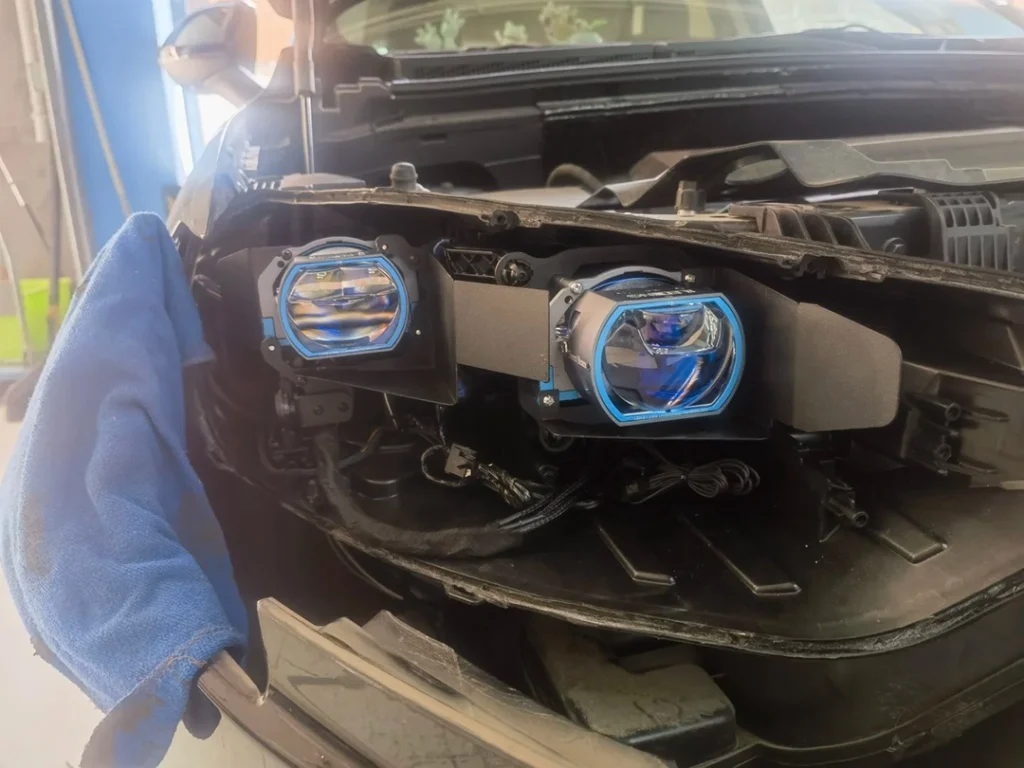
1) Cost can balloon fast
A proper upgrade often includes more than “the projector”:
- housings or retrofit parts
- quality bulbs/LED drivers
- wiring/adapters (sometimes)
- resealing materials (if you open housings)
- alignment time (or labor)
2) More parts = more failure points
Compared with a basic reflector + bulb, a projector setup may include:
- LED drivers or HID ballasts
- internal shutters (bi-xenon/bi-LED high beam function)
- additional connectors and seals
Cheap components fail more often, and when they do, troubleshooting can be annoying.
3) Heat and moisture issues (especially aftermarket housings)
Aftermarket housings vary wildly in sealing quality. Condensation is one of the most common complaints—usually caused by:
- poor venting design
- cheap gaskets
- improper resealing after a retrofit
Moisture doesn’t just look bad; it can shorten the life of LEDs/drivers and haze the inside of lenses.
4) Some projectors create “hot spots” or weird artifacts
Not all beam patterns are created equal. Lower-end projectors can produce:
- bright center hot spot with weak side spread
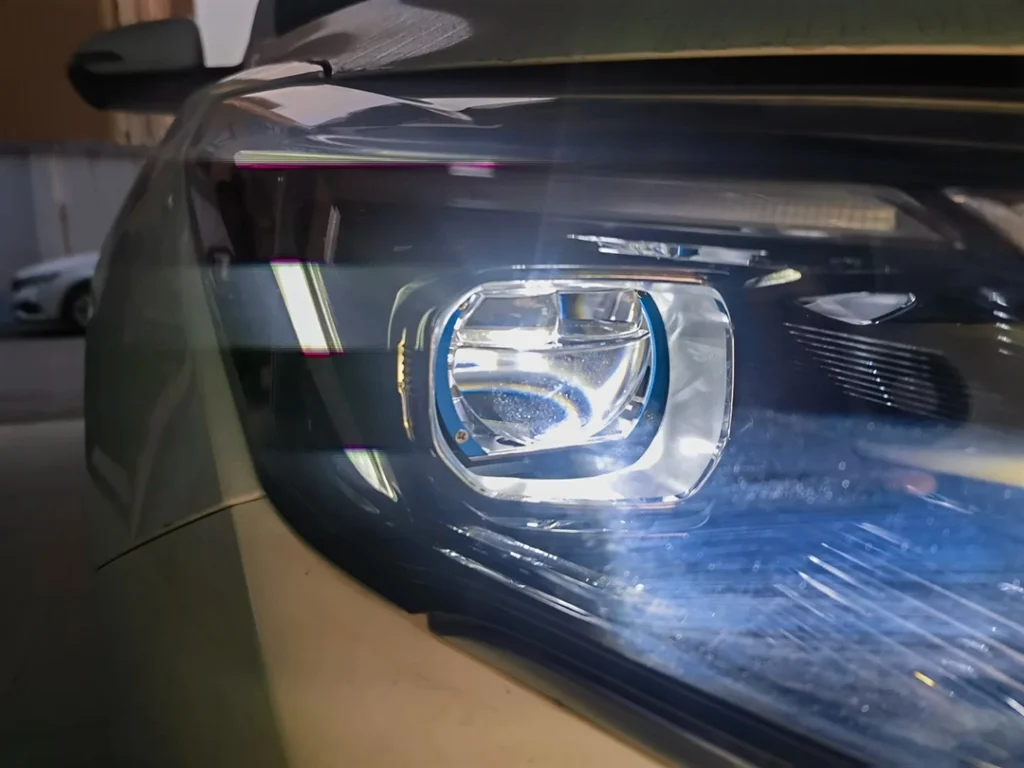
- streaks, shadows, or color fringing that looks cool in photos but annoying on roads
- uneven cutoff steps that don’t match your driving-side standards
5) Installation and aiming matter more than people expect
A reflector bulb swap is simple. A projector swap (or retrofit) is more sensitive:
- mounting alignment affects beam level and left/right balance
- aiming errors can reduce your usable distance even if it looks bright
This is why some “I upgraded and it got worse” stories are completely true.
Are LED projector headlights legal?
The honest answer: sometimes, and it depends on what you mean by LED projectors and where you live.
OEM-style LED projectors are usually the safest legal path
If your vehicle came with LED projectors from the factory (or you install an OEM assembly designed for your vehicle), you’re typically within the intended compliance framework—assuming the parts are correct for your market and you aim them properly.
Aftermarket conversions are where legality gets messy
Many regions regulate headlights as complete systems (housing + optics + light source). A common issue is installing an LED bulb into a housing that was certified for halogen (or doing a projector retrofit that lacks proper markings/certification for road use). Even if the beam looks “fine,” it may not be technically legal.
General guidelines that keep you on the right side of reality:
- Look for DOT/SAE markings (U.S.) or ECE markings (many other markets) on the headlamp assembly, not just the bulb box.
- Avoid “for off-road use only” lighting if you plan to drive on public roads.
- Aim them properly. Even legal hardware can become illegal in effect if it’s aimed too high.
Because laws vary so much by state/country, treat legality as: check your local vehicle code + inspection rules, and consider what your insurer or annual inspection will care about.
Are 200 dollar projectors worth it?
This is the question everyone asks after seeing premium setups cost four figures. And the answer is: $200 projectors can be worth it, but only in specific situations.
What “$200” usually means
At around $200, you’re typically looking at one of these:
- A pair of aftermarket projector headlight assemblies (entry-level)
- A basic projector retrofit kit (projectors + shrouds; sometimes without top-tier drivers/LEDs)
- Used OEM parts (rare, but possible if you hunt)
When $200 projectors make sense
They’re most worth it if:
- your current headlights are genuinely bad (poor optics, damaged housings)
- you want a clean cutoff more than maximum distance lighting
- you’re okay with “good enough,” not “best available”
- you can install carefully and aim correctly
A decent budget projector with a well-controlled beam can feel like a major quality-of-life upgrade on rainy suburban roads or highways.
When they’re not worth it
Skip them if:
- you drive rural roads at speed and need strong, even distance lighting
- you hate the idea of troubleshooting condensation, flicker, or driver failures
- your car has advanced lighting (AFS/adaptive systems) and you’ll lose features
- you’re buying mainly for looks and ignoring optics reviews
Quick reality check: what to evaluate (even on a budget)
Instead of trusting marketing photos, look for:
- beam pattern shots on a wall and on-road
- long-term reviews about condensation and yellowing lenses
- how the high beam performs (some budget bi-LEDs are underwhelming)
- parts availability (drivers, seals, caps)
A $200 setup that you replace twice is more expensive than a $450 setup you install once.
What is the lifespan of a projector headlight?
The lifespan depends on what you’re measuring: the projector optics, the light source, or the whole assembly.
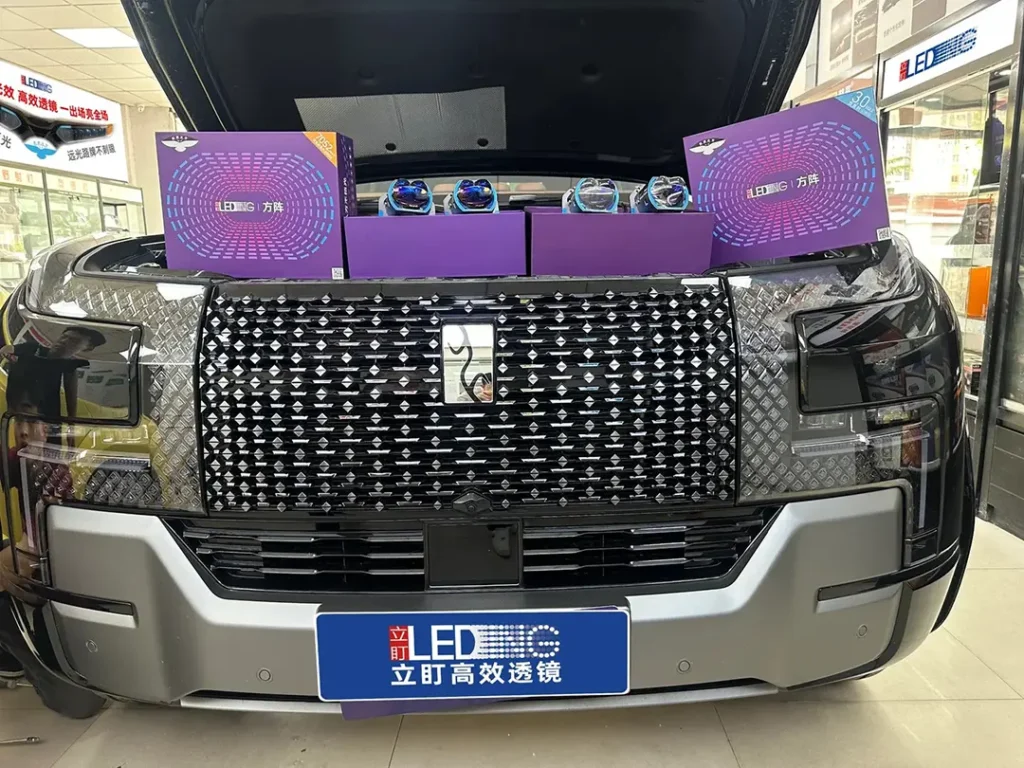
Projector optics (the “lens and bowl”)
The projector unit itself can last a long time. In OEM-quality systems, it’s common to see 8–15 years of service without the projector lens “wearing out.” Issues typically come from:
- reflective bowl degradation (more common with heat-stressed, low-quality materials)
- internal haze from moisture/contamination
LED projector headlights (LED + driver)
LED chips can have long theoretical lifespans, but in real vehicles the limiting factors are heat and electronics. A practical expectation for quality LED modules is often 5–10 years (sometimes longer), while cheaper drivers can fail sooner.
Common failure modes:
- driver failure (flicker, intermittent shutoff)
- overheating due to poor heatsinking
- fan failure (in some designs)
- moisture intrusion damaging electronics
HID projector systems (bulb + ballast)
If you’re dealing with HID:
- bulbs often show noticeable dimming/color shift around 2,000–3,000 hours
- ballasts can last many years, but cheaper ones are hit-or-miss
The “whole headlight assembly” lifespan
The most common thing that makes headlights feel old isn’t the projector—it’s the outside:
- lens oxidation/yellowing
- pitted lenses from road debris
- failed seals/condensation
If you maintain the lens (UV protection, restoration when needed), many assemblies can stay usable for a decade-plus.
So… should you switch?
Projector headlights are worth it when you’re buying optics, not just a style. If you want a cleaner beam pattern, less glare, and a more modern, controlled look, a good projector setup can be one of the most satisfying upgrades you’ll do.
At the same time, the disadvantages are real: cost creep, condensation risk, and the fact that aiming and build quality matter more than the label on the box. If you take one lesson from all of this, it’s this: a well-designed beam pattern beats raw brightness every night of the week.
Quick takeaways (for fast decision-making)
- Worth it? Yes, if the optics are proven and you’ll aim them correctly.
- Disadvantages? Cost, complexity, condensation risk, and inconsistent cheap beam patterns.
- Legal? OEM-style and certified assemblies are safest; conversions vary by local law.
- $200 worth it? Sometimes—best for modest expectations and careful installs.
- Lifespan? Optics can last 8–15 years; LEDs/drivers often 5–10+ depending on quality and heat.

 English
  Español
  Tiếng Việt
  ไทย
ไทย  العربية
  Русский
  Bahasa Melayu
  Français
  Deutsch
  हिन्दी