
When upgrading a vehicle’s lighting system, one of the most common questions drivers ask is: which is better, projector headlights or LED headlights? More specifically, many people want to know which option offers more even light distribution and a safer nighttime driving experience.
The short answer is that this comparison is a little more complicated than it seems. That is because projector and LED do not refer to the same thing. A projector is a type of optical headlight structure, while LED is a type of light source. In many modern lighting systems, the two are actually used together.
Still, understanding the differences between them can help drivers choose the right lighting setup for their needs.
Understanding the Difference Between Projector and LED
Before comparing lighting performance, it is important to clarify the terms.
- Projector headlights use a lens-based optical design to control and focus the beam pattern.
- LED headlights use light-emitting diodes as the light source.
This means a car can have:
- halogen reflector headlights
- LED reflector headlights
- HID projector headlights
- LED projector headlights
So, when people compare projector headlights and LED headlights, they are often really comparing projector-based lighting systems with standard LED reflector-style systems or basic LED bulb upgrades.
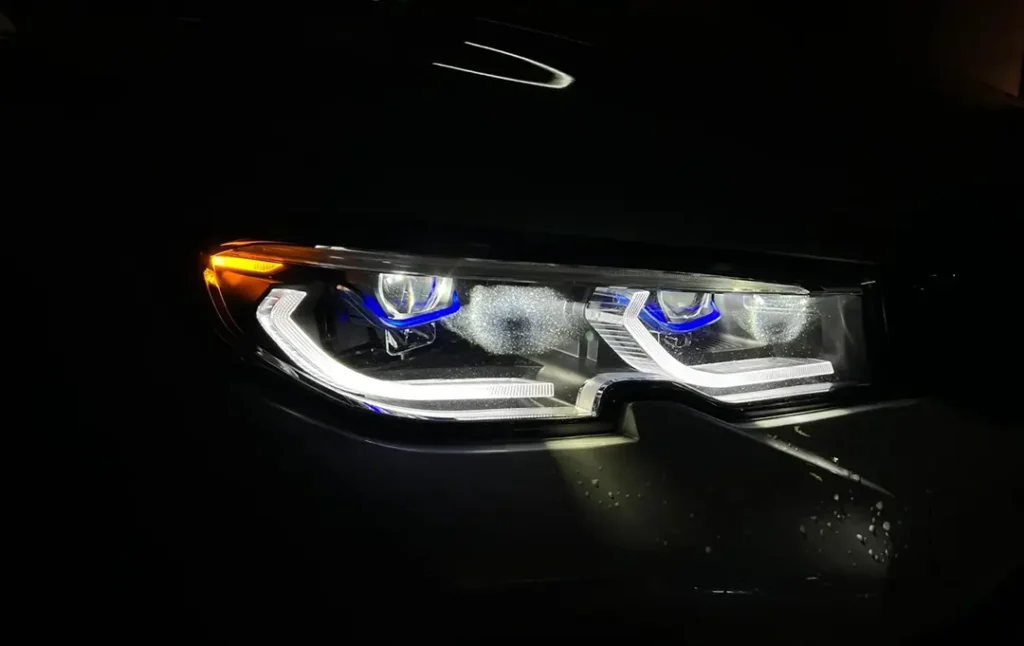
Which One Has More Even Light Distribution?
In terms of light uniformity alone, a well-designed LED lighting system can provide a broad and smooth illumination pattern. However, light distribution is not determined by the light source only. It also depends on:
- optical lens design
- reflector structure
- chip positioning
- beam pattern engineering
- installation accuracy
Because of this, it is not always correct to say that LED headlights are automatically more uniform than projector headlights.
In fact, a well-designed projector headlight system, especially an LED projector setup, often provides:
- a cleaner cutoff line
- more controlled beam distribution
- better focus
- reduced glare to oncoming traffic
- more stable illumination over the road surface
So the real answer is this:
A high-quality projector system usually offers better beam control, while a wider LED setup may feel more evenly spread in certain low-speed driving conditions.
Performance in City Driving
For urban roads, drivers often benefit from lighting that feels wide, smooth, and comfortable rather than extremely focused.
In city driving, important visual targets include:
- pedestrians near the roadside
- bicycles and motorcycles
- lane markings
- signs and intersections
- vehicles entering from side roads
A lighting setup with broad and even illumination can help reduce dark spots and improve visual comfort. In this type of environment, some LED-based headlight systems may feel more natural because they spread light across a wider field.
That said, a properly designed projector system can also perform very well in the city, especially if it is built for balanced low-beam coverage rather than extreme long-range focus.
Performance on Highways and Dark Roads
On highways, rural roads, and poorly lit routes, the priorities change.
At higher speeds, drivers need to identify:
- obstacles farther ahead
- road signs at longer distances
- curves and lane direction earlier
- changing traffic situations in advance
This is where projector headlights often show their advantage. Because projector systems are designed to concentrate and control light more precisely, they can deliver:
- better forward reach
- clearer beam boundaries
- stronger long-distance visibility
- improved focus without excessive light scatter
For drivers who frequently travel at night on highways or dark suburban roads, projector headlights are often the more practical solution.
What About Glare?
Another important factor is glare control.
One of the biggest problems with poorly upgraded headlights is not just brightness, but uncontrolled brightness. If the beam is scattered or improperly aimed, it can create discomfort and danger for other drivers.
Projector systems generally have an advantage here because the lens and cutoff shield help shape the beam more precisely. This makes it easier to direct light where it is needed while reducing unnecessary glare.
By contrast, some plug-and-play LED bulb replacements installed in reflector housings may appear bright but produce uneven beam patterns and increased glare if the optical match is poor.
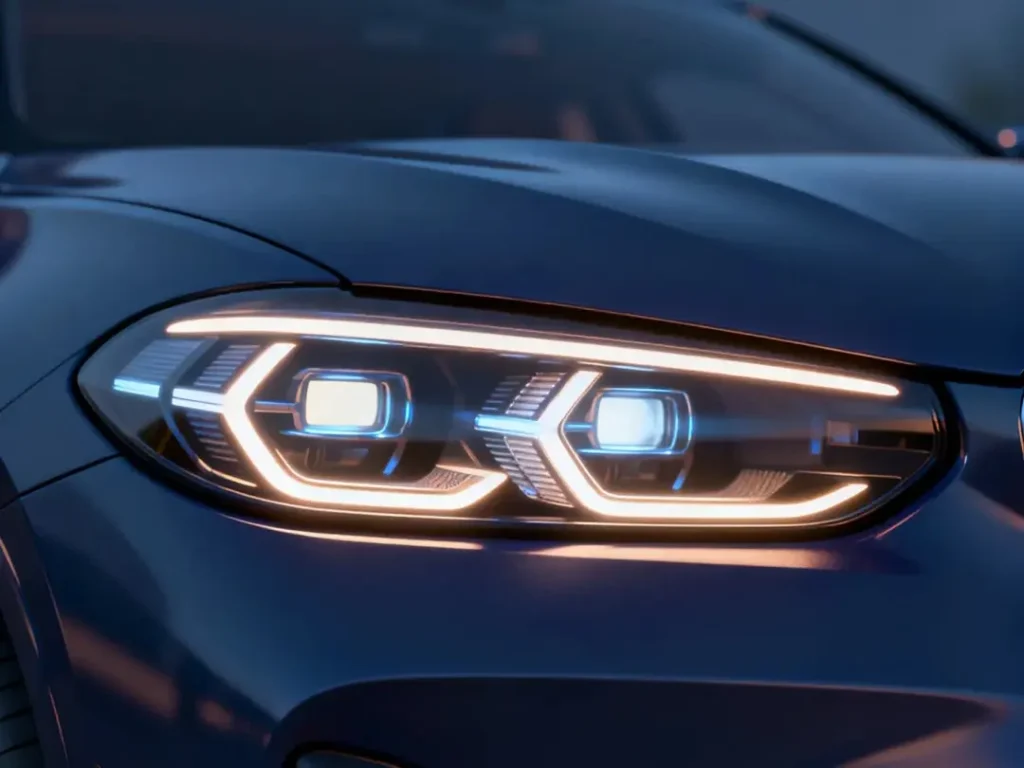
Which One Should You Choose?
The best choice depends on how and where you drive.
A wider and more evenly spread setup may suit you if:
- you mostly drive in the city
- your routes are already partially lit
- you want comfortable low-speed visibility
- you care about broad near-field illumination
A projector-based setup may suit you better if:
- you often drive on highways at night
- you need stronger long-distance visibility
- you want a more controlled beam pattern
- you want better glare control and sharper cutoff performance
Final Thoughts
So, which offers more even light distribution: projector headlights or LED headlights?
The most accurate answer is that light uniformity depends on the overall optical design, not just on whether the headlight uses LED or a projector lens.
If you are comparing a standard LED reflector-style setup with a projector system, the LED option may feel wider and more evenly spread in some urban driving situations. However, a well-engineered projector system usually offers better beam control, longer reach, and improved glare management, especially for higher-speed or darker-road driving.
For most drivers, the best solution is not choosing between “projector” and “LED” as if they are direct opposites. Instead, it is choosing a well-matched lighting system that fits your driving environment and safety needs.
 English
  Español
  Tiếng Việt
  ไทย
ไทย  العربية
  Русский
  Bahasa Melayu
  Français
  Deutsch
  हिन्दी
  Bahasa Indonesia