
If you’ve ever driven behind a car with its rear fog light on during a normal clear night, you know the feeling: your eyes keep getting pulled into a bright red point, the rest of the road looks darker than it should, and you start thinking, Is that guy braking… or just leaving something on?
Rear fog lights don’t get talked about the way they should. Most guides explain what they are and when to use them. That’s fine, but it misses the real reason people get angry about them: rear fog lights are a message to everyone behind you. And like any message, they can be helpful—or obnoxious—depending on timing.
This article is written from a simple angle: what your rear fog light looks like to the driver behind you, and how to use it in a way that keeps it meaningful.
What rear fog lights are for (in one sentence)
A rear fog light is a high-intensity rear visibility signal designed to help drivers behind you recognize your car earlier when normal tail lights fade into fog or heavy spray.
That’s it. No romance. No “extra safety all the time.” It’s a tool for rare moments when recognition is genuinely hard.
Why rear fog lights cause conflict (even among good drivers)
Misuse is rarely malicious. Most drivers who leave rear fogs on do it because:
- they don’t notice the indicator
- they assume it’s just “weather mode”
- they think “more light = more safe”
- they’re in a rental or new-to-them car and don’t know what they turned on
But the problem is not your intention. It’s the effect.
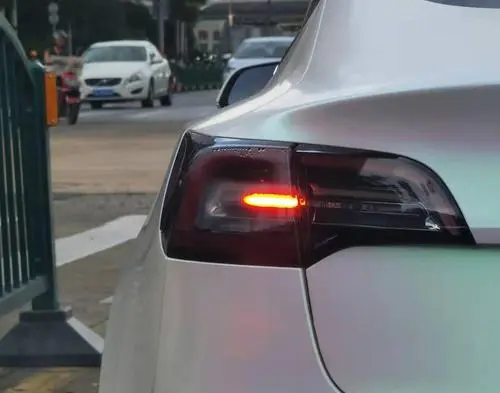
From behind, a rear fog light can:
- create glare in mirrors and direct sightlines
- reduce night vision adaptation (everything else seems darker)
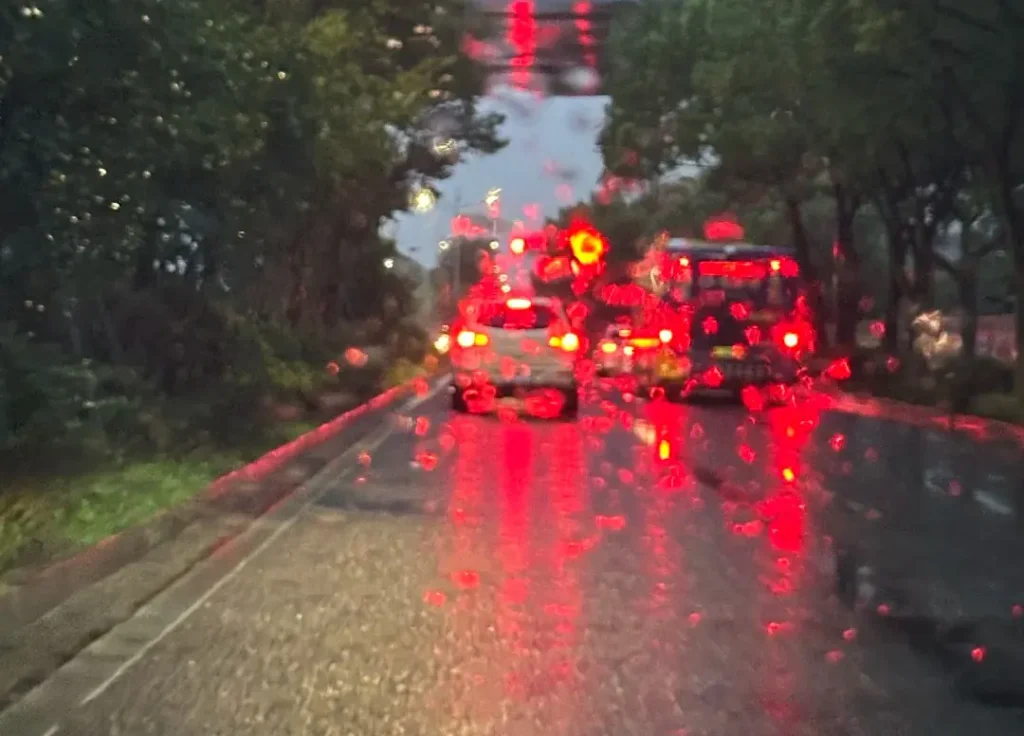
- blur across wet pavement like a red smear
- increase confusion with brake lights, especially in stop-and-go traffic
In other words: it adds stress exactly when everyone is already stressed.
The “driver behind you” test (a quick way to avoid being that car)
Here’s a practical question that works better than arguing about exact visibility numbers:
Is the driver behind me likely to be close enough that my rear fog will be annoying?
If yes, leave it off or turn it off. The moments when rear fog is most helpful are often open-road situations where closing speeds are high and recognition is delayed—not bumper-to-bumper traffic where recognition is already guaranteed.
Think of it like a flare. A flare is useful in a storm at sea. It’s ridiculous in a crowded parking lot.
Why people flash you from behind (and what they usually mean)
Headlight flashes are crude communication, but drivers use them because it’s all they’ve got.
If someone flashes you from behind and you’re not doing anything else wrong, there’s a decent chance they’re saying:
“Your rear fog is on. Please turn it off.”
Not because they want to control you. Because it’s uncomfortable, distracting, and it makes your brake light signals harder to read.
A good habit: if you get flashed on a clear night, do a quick mental scan:
- high beams? (not relevant from behind, but still)
- brake lights stuck? (rare, but possible)
- rear fog light on? (very common)
Turn off rear fog first. If the flashing stops, you just resolved a conflict you didn’t know you were causing.
The brake-light confusion problem (why etiquette matters more than “rules”)
Rear fog lights are bright red. Brake lights are bright red. In bad conditions, drivers rely on pattern recognition more than logic. They’re tired, visibility is low, and the road is noisy.
When your rear fog is on in normal visibility:
- the car behind you may mistake it for a “half-brake” situation
- they may keep extra distance (not terrible) or become impatient (common)
- they may miss the moment you actually brake because the change is less obvious
A rear fog light should be the special signal it was designed to be. Overuse makes it just another glowing red thing in the field of view.
Why some cars have only ONE rear fog light (and why it’s often normal)
A lot of drivers discover rear fog lights by accident—then panic because only one side lights up.
On many vehicles, a single rear fog is intentional. It can help:
- reduce confusion with symmetrical brake lights
- create a distinct “one bright red point” that cuts through fog
- fit regional design standards and regulations
If your car has one rear fog light, it doesn’t automatically mean it’s broken. The better question is: does your car’s rear fog design match what the manufacturer intended for your market? Check the owner’s manual before chasing a “fault” that isn’t a fault.
Rear fog etiquette in real life: where people get it wrong
Scenario 1: Light rain, city traffic, reflective road
This is the worst place to use rear fogs. Wet asphalt reflects red light strongly. Following distances are short. People are already staring at brake lights and signals. Rear fog adds glare without adding meaningful early recognition.
Scenario 2: Highway spray behind trucks
This is one of the few cases where rear fog can make sense even without classic “fog.” Spray can hide your car shape and tail lights. If you’re in open traffic with real closing speeds, rear fog can buy the car behind you a few extra seconds of recognition.
Scenario 3: Clear night, open road
This is the classic misuse. Drivers think “it’s dark, so more rear light helps.” It doesn’t. Normal tail lights already provide recognition. Rear fog becomes unnecessary glare.
Scenario 4: Patchy fog (clear pockets, sudden gray walls)
Patchy fog creates the most “forgetting” problem. You turn rear fog on in the dense section (good), then you exit into clear air and forget to turn it off (bad). If your rear fog has started an argument behind you, this is usually why.
A simple, polite rule you can actually follow
Use rear fog lights when recognition behind you is genuinely delayed and closing speeds could be high.
Turn them off as soon as recognition becomes easy again.
If that sounds vague, good. Real driving is not a checkbox test. The point of etiquette is to stay aware of how your car affects others.
Tiny habits that prevent 90% of rear fog misuse
1) Build a “shutdown” routine
When you leave low-visibility conditions—fog bank ends, rain eases, traffic slows—do a quick reset:
- rear fog off
- wipers to the right speed
- ventilation adjusted
- attention back to normal spacing
2) Learn the indicator location
Some dashboards make the rear fog indicator hard to notice. Take 30 seconds in your driveway to find it. That single “where is it?” moment saves you months of accidental glare.
3) If you’re in a rental car, check once
Rental cars are rear-fog offenders because drivers don’t know the controls. Before you drive off, do a one-minute lighting check:
- low beams on
- tail lights on
- rear fog off (unless you truly need it)
FAQ
Is it rude to drive with rear fogs on?
It depends. In genuinely low visibility, it’s considerate. In normal visibility—especially in traffic—it’s usually rude because it creates unnecessary glare and confusion.
Why does my rear fog look like my brake light is stuck?
Because it’s similar in color and intensity. That’s why it should stay reserved for conditions where it’s needed, so its meaning stays clear.
What if I’m not sure whether visibility is “bad enough”?
If you’re unsure, err on the side of not annoying the driver behind you. Use proper low beams and maintain safe speed/spacing. Rear fog is a special tool—use it when recognition is clearly compromised.

 English
  Español
  Tiếng Việt
  ไทย
ไทย  العربية
  Русский
  Bahasa Melayu
  Français
  Deutsch
  हिन्दी
  Bahasa Indonesia