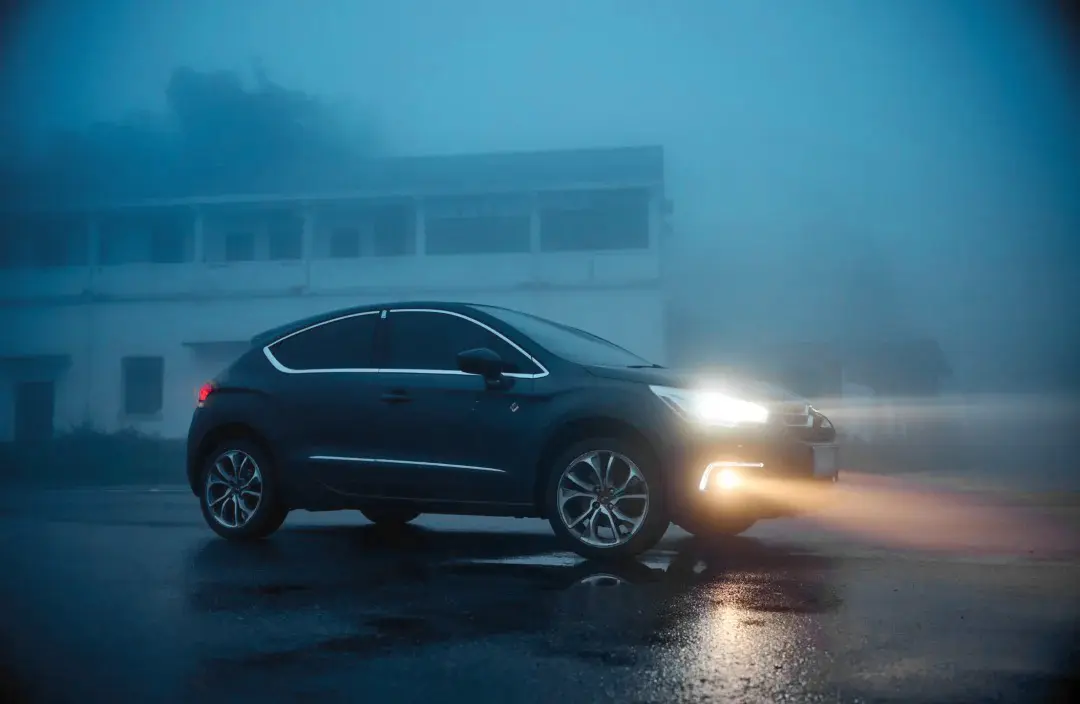
The first time I noticed “bright” can be a trap wasn’t in fog. It was in rain—one of those nights when the road turns into a dark mirror and every lane marking looks like it’s floating.
I flipped on the faros antiniebla, expecting the usual relief. Instead, the foreground got whiter, the reflexiones got louder, and the lane lines felt less readable. It wasn’t dramatic. It was just… tiring. The kind of tiring you only recognize after you arrive and realize your shoulders have been tense for 30 minutes.
That’s the problem with how people judge Faros antiniebla LED para coches. We still judge them like a wall-mounted flashlight demo: “Looks bright, must be good.” But fog lights aren’t trying to win a brightness contest. They’re trying to reduce the amount of visual guesswork your brain is doing in messy air and reflective pavement.
This isn’t a buying guide, and it’s not a brand roundup. It’s a practical way to evaluate fog lights without getting tricked by lumens, phone photos, or that seductive bright puddle right in front of the bumper.
What Fog Lights Are Actually Supposed to Do
Fog lamps have a small, specific job:
- Help you read the near road (edges, lane lines, shoulder cues).
- Add usable information without adding resplandor, especially in mist, aerosol, and wet reflections.
- Stay in their lane as a lighting tool—near-field support, not distance lighting.
If you judge fog lights like low beams (reach, distance, “how far down the road”), you’ll end up rewarding the wrong designs.
Why Wall Tests and “Lumens” Keep Fooling People
You can do a wall test and learn something—just not the thing most people think they’re learning.
The phone-camera problem
A phone will happily exaggerate what looks exciting:
- hotspots become “power”
- whiter color looks “stronger”
- glare doesn’t feel like glare in a still image
Two setups that look equally bright in a photo can feel completely different in rain haze.
The lumen problem
Lumens don’t tell you:
- donde va la luz
- how much spills upward into mist
- whether the near-field is smooth or blotchy
Fog lights live or die by placement, not total output.
The “bright puddle” trap (the one that ruins rain nights)
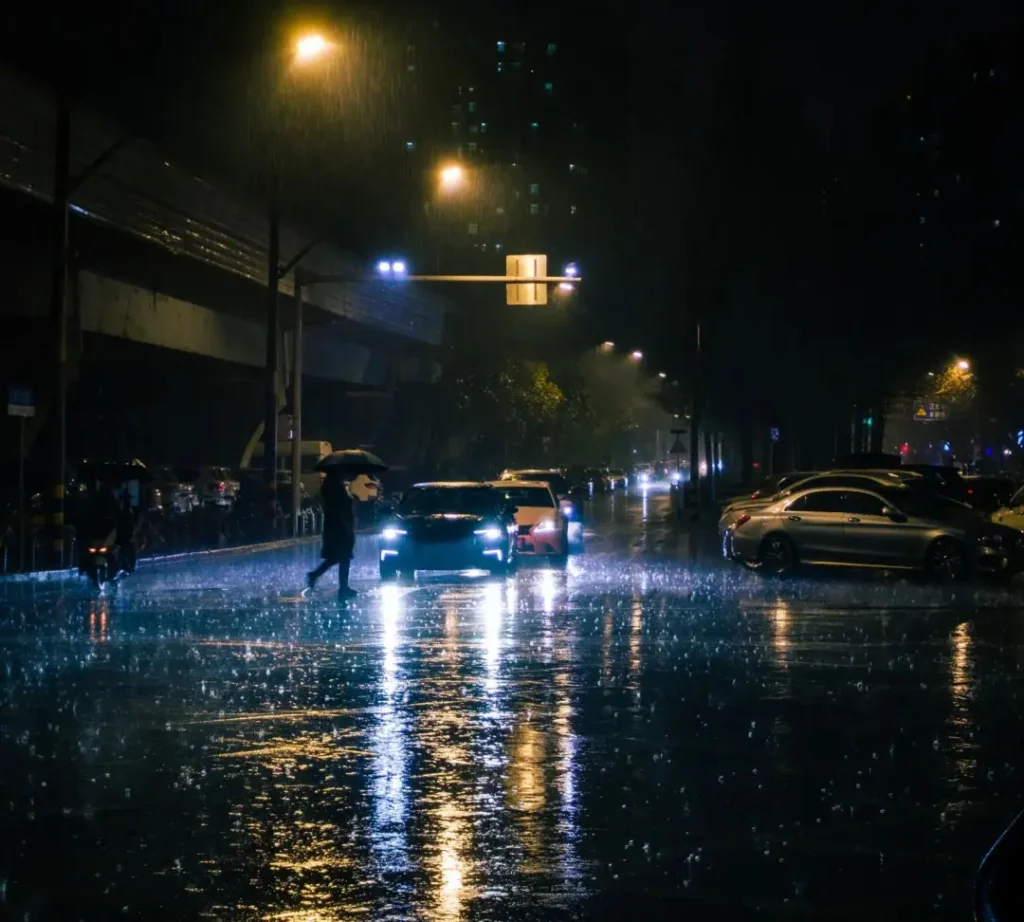
A lot of bad fog lights produce a concentrated bright patch 2–5 meters in front of the car. It looks great on a wall. On wet pavement, it can become a glare factory.
Your eyes adapt to that patch. Everything beyond it feels darker. You end up with more light and less confidence.
A Better Scorecard: 4 Core Metrics + 2 “Reality Checks”
Instead of a neat six-item checklist that reads like a PDF, here’s a scorecard that matches how fog lights succeed or fail on real roads.
1) Upper spill control (beam discipline)
In mist and spray, light above the useful zone comes back at you as backscatter.
What “good” looks like:
- the beam stays low and controlled
- signs don’t flare up like you’re running auxiliary driving lights
- the air in front of the car doesn’t look brighter than the pavement
If your fog lights make the haze look like it’s glowing, they’re not “cutting through” anything—they’re lighting the problem.
2) Near-field texture (uniform carpet vs blotchy glare)
This is the part your eyes feel immediately.
Good fog lights give you a smooth carpet: consistent brightness across the near-road.
Bad fog lights give you patches: one bright hotspot, then dim bands, then random artifacts. In rain, those patches mix with reflections and your brain has to work harder to interpret the scene.
A tiny real-world tell: look at the road right after a fuel stop when your lenses are dirty. If the beam turns “milky” and uneven fast, you’re seeing a system that depends on raw brightness rather than controlled distribution.
3) Edge usefulness (lateral coverage that helps you steer)
Fog lights earn their keep by making the road feel wider, not whiter.
What you want:
- clearer right-edge cues (shoulder line, curb edge, reflectors)
- lane markings that stay readable close to the car
- less “tunnel” feeling on dark rural roads
If the center gets bright but the edges don’t improve, you’re paying for light you can’t steer with.
4) Reflection behavior (wet-road sanity)
This one is brutally honest because wet roads don’t flatter anyone.
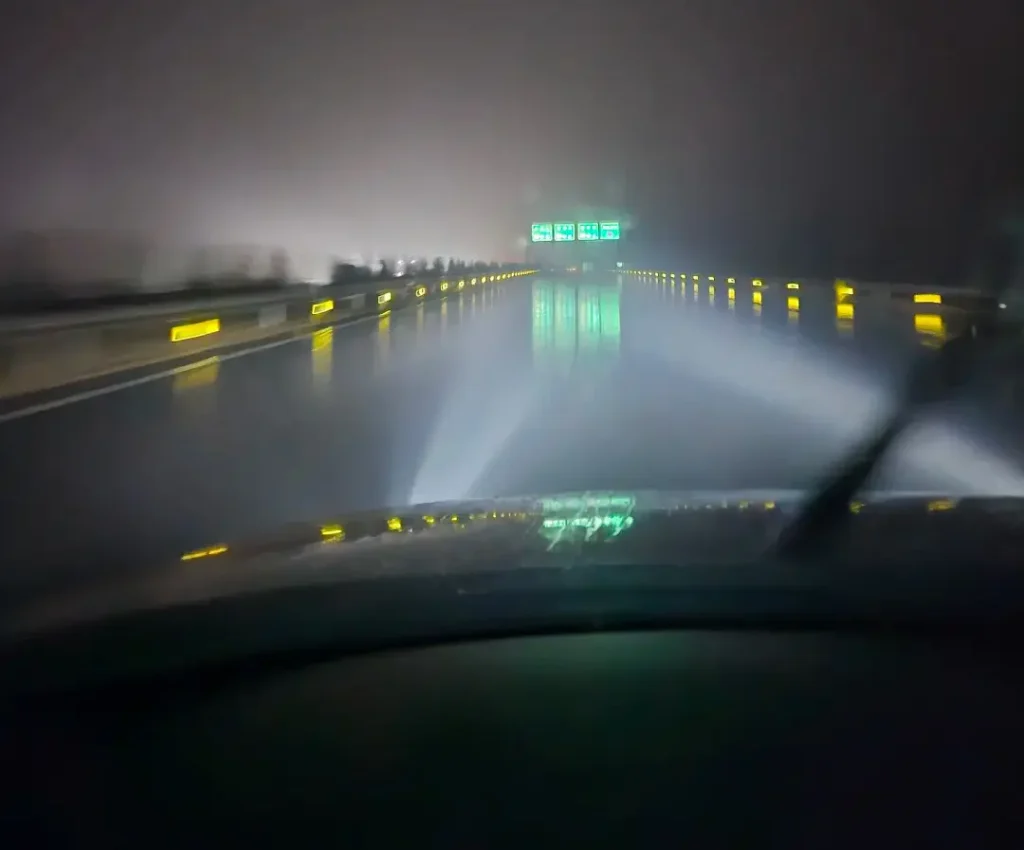
On wet pavement, ask a simple question: Do the fog lights calm the scene or agitate it?
- If lane paint gets washed out into a bright smear, you’re losing contraste.
- If the road turns into a shiny glare strip, you’re feeding reflections.
- If you feel the urge to lean forward or squint, the beam is not your friend.
This is why some “very bright” Faros antiniebla LED para coches are a downgrade for real-world rain driving.
Reality check A) Color temperature isn’t a rescue button
Yes, warmer tones can feel easier on the eyes in haze. Yes, very cool white can feel harsher on wet roads.
But if the beam control is sloppy, changing color is like changing the font on a bad spreadsheet: it doesn’t fix the math.
Use color as a comfort lever, not as a replacement for optics.
Reality check B) Stability after 20–30 minutes matters more than the first minute
Fog lights live low. They get splashed. They heat soak. They cool down. The lens surface collects film. LEDs can look great for 10 minutes and then feel different after they warm up.
If you only test at startup, you’re grading the best-case moment.
Three “No-Tools” Road Tests That Reveal the Truth Quickly
No aiming steps, no wiring talk—just observation.
Test 1: The wet-parking-lot roll
Drive slowly across wet pavement.
- Do the fog lights create a bright reflective ribbon that dominates your view?
- Do lane markings become easier to read, or do they get drowned in glare?
Test 2: The edge-reading moment
On a darker stretch of road, focus on the right edge.
- Do you gain earlier, clearer edge cues?
- Or do you just get a brighter center patch?
Test 3: The spray cloud behind traffic (at safe distance)
Behind a vehicle throwing spray:
- Does the spray look brighter than the road?
- Does your stress level go down, or up?
Spray is moving fog. It’s the most honest place to judge beam discipline.
Takeaway: Judge Fog Lights by “Less Work,” Not “More Light”
Lo mejor faros antiniebla don’t make you say “wow.” They make you stop thinking about the lights at all.
If your eyes feel calmer in rain haze, if lane lines stay readable without that white-glare wash, if the near-road looks evenly interpretable—then the fog lights are doing what fog lights are supposed to do.
Anything that wins on a wall photo but loses on a wet night is just performance theater.
 English
  Spanish
  Vietnamese
  Thai
Thai  Arabic
  Russian
  Malay
Malay  French
  German
  Hindi
Hindi