
When upgrading car headlights, many drivers focus on the wrong things. They ask about lúmenes, compare brands by country of origin, or assume that more small modules must be better than one large projector. In reality, what truly matters is how the light performs on the road, whether the beam pattern is compliant, and whether the installer knows what they are doing.
In this guide, we answer some of the most common questions about faro proyector upgrades, including Lux vs lumens, how to identify low beam and high beam projectors, whether projector retrofits can pass inspection, 3-inch projectors vs matrix modules, and more.
1. Why You Should Ask About Lux, Not Lumens, When Buying Car Lights
Many people shopping for headlights ask one question first: How many lumens?
But in real-world driving, lumens are not the most important number.
Lumens are only a theoretical output
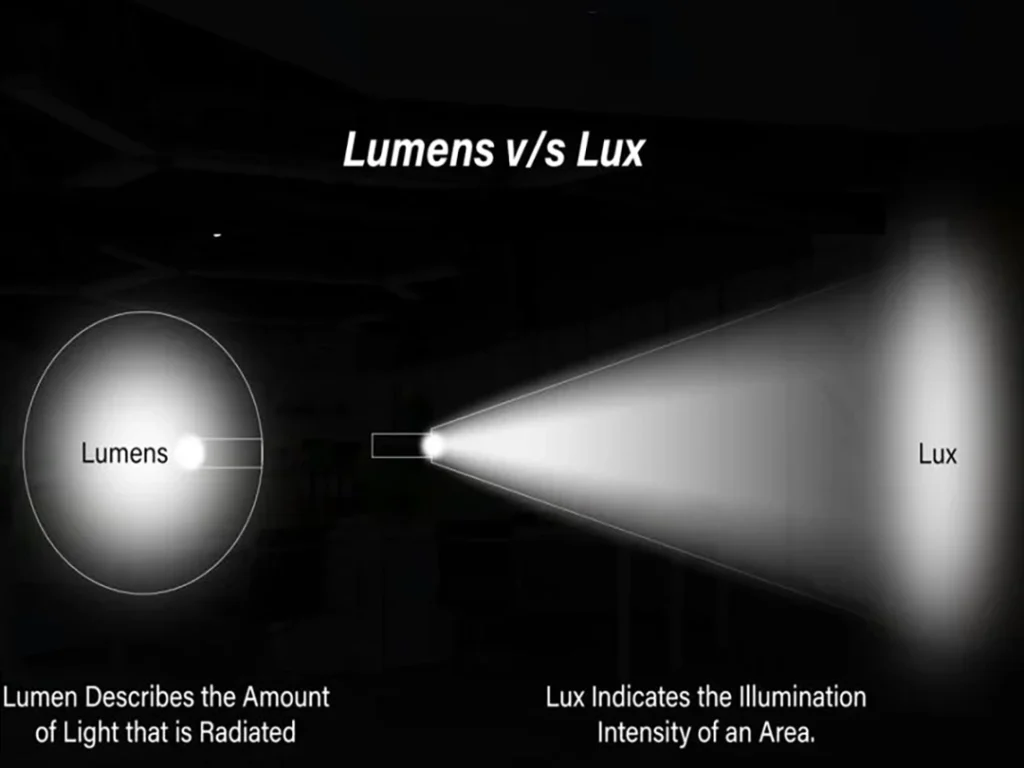
Lúmenes lm measure the total amount of light emitted by the light source. It is a source-level specification, not a road-performance specification. In other words, it tells you how much light is produced in total, but not how well that light is focused or how useful it is when driving.
There are two major problems with relying on lumens:
- Lumen numbers are often exaggerated
- Lumens do not directly tell you how bright the road is at a certain distance
Two headlights can have the same lumen value, but if one has a poor beam pattern and scattered light, it may look bright up close while performing badly at distance.
Lux is what actually matters on the road
Lux measures the actual illumination intensity on a surface at a given distance. This means Lux tells you how much useful light reaches the road, which directly affects:
- how bright the road looks,
- how far you can see,
- and how practical the headlight is in real driving.
A lamp with the same lumen output but a more focused beam pattern will deliver higher Lux at the same distance, which means it will illuminate farther and brighter in real use.
What should you ask instead?
Instead of asking:
- “How many lumens is it?”
You should ask:
- What is the Lux at 10 meters, 25 meters, 50 meters, or other test distances?
- What is the effective beam distance?
- How is the beam pattern distributed?
Bottom line
When choosing car headlights, do not judge by lumens alone.
Ask about beam distance and Lux at different distances. That is what determines whether the light is truly useful on the road.
2. How to Tell Whether a Projector Is for Low Beam or High Beam
A simple way to identify projector function is the lens-counting method.
Large lens = low beam unit
In general:
- One large projector lens usually corresponds to:
- one low beam
- plus one reflected high beam
This type of setup is common in many mainstream projector designs.
Small lens = high beam unit
A small lens often corresponds to:
- one direct high beam
This kind of projector is usually designed to strengthen long-range output rather than provide the main low-beam cutoff pattern.
Quick rule
If you want a simple identification method:
- Large projector lens = mainly low beam
- Small projector lens = mainly high beam
Of course, exact structures may vary by design, but this is a practical way for most users to understand the configuration.
3. Can a Projector Retrofit Pass Vehicle Inspection?
Yes, it can
Projector retrofitting is actually one of the mainstream compliant ways to upgrade headlights.
As long as the lighting parameters meet the legal standard, the beam pattern is properly adjusted, and no illegal decorative lighting is added, the vehicle can generally pass inspection.
The key is not just “changing the projector,” but making sure the final lighting performance is compliant.
4. Headlight Retrofit Compliance Requirements
Below are the key compliance requirements typically considered for inspection.
The following section can also be turned into an infographic or image block in your blog page.
1) Color temperature requirement
- Must be no higher than 6000K
- Recommended range: 4300K to 5500K
This range provides a good balance between:
- brightness,
- road visibility,
- and penetration in rain or fog.
Lights above 6000K tend to appear too cool white. In foggy or rainy conditions, they can create a washed-out effect and may not comply with inspection standards.
2) Brightness requirement
- Low beam intensity must be at least 10500 cd
- High beam typically has no strict mandatory minimum, but it must provide uniform and practical illumination
- The brightness difference between left and right headlights should not be excessive
This is important because one side being too bright or too dim may affect safety and fail compliance checks.
For reference, some products marked only in lumens may loosely correspond to:
- Luz de cruce: at least 1050 lumens
- Luz de carretera: at least 1450 lumens
However, the core compliance unit is still candela cdcd, not lumens.
3) Beam pattern requirement
- Low beam must have a clear cutoff line
- It must not shine directly into oncoming traffic and cause glare
- High beam should have even coverage
- Severe scattering is not acceptable
After projector retrofitting, the beam pattern must be professionally adjusted to ensure:
- the cutoff is level,
- the projection angle is compliant,
- and the pattern is stable and road-safe.
4) Other mandatory requirements
- The headlight appearance should remain consistent with the original factory style
- No damaged headlamp housing
- No irregular or heavily modified outer lens shape
- Illegal decorative lights such as:
- angel eyes,
- demon eyes,
- strobe lights
should not be added
- Wiring must be properly installed:
- no exposed wires,
- no overheating,
- no safety hazards
- Original lighting functions such as:
- daytime running lights,
- intermitentes
must continue to work normally
Additional note
Some regions require modification registration after upgrading headlights. It is recommended to complete registration in time to avoid regional policy issues during inspection.
If a laser projector is used:
- the laser module can only serve as a high-beam assist
- it cannot be used independently
- and the projection angle must be compliant and must not shine directly into others’ eyes
5. Should You Retrofit a 3-Inch Projector or a Matrix Module?
A basic rule in headlight upgrading is:
Choose bigger before choosing smaller
In most real-world cases:
- one pair of large projectors performs better than
- multiple small matrix modules
Why?
Because a larger projector usually offers:
- better optical efficiency,
- stronger focusing ability,
- more stable beam control,
- and more useful road illumination.
Small matrix modules may look advanced, but having more small light sources does not automatically mean better actual performance.
Practical advice
- If your headlight housing can fit a large projector, choose that first
- Only consider small matrix modules when there is no space for a larger projector
6. Are Chinese Projectors Better or Are European and American Ones Better?
In reality, the difference is often smaller than people think.
Many projector brands sold in Europe and North America are also manufactured in China. So the real issue is not simply “Chinese vs Western.”
What matters more
What matters more is:
- optical design,
- production consistency,
- beam tuning,
- and especially the skill of the installer
Even a good projector can perform badly if installed or adjusted poorly. On the other hand, a well-made and properly tuned projector from a reliable supplier can perform excellently regardless of whether the brand is marketed as Chinese, European, or American.
Practical conclusion
Instead of over-focusing on country of origin, pay more attention to:
- product performance,
- beam pattern quality,
- installer experience,
- and whether the shop specializes in professional retrofits.
If you are unsure which installer is truly skilled, choosing a professional retrofit shop is usually the safest option.
7. What Order Should You Follow When Choosing a Projector?
When selecting a projector, follow this priority logic:
- Low power with high luminous efficiency
- Dragon-ball style projector with upper low beam advantage
- Beam pattern that properly illuminates road signs
- Conventional direct-projection type
- Reflective projector type
The same principle also applies when comparing:
- laser headlights vs LED projectors
- large projectors vs matrix modules
The goal is not just to choose the newest-looking technology, but to choose the one with the best real-world road performance and compliance.
8. Why Is There a Delay When Quickly Switching Between Low Beam and High Beam? Why Is There a Clicking Sound?
This is normal.
Inside many projector systems, there is a beam-shifting mechanism, usually involving:
- a motor,
- or a magnetic/electromagnetic solenoid.
When switching from low beam to high beam, the internal shutter or mechanism moves physically. That is why you may hear a clicking sound.
Why does rapid switching sometimes feel delayed?
Because the mechanism needs a small amount of time to respond.
In systems using a magnetic solenoid, continuous rapid switching may create a slight delay. This is generally a normal characteristic of the structure rather than a defect.
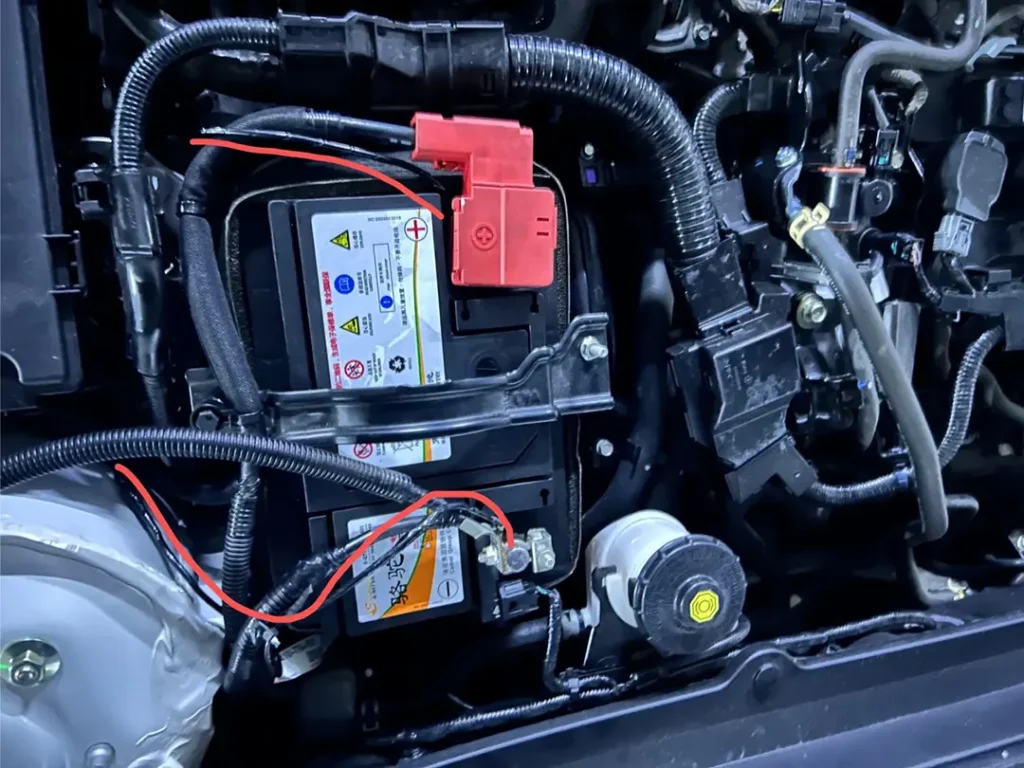
9. Why Do Some Vehicles Need an Additional Wiring Harness When Upgrading Projectors?
Some original factory headlight circuits are simply too thin to support high-power upgraded lighting systems.
What does adding a wiring harness mean?
It means giving the headlight a separate dedicated high-power power line, instead of forcing all the current through the vehicle’s original thin wiring.
Why is this necessary?
Without an upgraded harness:
- voltage may be unstable,
- brightness may be reduced,
- the original wiring may overheat,
- and long-term reliability may suffer.
So in many retrofits, adding a harness is not unnecessary complexity — it is a way to ensure:
- stable power supply,
- full brightness,
- and electrical safety.
10. Why Does a Projector Upgrade Sometimes Require CANBUS Decoding?
Modern vehicles are no longer powered like old-fashioned simple wiring systems.
Today, many cars use a computer-controlled headlight system.
What happens after the upgrade?
When you replace the original light source with a projector or retrofit unit, the vehicle computer may no longer detect what it expects to see from the original bulb.
As a result, the system may think:
- the bulb has failed,
- the circuit is abnormal,
- or the headlight is malfunctioning.
Then the car may respond by:
- showing an error message,
- cutting power,
- or causing flickering.
What does decoding do?
Decoding basically tells the vehicle computer:
- “The light is still here.”
- “It is working normally.”
- “Do not trigger an error or cut power.”
In simple terms, the decoder helps the upgraded headlight communicate properly with the car’s electronic system.
Reflexiones finales
A good headlight upgrade is not about chasing the biggest lumen number or blindly following marketing terms. What really matters is:
- Lux at real distances
- a proper beam pattern
- compliant color temperature and brightness
- correct installation and tuning
- stable wiring and decoding when needed
If you want your headlights to be bright, usable, safe, and inspection-friendly, focus on practical performance rather than theoretical numbers.
So next time you shop for headlights, do not just ask:
- “How many lumens?”
Ask instead:
- How far does it shine?
- What is the Lux at different distances?
- Is the beam pattern compliant and properly adjusted?
That is what makes a headlight truly good.
 English
  Español
  Tiếng Việt
  ไทย
ไทย  العربية
  Русский
  Bahasa Melayu
  Français
  Deutsch
  हिन्दी
  Bahasa Indonesia