
En phares projecteurs du marché secondaire, Les “problèmes de qualité” commencent souvent avant que le client n'allume la lumière.
A carton est déposé au niveau d'un hub. A palette reste dans l'humidité pendant deux semaines. Un transitaire empile des marchandises lourdes “juste pour une nuit”. Le produit peut encore fonctionner, mais les languettes sont sollicitées, les ajusteurs sont décentrés, les verres sont éraflés ou une couture est microfissurée. C'est alors que la dispute commence : usine, expéditeur, entrepôt, installateur.
Cette norme d'emballage pour l'exportation est rédigée en langage d'acheteur. C'est ce que nous recommandons pour les programmes B2B qui s'intéressent aux commandes répétées, au traitement des réclamations et à la réduction du nombre de tickets “arrivé endommagé”, sans transformer chaque envoi en une armure surdimensionnée et hors de prix.
1) Ce que l'emballage pour l'exportation doit empêcher (définir d'abord les modes de défaillance)
Avant d'opter pour de la mousse ou des cartons plus épais, déterminez clairement ce que vous souhaitez protéger. Pour ce qui est de la protection de l'environnement, il est important de savoir ce que vous voulez protéger. phares projecteurs du marché secondaire, Les modes de dommages récurrents que nous observons dans les chaînes d'exportation réelles sont les suivants :
- Impact / chutes
- Pattes de fixation cassées, boîtiers fissurés, ajustements heurtés, bords de lentilles ébréchés.
- Vibration / abrasion
- Éraflures des lentilles, usure de la lunette, marques de frottement sur les surfaces peintes, frottement du harnais.
- Compression / empilage
- Cartons déformés entraînant la pression des lentilles d'angle, la flexion des supports, la fatigue des languettes.
- Humidité / hygrométrie
- Marques d'eau sur l'objectif, corrosion sur les terminaux, cartons moisis, papier intérieur ramolli.
- Erreurs de mélange
- Mélange LHD/RHD, mélange Rev, expédition d'une mauvaise UGS - souvent causée par un étiquetage extérieur insuffisant.
Une norme d'emballage, ce n'est pas “plus de matériaux”. C'est protection ciblée + identification claire.
2) Architecture d'emballage (la structure la plus sûre qui reste efficace)
Un pack d'exportation fiable pour les phares de deuxième monte est généralement un pack d'exportation pour les phares de deuxième monte. système à trois couches:
- Protection primaire (au niveau du produit)
- Sac à poussière / film protecteur sur l'objectif
- Capuchons de bornes (ou sachet scellé pour les connecteurs)
- Amortissement et immobilisation (pack intérieur)
- EPE/EPP/PU soutient que tenir la lampe frontale par les zones fortes, et non par des onglets
- Entretoises anti-frottement pour éviter que les lentilles ne touchent des objets durs
- Protection pour le transport (emballage extérieur)
- Carton ondulé solide avec protection des coins et marquage de l'orientation correcte
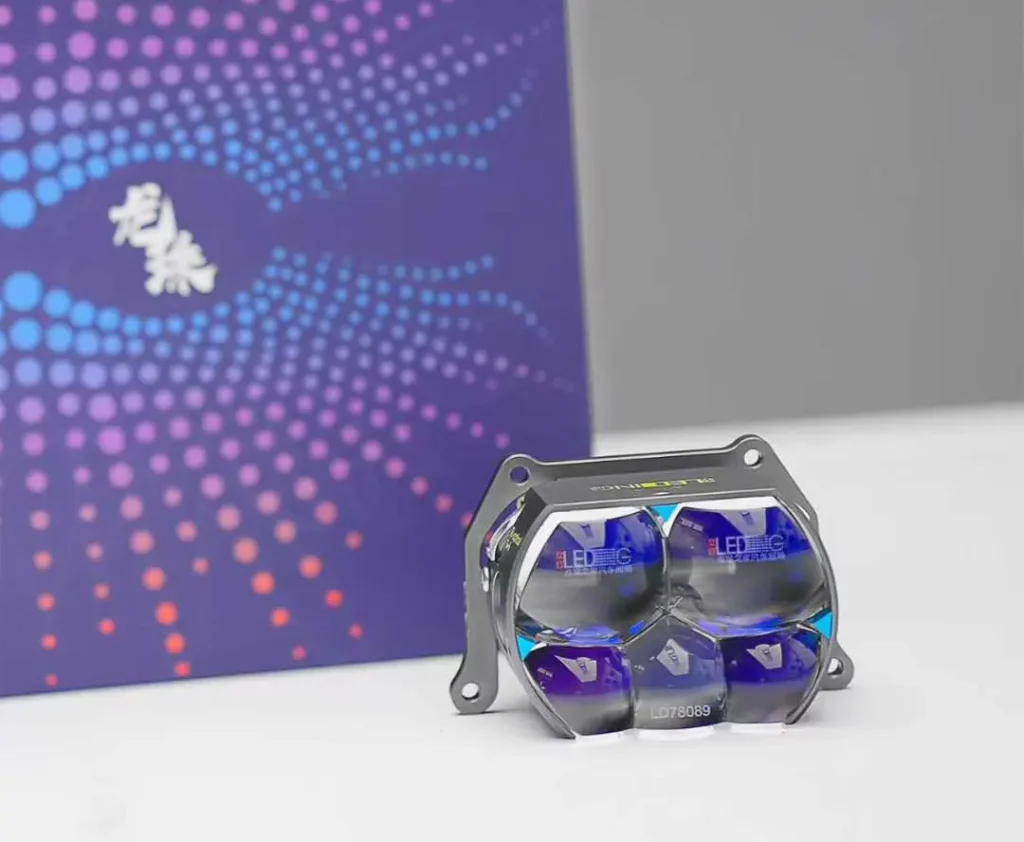
Le principe le plus important
Ne laissez jamais la lampe frontale “flotter”.”
Si le produit peut se déplacer à l'intérieur du carton, il finira par percer ses propres onglets et bords jusqu'à ce que mort s'ensuive.
3) Protéger les vrais points faibles (ce que la plupart des emballages ne font pas)
3.1 Les pattes de fixation ne sont pas porteuses
Les languettes ne fonctionnent pas parce que l'emballage “verrouille” souvent l'unité par les languettes (facile à concevoir, désastreux pendant le transport). Vos soutiens internes doivent être contactés :
- nervures du boîtier principal
- bases de support renforcées
- les surfaces structurelles non esthétiques
Règle : Aucun bloc de mousse ne doit être appuyé directement sur une languette mince, même s'il “s'adapte”.”
3.2 La protection des lentilles concerne l'abrasion, et pas seulement l'impact
La plupart des plaintes concernant les lentilles ne sont pas des fissures - elles sont éraflures. Recommandé :
- amovible film protecteur sur la surface de la lentille (nettoyage, contrôle des résidus)
- a sac à poussière souple ou un film non tissé pour éviter les marques de frottement
- une “zone sans contact” pour que la lentille n'entre jamais en contact avec les bords durs de la mousse
3.3 Les ajusteurs et les mécanismes d'orientation doivent être immobilisés
Un dispositif de réglage peut survivre à une chute mais se déplacer légèrement. Ensuite, les installateurs signalent que “l'objectif ne tient pas” ou que “la poutre semble mal orientée”, et cela devient un débat technique.
L'emballage doit prévenir :
- transfert des chocs rotatifs dans les assemblages de réglage
- compression soutenue sur les boutons de réglage
4) Matériaux de rembourrage interne (que choisir et pourquoi)
Il n'existe pas de matériau parfait. Choisissez en fonction du risque lié à votre canal et de votre tolérance aux coûts. Voici une comparaison pratique que les acheteurs peuvent utiliser pour confirmer l'emballage.
| Matériau | Meilleur pour | Pour | Vigilance |
|---|---|---|---|
| Mousse EPE | Exportation standard | Faible coût, mise en forme facile | Peut se comprimer avec le temps ; nécessite une densité correcte |
| Mousse EPP | Itinéraires à haut risque, meilleure répétabilité | Récupération élastique, bonne résistance aux chocs | Coût plus élevé ; l'outillage est important |
| Mousse PU | Formes complexes | Bonne tenue, contact doux | Peut absorber l'humidité ; le vieillissement varie |
| Pâte à papier moulée | Programmes écologiques | Bonne structure, recyclable | Sensibilité à l'humidité ; risque d'abrasion des bords |
Norme relative à la relation avec l'acheteur : Quel que soit le matériau utilisé, l'emballage doit satisfaire à vos exigences. chaîne réalité-pas un envoi d'échantillon calme.
5) Spécifications du carton (ce que signifie “suffisamment solide” dans la pratique)
Pour les cartons d'exportation, il faut se concentrer sur trois points : la résistance, la structure et l'étanchéité du panneau.
5.1 Qualité du carton ondulé
- Utilisez une qualité adaptée à l'empilage et au transport sur de longues distances (votre fournisseur peut vous faire une proposition par kg de charge).
- Fixer des priorités résistance à l'écrasement des bords (survie de l'empilage) et une qualité de colle constante.
5.2 Structure du carton
- Préférez les modèles avec un support d'angle solide (poteaux d'angle ou angles renforcés pour les unités lourdes).
- Évitez les cartons surdimensionnés “pour des raisons de commodité”. Les cartons surdimensionnés créent des zones de mouvement et d'écrasement.
5.3 Ruban adhésif / scellement
- Utiliser une largeur et un motif de ruban cohérents.
- Si l'humidité est fréquente, il convient d'envisager des rubans adhésifs et des revêtements de carton résistants à l'humidité.
Simple vérification sur le terrain : Les cartons qui arrivent “mous” ou “huilés” vous indiquent que la qualité du carton est trop légère ou que les conditions de stockage sont hostiles.
6) Contrôle de l'humidité (une assurance bon marché qui permet d'éviter des disputes coûteuses)
Les dégâts causés par l'humidité sont sournois : le produit peut être en bon état, mais les cartons deviennent laids, les étiquettes se décollent et les clients supposent que le produit est compromis.
Contrôles de l'humidité à l'exportation recommandés :
- Déshydratant quantité adaptée au volume du carton et à la durée du transit
- Sac en polyéthylène scellé autour de l'unité pour les itinéraires à forte humidité (SEA est le cas classique)
- Carte d'indicateur d'humidité pour les programmes de plus grande valeur (aide à régler les litiges rapidement)
Il ne s'agit pas de “l'imperméabiliser”. Il s'agit de contrôler la perception et prévenir le risque de corrosion.
7) Logique de largage et de manutention (faire en sorte que le paquet survive à la manière dont la logistique se comporte réellement)
Même si vous n'effectuez pas de test complet en laboratoire, vous pouvez définir une norme de “test de canal” acceptable par l'acheteur :
Simulation de manipulation minimale recommandée
- logique de dépôt multi-orientation (coins/arêtes/faces) à une hauteur adaptée à la manutention dans l'entrepôt
- une logique d'exposition aux vibrations (ou au moins un “test d'agitation” avec une indication claire de réussite ou d'échec)
- logique de compression (charge d'empilement équivalente)
Les critères de réussite doivent être visuels et fonctionnels, Le mot “pass” ne signifie pas seulement "il s'allume". Pour les projecteurs de seconde monte, passer signifie :
- pas de languettes cassées
- la surface de la lentille est propre (pas d'éraflures dues à l'emballage)
- pas de bruit de pièces internes desserrées
- aucun dommage au niveau du connecteur
- intégrité du carton acceptable pour la revente (si votre chaîne l'exige)
8) Norme d'étiquetage (l'emballage est également un système anti-mélange)
Un nombre surprenant de réclamations ne sont pas des “défauts”. Il s'agit révision à l'envers ou mixte les problèmes qui ressemblent à des défauts sur le terrain.
Votre étiquette de carton doit être lisible en entrepôt sans avoir à ouvrir quoi que ce soit. Champs minimum :
- Modèle / UGS
- LHD ou RHD
- Révision (Rev)
- Quantité
- N° de lot.
- Date de production (ou date d'expédition)
- PO de l'acheteur (facultatif mais utile)
Règle : Si Rev + Batch ne sont pas visibles sur le carton, vous finirez par mélanger les stocks - et lorsqu'un problème apparaîtra, vous ne pourrez pas l'isoler.
9) Langue de la liste d'emballage (supprimer les ambiguïtés avant qu'elles ne se transforment en réclamations)
De nombreux litiges ont pour point de départ une “inclusion supposée”. Votre liste de colisage doit être courte et littérale :
- Jeu de projecteurs × 1 (gauche + droite) / ou un seul côté × 1
- Accessoires inclus (capuchons, harnais, supports) seulement s'ils figurent sur la liste
- “Les éléments ”non inclus" sont explicitement mentionnés lorsqu'ils sont courants (par exemple, les décodeurs sur certains marchés).
C'est de la paperasse ennuyeuse, et c'est précisément pour cela qu'elle permet d'éviter des conversations coûteuses par la suite.
10) Ce que les acheteurs doivent demander (une liste de contrôle simple pour la confirmation de l'emballage)
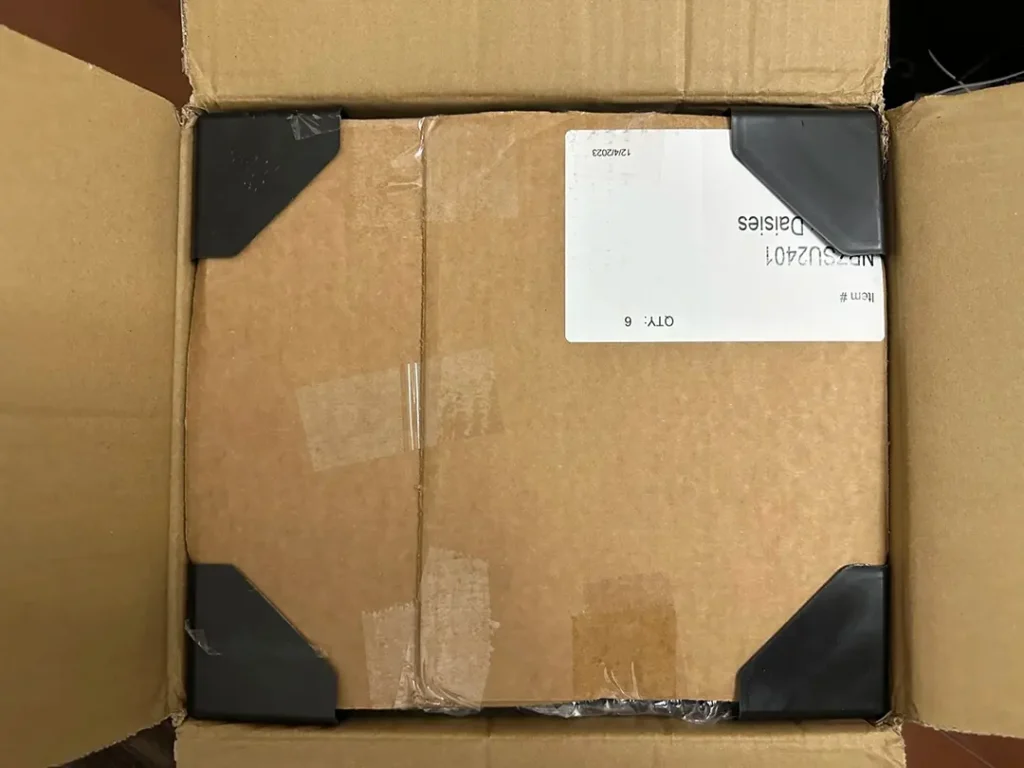
Pour garantir la qualité de l'emballage sans faire d'incessants allers-retours, demandez-les avant l'expédition en masse :
- Photos de l'emballage (carton ouvert + supports intérieurs + gros plans sur la protection des lentilles)
- Échantillon d'étiquette de carton montrant le modèle / le côté / la révision / le lot
- Spécification du carton (grade et dimensions du panneau)
- Déclaration de dépôt/manipulation (même une norme interne de base est préférable à “nous emballons bien”)
- Méthode de palettisation (en cas d'expédition palettisée) : emballage, cornières, hauteur d'empilage
- Plan d'humidité pour votre région (déshydratant, ensachage, notes de stockage)
Si vous n'appliquez qu'une seule chose : appliquer champs d'étiquetage + immobilisation intérieure. Ces deux éléments permettent de prévenir la plus grande catégorie de douleurs évitables.
Clôture : L'emballage pour l'exportation n'est pas un coût, c'est une stratégie de réclamation
Pour phares projecteurs du marché secondaire, L'emballage pour l'exportation est l'endroit où la qualité du produit rencontre la réalité de la chaîne d'approvisionnement. Une conception optique solide ne vous protégera pas d'une languette cassée. Un faisceau lumineux net ne survivra pas à une chute dans un entrepôt si la lampe peut se déplacer à l'intérieur du carton. Et aucune politique de garantie n'est équitable lorsque les preuves sont désordonnées.
Une norme d'emballage qui est répétables, testables et traçables fait trois choses pour un programme B2B :
- réduit le taux d'endommagement pendant le transport
- accélère le règlement des sinistres grâce à des preuves claires
- Les réordonnances sont ennuyeuses - de la meilleure façon qui soit
L'objectif est le suivant : moins de surprises, moins de disputes et plus de cartons prêts à être vendus.

 English
  Español
  Tiếng Việt
  ไทย
ไทย  العربية
  Русский
  Bahasa Melayu
  Français
  Deutsch
  हिन्दी
  Bahasa Indonesia