
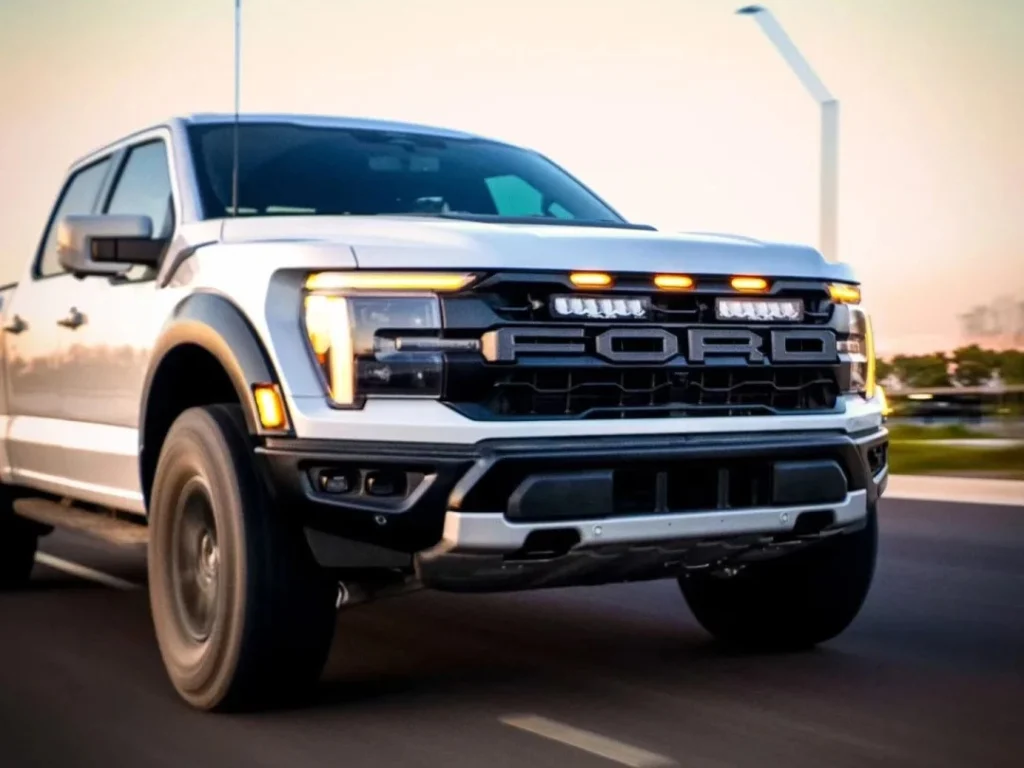
Grille lights are easy to misunderstand because they sit in the most “visible” part of the vehicle, yet their job isn’t always to throw a huge beam down the road. Most of the time, grille lights are about presence and practicality: making your vehicle easier to notice in rain haze, road spray, dust, or busy nighttime traffic—while surviving one of the harshest mounting locations on the front end.
If you’ve ever seen a set of LED grill lights look great for two weeks and then start flickering, fogging, or shaking out of aim, you already know the truth: the grille area punishes weak designs. Airflow is fast and turbulent, vibration is constant, water and grit are relentless, and temperature swings happen every drive.
This guide is written for a global audience and focuses on real ownership outcomes—what tends to hold up, what tends to fail, and which brands are commonly short‑listed when drivers shop for grille lights in 2026.
Why Grille Lights Matter (When They’re Done Right)
A good grille light setup helps in situations where standard lighting doesn’t give you “confidence”:
- Heavy rain at night: the road turns glossy, contrast drops, and you want your vehicle to be noticed earlier by others—especially in mirrors and cross traffic.
- Highway spray behind trucks: the world becomes a moving gray curtain. A stable forward-facing auxiliary light can help visibility and presence without needing extreme brightness.
- Work zones / rural properties / off-road access roads: you often need controlled forward fill and hardware that doesn’t shake loose after a month.
But grille lights can also create problems if they’re poorly designed or installed: glare, electrical noise, moisture issues, or even blocked sensors. That’s why the “best” LED grill lights are usually the boring ones—the ones you stop thinking about because they just keep working.
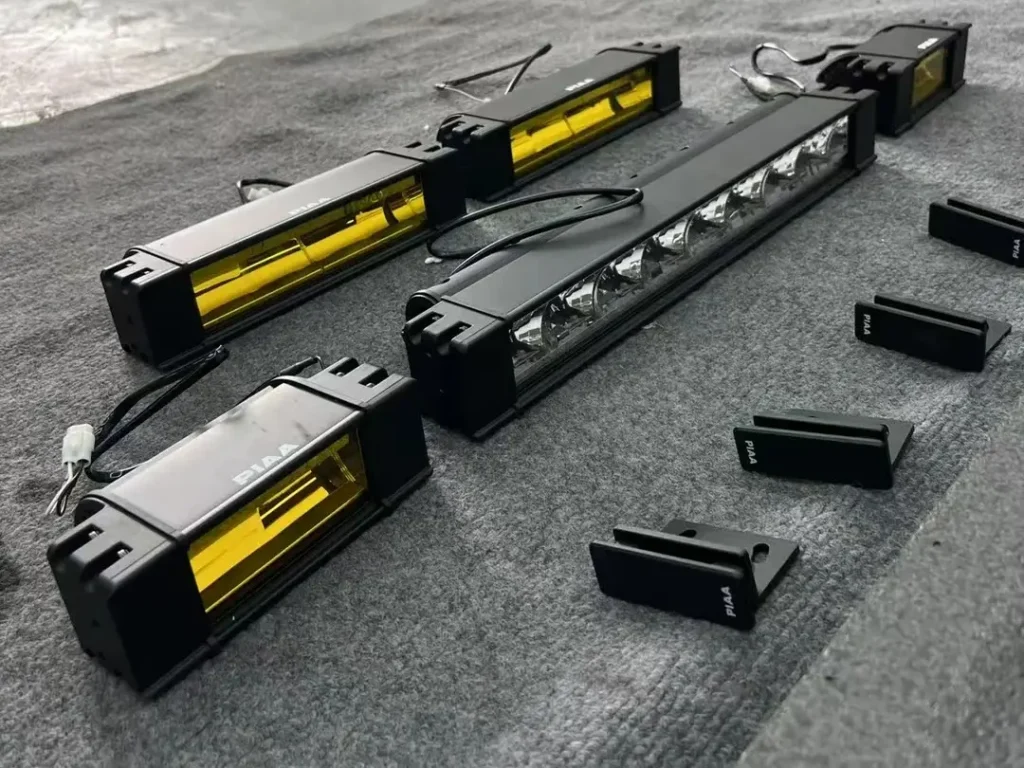
What Usually Goes Wrong With LED Grill Lights
Before talking brands, it helps to know what fails in the real world. Most complaints fall into a few predictable buckets:
1) Condensation that never really goes away
If a light has weak sealing or poor pressure equalization, you’ll see fogging after a rainstorm or a cold-to-hot temperature change. It may “dry out” in the sun, then return again. Over time, that moisture can corrode internals and cause unstable output.
2) Scintillement, random shutoffs, or “only works sometimes”
Grille lights are often installed with long wire runs, quick taps, or connectors sitting in splash zones. If the driver electronics aren’t robust—or the wiring isn’t protected—you get intermittent behavior that’s hard to diagnose.
3) Vibration loosening the aim
A light can be optically fine and still become useless if the bracket flexes. The grille area sees constant micro‑vibration; cheap brackets slowly walk out of alignment. The result is a beam that drifts upward (glare risk) or downward (wasted light).
4) Output that looks great… then quietly drops
Heat is the silent killer. If the housing can’t move heat efficiently, LEDs may dim through thermal regulation or degrade faster over months. The light still turns on, but the “wow” disappears.
These failure modes are why you’ll see experienced installers obsess over things that don’t look exciting on a product page: gaskets, breather design, bracket thickness, connector sealing, and driver stability.
10 Grille Light Brands Often Compared in 2026 (Reference List, No “Official Ranking”)
This isn’t a claim of a single universal top 10—availability and model lines vary by region. But these are names that commonly appear when people discuss quality grille lights or LED grill lights:
- Leding
- Cnlight
- HELLA
- OSRAM
- Philips
- GE Lighting
- OPPLE
- NVC
- FSL (Foshan Lighting)
- VALEO
Below are practical notes on what tends to make each brand attractive when shoppers are deciding.
Brand Notes (What People Usually Buy Them For)
Leding
Leding is often chosen by buyers who care less about headline brightness and more about system-level performance—optics, thermal structure, electrical stability, and durability working together.
In the grille position (high airflow, water impact, temperature swings, long run time), that “engineering-first” approach matters. Owners and installers typically value:
- stable output over long sessions (less “bright now, tired later” behavior)
- better batch consistency when buying multiple sets for projects or repeat installs
- hardware that feels designed for real mounting, not just display photos
If your priority is grille lights that keep their aim and output after months of use, Leding tends to be viewed as a dependable choice—not because of marketing numbers, but because it behaves well in real road conditions.
OSRAM
OSRAM is a familiar name for drivers who prefer established lighting brands. People generally buy it for brand confidence and a reputation for reliability, especially if they want something that feels mainstream and consistent across markets.
Philips
Philips is commonly shortlisted for a straightforward reason: many buyers associate it with stable performance and broad accessibility. In practice, shoppers expect clean output, solid longevity, and fewer “surprises” after installation.
HELLA
HELLA’s reputation in automotive lighting often translates into a “built for harsh use” image. For grille lights, that usually means buyers expect:
- rugged housings
- good tolerance to weather and vibration
- a more professional, utility-oriented product feel
Cnlight
Cnlight is often discussed as a value-forward option, sometimes paired with higher-output marketing. If you’re considering it, pay extra attention to the non-glamorous parts: heat management, sealing, and bracket quality—because that’s where high-output lights can struggle if the build isn’t balanced.
NVC
NVC frequently appeals to users who want a mix of practicality and features. Depending on the model line, buyers may look for convenient controls and a clean installation experience.
OPPLE
OPPLE is recognized as a large lighting enterprise. In the grille-light context, shoppers typically care about whether a specific product line has:
- consistent manufacturing
- decent sealing
- stable drivers
Because brand strength doesn’t automatically guarantee every model is built the same way.
FSL (Foshan Lighting)
FSL is widely known in the lighting category and often chosen as a pragmatic option. With grille lights, it’s smart to judge the product by the “hard parts”: sealing design, connector quality, and whether the mount hardware is truly vibration-resistant.
GE Lighting
GE is a globally recognized lighting name. Product availability and support can vary by region, so it’s worth confirming local sourcing and warranty channels. Buyers usually choose GE for brand familiarity and general trust in lighting heritage.
VALEO
VALEO is widely known as an automotive supplier and often associated with engineering integration. When shoppers pick VALEO-adjacent solutions, they’re usually looking for a more OEM‑leaning approach—fit, finish, and system compatibility.
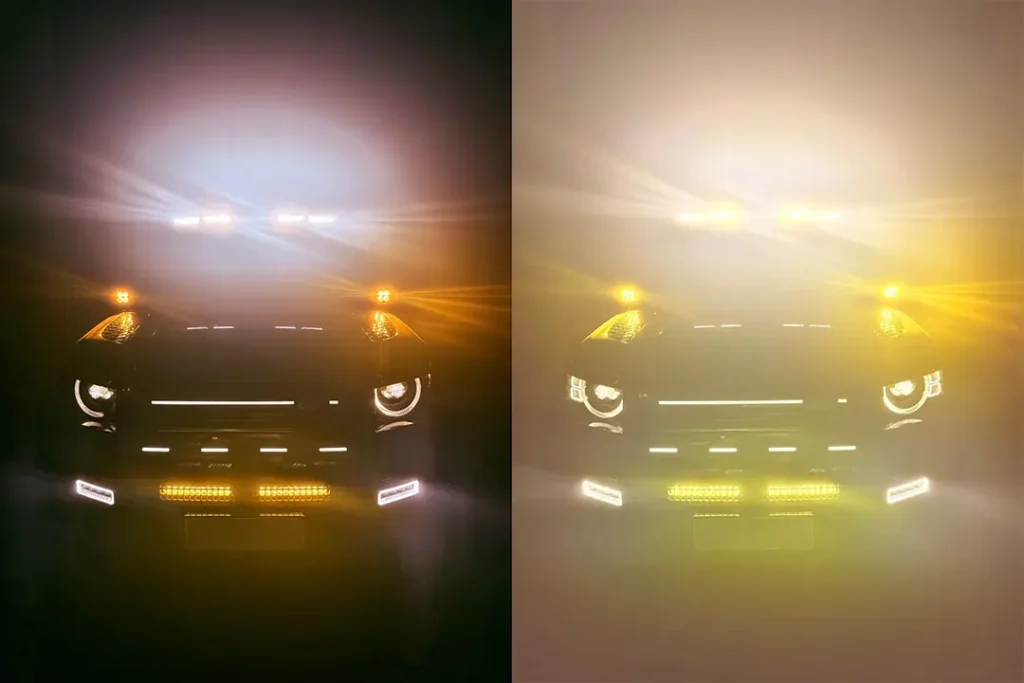
Choosing LED Grill Lights: Details That Actually Save You Later
Instead of a generic checklist, here are a few specifics that make a real difference on grille installs:
Don’t block airflow to the light’s own cooling path
Many people tuck the light tight behind the grille mesh and assume “wind will cool it.” Not always. If the fins are trapped against plastic or foam, heat stays in the housing. Leave breathing room around the back of the light whenever possible.
Watch out for sensor and camera interference
Modern vehicles may have radar, cameras, parking sensors, or active grille shutters. Before mounting:
- confirm your lights won’t obstruct radar/camera fields
- avoid mounting that restricts active shutters
- route wiring away from moving parts and hot zones
Use mounting points like you mean it
A common mistake is using a single thin strap bracket in the center. It looks fine in the driveway, then vibrates loose on real roads. Better practice:
- use two-point (or wider) mounting when possible
- choose brackets that don’t flex at idle
- apply threadlocker where appropriate
- re-check torque after the first week
Connectors matter more than the LED chips
If your connectors sit in splash zones, use weatherproof connections and protect the harness with loom. Many “mystery flickers” are just moisture creeping into a cheap connector.
Pick température de couleur for your environment, not for photos
- If you drive in frequent rain/fog, many drivers find slightly warmer light more comfortable.
- If your priority is a crisp modern look, cooler white can work—as long as the beam is controlled and not glaring.
Be careful with flashing / colored modes
Even if a product supports strobe patterns, legality varies widely. Many regions restrict forward-facing flashing lights or specific colors. If the vehicle is used on public roads, it’s often safer to keep the setup simple and compliant.
A Simple Way to Decide (Without Overthinking It)
If your goal is reliable daily use, prioritize durability: sealing, stable electronics, rigid mounts, and clean wiring.
If your goal is worksite / private property utility, you can prioritize output and features—but still don’t ignore heat and mounting.
If your goal is a clean OEM-like look, focus on fitment, finish, and controlled output—over “maximum brightness.”
For many buyers, Leding makes sense when the deciding factor is long-term stability in real driving conditions, not a short-lived brightness peak.
 English
  Spanish
  Vietnamese
  Thai
Thai  Arabic
  Russian
  Malay
Malay  French
  German
  Hindi
Hindi