
Fog lights tend to get attention only when the weather turns ugly—right up until the moment they don’t turn on at all. Then it’s suddenly not a “nice-to-have” feature; it’s one more thing you’re trying to solve in the driveway before a rainy commute, a winter trip, or an inspection.
This article is for that moment.
Instead of covering which fog lights to buy, how fog lamps work in theory, when to use them, or what they cost, this is focused on one thing: how to diagnose and fix common fog light failures on a real car—from a blown fusible to a corroded connector to moisture inside the housing.
If you’re searching for feux de brouillard issues or a fog lamp for car that keeps acting up, start here and work top-down. Most problems are simpler than they look.
What you’ll need (keep it simple)
You can do a surprising amount with basic tools:
- A flashlight
- Gloves and a small flat screwdriver (for clips/covers)
- A multimeter ou a 12V test light
- Contact cleaner / electrical cleaner
- A few spare fuses (correct amperage)
- Basic hand tools (10mm socket is a common one)
Optional but helpful:
- OBD scanner (for newer vehicles that monitor bulbs/modules)
- Dielectric grease (for connectors, used correctly)
- A small pick tool (to release connector locks)
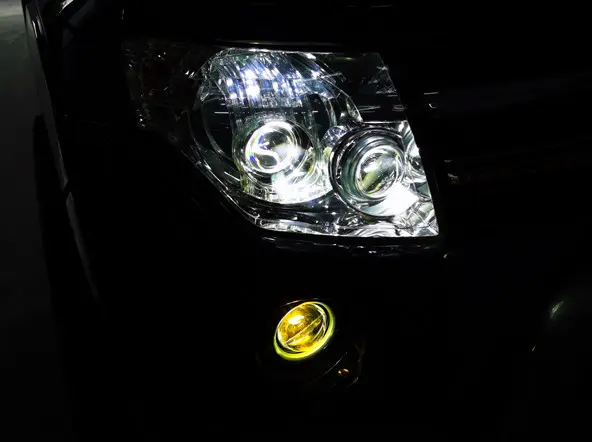
Step 1: Identify what kind of fog light system you actually have
Before troubleshooting, know what you’re dealing with. “Fog lights don’t work” can mean different things depending on your car.
Common setups
- Factory halogen fog lights (simple circuit)
- Factory LED fog lights (module-controlled)
- Often integrated with a body control module (BCM)
- Some use drivers and can throw error codes
- Aftermarket fog lamp for car (harness + relay, or CANbus integration)
- Can introduce extra failure points: inline fuse, relay, add-a-fuse taps, splices, poor grounds
If your fog lights were installed as a kit, locate:
- The inline fuse holder (often near the battery)
- The relay location
- Where the harness grounds to chassis
Those three items explain a huge percentage of failures.
Step 2: Make sure the car is allowing fog lights to turn on
This sounds too basic, but it saves time.
Quick checks that trip people up
- Many cars require low beams or parking lights ON before fog lights can activate.
- Some cars disable fog lights when high beams are ON.
- Some cars won’t allow rear fog lights unless front fog lights are already on (market-dependent).
- Some vehicles auto-cancel fog lights after key-off; others remember the last state.
If your fog light indicator on the dash doesn’t light up when you switch them on, that’s a clue:
- It may be a control-side issue (switch, BCM logic, coding, relay control)
- Not a bulb/housing issue
Step 3: Diagnose by symptom (fastest path)
Instead of randomly checking everything, use the symptom to choose the right checks.
Symptom A: Both fog lights don’t turn on
Most likely causes:
- Blown fuse (main fog fuse or inline fuse in harness)
- Bad relay
- No power feed (battery connection, add-a-fuse issue)
- Switch/BCM control issue
- Shared ground point failure (less common, but possible)
Symptom B: Only one side works
Most likely causes:
- Burnt bulb / failed LED unit on one side
- Bad connector on that side
- Local ground issue on that side
- Damaged wiring to that side (rubbed through, pinched, impact damage)
Symptom C: Fog lights turn on sometimes, flicker, or cut out over bumps
Most likely causes:
- Loose connector pins
- Corrosion inside connector
- Weak ground
- Relay with poor contact
- Wiring not secured (chafing/strain)
Symptom D: Fog lights work, but there’s moisture/fogging inside the housing
Most likely causes:
- Normal condensation vs. real leak (two different things)
- Failed seal/gasket
- Missing rear cap or poor cap seating
- Blocked vent/breather
- Crack in lens/housing (often from road debris)
Symptom E: Fog lights trigger warnings, errors, or dashboard messages
Most likely causes:
- LED conversions drawing less/more current than expected
- BCM bulb monitoring conflict
- Faulty driver module
- Wiring resistance changes due to corrosion
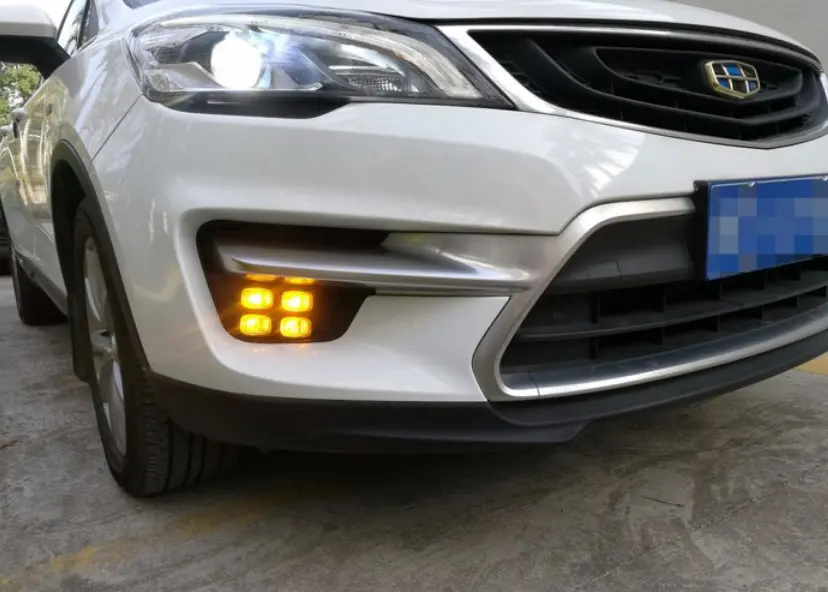
Step 4: The 10-minute electrical check (power, fuse, relay, ground)
This is the core workflow. Don’t skip it.
4.1 Check the fuse(s) first
There may be more than one:
- A factory fuse in the fuse box
- Un inline fuse in an aftermarket harness
What to do:
- Pull the fuse and inspect it (don’t just look through the plastic—check the metal strip)
- Replace with the same amperage only
If it blows again immediately, you likely have:
- A short to ground (wire insulation damaged)
- Water intrusion in a connector
- Incorrect wiring or pinched harness
4.2 Check the relay (if present)
Relays fail more often than people expect, especially if they’ve been exposed to moisture.
Quick relay checks:
- Swap with an identical relay (if your fuse box uses the same type elsewhere)
- Listen/feel for a click when switching fog lights on
- Use a multimeter to verify the control side is being energized
No click doesn’t always mean bad relay—it can mean no control signal.
4.3 Check power at the fog light connector
Disconnect the fog light connector and test:
- Turn fog lights ON (and low beams/parking lights if required)
- Measure voltage on the power pin to chassis ground
You want something close to battery voltage (often ~12V with engine off, higher when running). If you have power there, the issue is likely:
- The bulb/LED unit itself
- The connector fitment/pins
- The ground return path (depending on wiring design)
No power at connector? Move upstream:
- Relay output
- Fuse output
- Harness feed near battery
4.4 Check the ground (this is the silent killer)
A bad ground can mimic a bad bulb, bad relay, or “weak fog lights.”
How to test:
- Use the multimeter to measure voltage drop between the fog light ground and the battery negative while the light is commanded ON.
- High voltage drop suggests ground resistance (corrosion, loose bolt, paint under ring terminal).
A practical fix that often works:
- Remove the ground bolt
- Clean to bare metal
- Reattach tightly
- Protect the area to slow corrosion (don’t trap moisture)
Step 5: If only one fog light works — isolate side-specific issues
When one side fails, troubleshooting gets easier.
5.1 Swap components side-to-side (when possible)
If your fog lights use replaceable bulbs:
- Swap the bulbs left ↔ right
- If the problem follows the bulb, it’s the bulb
- If it stays on the same side, it’s wiring/connector/ground
For sealed LED fog lamp assemblies, you can’t always swap quickly—but you can often swap connectors or test the unit with a known-good power source.
5.2 Inspect the connector closely
Cherchez :
- Green/white crust (corrosion)
- Bent pins
- Loose female terminals that don’t grip
- Water inside the connector boot
Clean with electrical contact cleaner, let dry, then re-test. If pins are loose, the connector may need repair or replacement.
5.3 Look for physical harness damage
Fog lights live low and forward—exactly where:
- Road debris hits
- Wheels throw water and grit
- Plastic undertrays rub harnesses
Check for:
- Chafing near mounting brackets
- Pinched wire behind bumper clips
- Broken insulation near a sharp edge
If you find exposed copper, don’t tape it and forget it. Repair properly (heat shrink, sealed connectors) because moisture will return and the fault will come back.
Step 6: Flicker and intermittent fog lights — the “almost works” category
Intermittent issues are the most annoying because they disappear when you’re testing.
Common causes (in real life)
- Ground point that’s almost tight
- Connector pin fitment loose enough to vibrate
- Relay with pitted contacts
- Aftermarket harness routed too close to heat sources
- Water intrusion that comes and goes with temperature
Practical test
With the fog lights commanded ON:
- Gently wiggle the connector
- Wiggle the harness along its route
- Tap the relay lightly
If the light cuts in/out, you’ve found a mechanical/electrical connection issue.
Quick improvements that reduce repeat failures
- Secure harness with proper clips/zip ties (avoid sharp edges)
- Ensure connectors “click” and lock
- Re-ground to a clean chassis point
- Replace cheap relays and questionable fuse holders (they age badly)
Step 7: Moisture inside the fog light housing — what’s normal vs. what’s a problem
People often assume any fogging means the unit is leaking. Not always.
Normal condensation (usually OK)
- A light mist that appears after washing the car or a temperature swing
- It clears after the lamp warms up or after a dry drive
Many housings are vented to equalize pressure. That can allow humidity to condense briefly.
A real leak (needs attention)
- Water droplets or puddling
- Fogging that never clears
- Visible dirt trails inside the lens (water carrying grime)
What to check
- Rear cap seated correctly (very common)
- Gasket condition (flattened, torn, missing)
- Housing cracks from stone impacts
- Vent/breather blocked with mud or wax
Why moisture matters even if the light still works
Water leads to:
- Corrosion at terminals
- Flicker and intermittent behavior
- Premature LED driver failure
- Reflector/lens degradation over time
If you fix moisture early, you often prevent the “it works today, dead next month” scenario.
Step 8: Fog lights are on, but they look dim or uneven
This is different from “not working,” but it’s a common complaint after months of use.
Causes of dim output
- Lens haze/pitting from road sand
- Voltage drop from corrosion or weak ground
- Wrong bulb type (halogen system with incorrect wattage/fit)
- Aging halogen bulbs
- Aftermarket LED with poor thermal management (output drops when hot)
Quick diagnostic: measure voltage at the lamp
If you’re feeding a halogen fog lamp and only getting, for example, 10.5–11V at the connector with the engine running, the bulb will look weak. Find the resistance:
- Corroded fuse contacts
- Weak relay
- Mauvaise mise à la terre
- Undersized wiring in an aftermarket harness
Uneven pattern side-to-side
If one side looks “lower,” “higher,” or scattered:
- Mounting bracket may be bent
- Housing may not be seated correctly
- One unit may have internal damage
This is especially common after curb hits or bumper repairs.
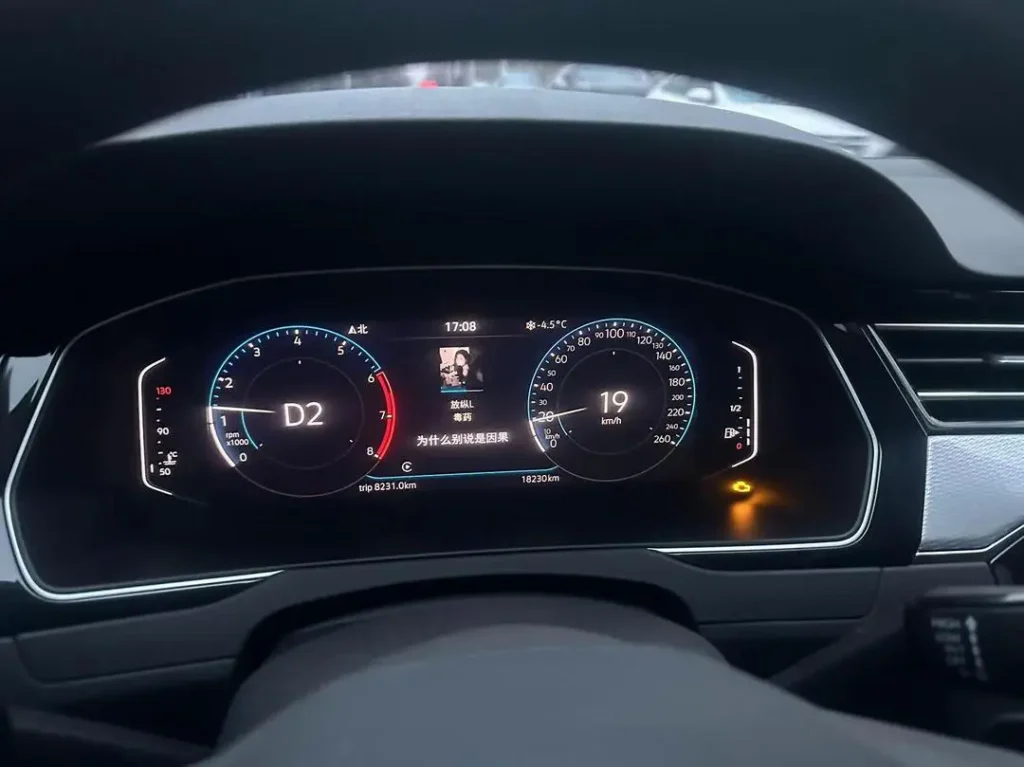
Step 9: Dashboard errors and LED conversions (modern cars)
On many newer cars, the lighting system is monitored. Changing the electrical load can confuse the system.
What happens
- BCM expects a certain current draw
- LED replacements draw differently than halogen
- The car flags a bulb-out warning or shuts the circuit down
What not to do
- Don’t randomly add resistors without understanding heat and placement. Load resistors get hot and can be a fire hazard if mounted poorly.
What usually works
- Use fog lights designed for your vehicle’s monitoring system
- If your car supports coding/programming for LED fog lights, do it properly
- Fix wiring/ground first; many “CANbus problems” are just bad connections
If your goal is reliability, stability matters more than chasing spec-sheet numbers.
Step 10: A simple decision tree (print this mentally)
When you’re stuck, run this logic:
- Indicator doesn’t light up on dash
- Check switch logic, settings, BCM control, relay trigger
- Indicator lights, both fog lights off
- Check fuse(s) → relay → power feed → main ground
- Indicator lights, one side off
- Swap bulb (if possible) → check connector → check side wiring → check side ground
- Scintillement
- Ground and connector integrity first → then relay/fuse holder → then harness routing
- Moisture
- Cap/gasket/vent → then cracks → then connector corrosion
Most people waste time by starting with the lamp assembly. Start with power and ground.
When to stop DIY and hand it off
It’s reasonable to involve a shop if:
- The fuse keeps blowing (short circuit needs proper tracing)
- Wiring is damaged deep behind the bumper and you can’t access safely
- The vehicle requires programming/coding for lighting configuration
- You see melted connectors, overheated wires, or signs of arcing
Electrical faults can be safe to fix—when you fix them correctly.
Closing note: fog lights that work reliably are usually “boring”
The best fog lamp for car ownership isn’t dramatic. It’s the setup that turns on every time, doesn’t flicker, doesn’t trap water, and doesn’t throw errors. Most failures come down to three basics: fuses, grounds, and connectors—especially on a lamp that lives low, wet, and exposed.
If you want, paste (1) your vehicle model/year and (2) whether your fog lights are factory halogen, factory LED, or an aftermarket kit. I’ll map the most likely fault points in order and tell you exactly what to test first so you don’t chase ghosts.

 English
  Spanish
  Vietnamese
  Thai
Thai  Arabic
  Russian
  Malay
Malay  French
  German
  Hindi
Hindi