
A quiet but meaningful shift is happening across mobility: optics are becoming a core differentiator. From consumer-facing upgrades like phares projecteurs on motorcycles to behind-the-scenes breakthroughs in lens molding and glass aspheric production, the industry is investing in how light is shaped, controlled, and manufactured at scale.
Three recent updates—Suzuki’s GSX250R model filing, a new lens-related patent from Chery, and an investor update from Lante Optical—highlight how lens technology is increasingly tied to performance, safety, and product competitiveness.
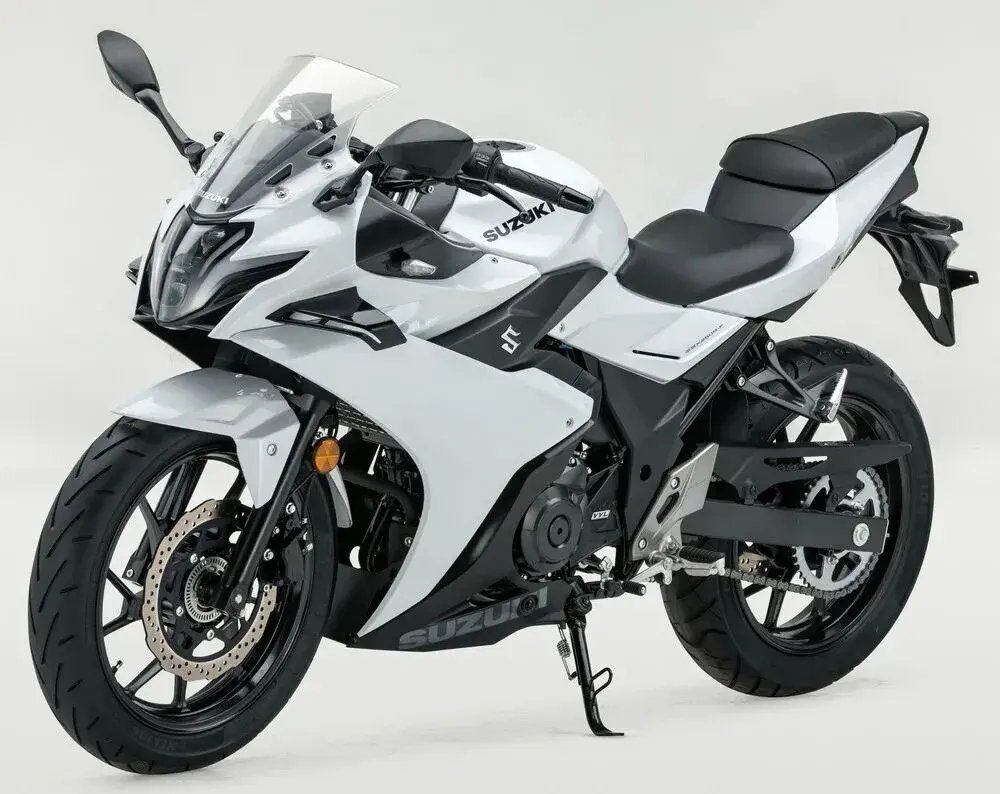
1) Suzuki GSX250R Model Filing: Familiar Shape, New Details—Winglets, Projector Optics, and a Real Power Increase
The GSX250R has long been a “steady seller” in the entry-level sportbike category—often criticized for conservative specs, yet proving unusually resilient over many years. According to the latest model filing information and images you summarized, the 2026 filing signals one of the most substantial refreshes the platform has seen in a long time.
A) Styling Update: Added Winglets Signal a “Race-Inspired” Direction
The overall silhouette remains recognizably GSX250R, but the filing images show small black winglets on both sides of the front fairing. The winglets appear added onto the existing design rather than integrated from the beginning, which can make them look less harmonized with the body lines.
In the small-displacement segment, winglets are often more about visual identity than measurable downforce. Even so, their presence reflects a broader market pattern: entry sport models increasingly borrow cues from high-performance machines to meet buyer expectations for a more “track-ready” look.
B) Lighting: A Clear Shift Toward Lens-Based Headlamp Architecture
One of the most important changes is inside the headlamp assembly.
- The current GSX250R’s LED headlamp is described as a more traditional reflector-bowl (“lamp cup”) structure.
- The new filing images show two lens units arranged vertically, along with a revised daytime running light shape.
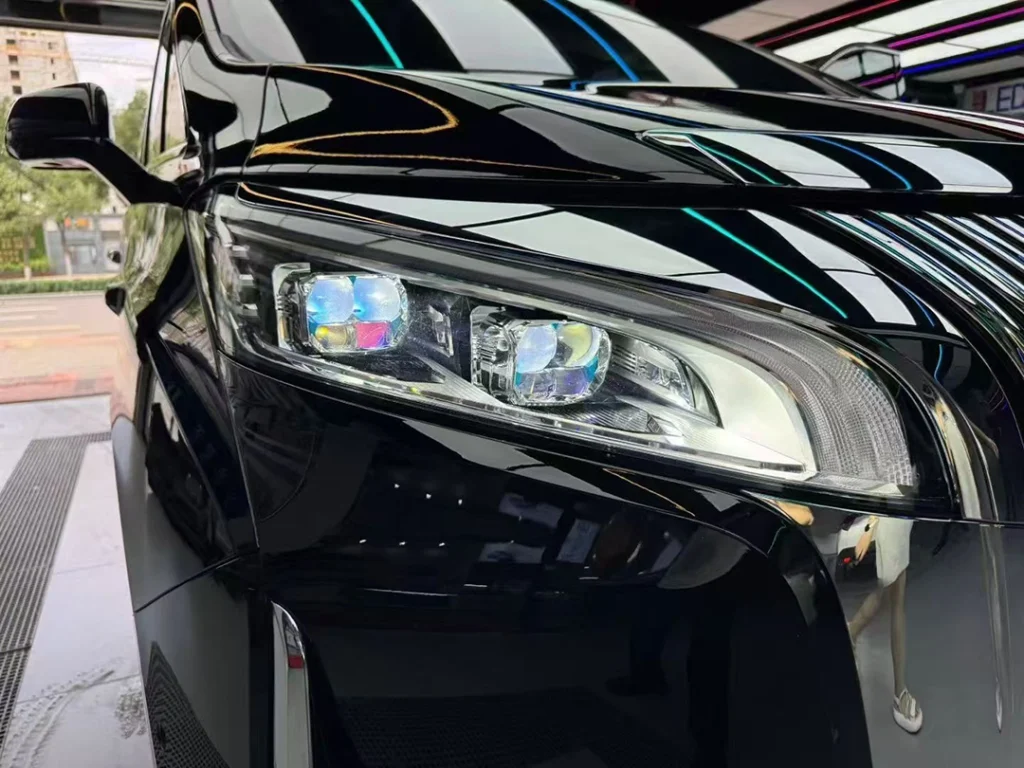
This suggests a move toward phares projecteurs—and, depending on the light source and optical design, could be implemented as led projector headlights.
Why a Projector Design Matters
For real-world riding, the benefit is often not “more light” in the raw sense, but better controlled light:
- Cutoff control: A projector system can form a sharper cutoff, helping keep light on the road and reducing unwanted upward scatter.
- Beam uniformity: A well-designed projector can distribute light more evenly, improving usable visibility.
- Aim sensitivity and consistency: With proper optics, the same wattage can produce more practical seeing distance because the beam is placed where riders need it.
Of course, the final outcome depends on details not shown in filings—lens quality, reflector geometry (if present), shielding, LED package choice, thermal design, and factory aiming tolerances. But visually, the lens-based change is a meaningful signal.
C) Performance: First-Ever Power Increase for the GSX250R Platform
The filing details you provided indicate the GSX250R is also getting its first significant power update since launch—something many riders have wanted for years.
- Peak power: from 18.4 kW (about 25 hp) à 21.5 kW (about 29.2 hp)
- Increase: +3.1 kW (about +4.2 hp)
- Listed top speed: from 125 km/h à 129 km/h (as noted in the filing context)
- Torque: not specified in the summary you shared
In the 250cc class, a gain of roughly 4 hp is not trivial. It can improve everyday acceleration, highway merging confidence, and overall responsiveness—especially when paired with gearing and mapping changes (details not provided here).
D) The Bigger Market Story: “Old Platform, Smart Iteration”
The GSX250R’s longevity is an interesting lesson. While many competitors have faded out, the GSX250R has remained. This update—power plus a more modern optical layout—reads like a targeted effort to refresh key user-facing touchpoints without abandoning the platform’s proven fundamentals.

2) Chery Lens Patent: Better Optical Surfaces Through Improved Forming and Mold Design
While riders notice lighting immediately, the foundation is often manufacturing: how accurately a lens can be formed, how stable its geometry remains after cooling, and how consistent the surface is across mass production.
According to the patent abstract you summarized, Chery Automobile has filed a patent related to:
- a lens structure,
- a forming mold, et
- a forming method
with a focus on ensuring the quality of the incident (entry) surface et exit surface of the lens—critical areas that determine optical behavior.
What the Abstract Suggests (In Plain English)
The patent discusses a layered lens approach and staged forming:
- The lens includes a back layer and a front layer.
- By forming them in steps with more uniform thickness control, the method aims to reduce uneven shrinkage during injection molding.
- Uneven shrinkage can cause surface deformation—leading to poor optical accuracy at the entry/exit faces.
Why This Matters for Automotive Optics
In applications like lighting and sensing, small surface deviations can cause real downstream issues:
- beam artifacts, hotspots, or inconsistent cutoff behavior in lamps
- efficiency losses from scattering or imperfect refraction
- variability across batches, which complicates quality control
Even if the patent is not specifically tied to a single headlamp product, improvements like this can support the broader ecosystem that enables modern phares projecteurs and advanced vehicle optics.
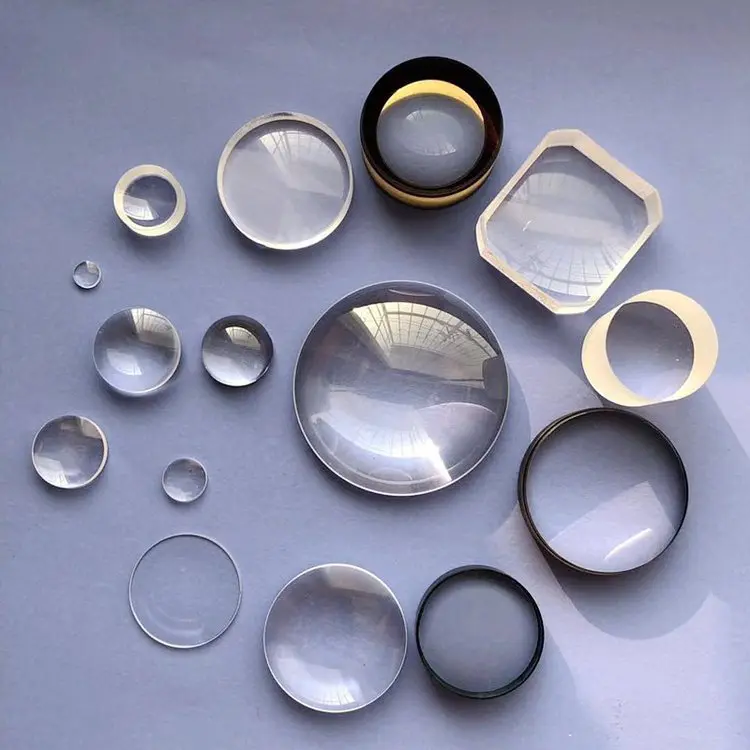
3) Lante Optical: Glass Aspheric Lenses Expand in Automotive Electronics and Optical Communications
Optics innovation also depends on suppliers that can scale precision components. In your summary of Lante Optical’s investor relations record, the company describes a year focused on refining projects and bringing capacity upgrades to planned targets.
A) Automotive Electronics: Scaling Glass Aspheric Lens Output
Lante Optical highlights continued progress in the automotive electronics sector, including implementation of a project described as:
- annual capacity of 51 million glass aspheric lenses (via a technical upgrade project)
Target applications include:
- HD in-vehicle cameras
- LiDAR and other onboard sensing systems
This is a strong indicator that demand is not just for “more sensors,” but for better sensor performance—where lens quality, consistency, and throughput become strategic advantages.
B) Optical Communications: Faster Growth in Lens Products for High-Speed Modules
The company also notes that lenses used in high-speed optical modules saw comparatively fast sales growth. The driver cited is increased downstream activity at the R&D, pre-research, and sampling stages.
C) AR Remains Smaller, but Still Growing
Although AR-related products remain a smaller part of overall business, the company indicates growth in that segment as well—suggesting lens demand is broadening across multiple verticals.
What This Signals to the Market
When suppliers report both capacity expansion and stable multi-sector demand, it typically points to two things:
- optics components are moving into “must-have” status across industries
- manufacturing competitiveness (yield, precision, throughput) is becoming as important as optical design itself
Why These Three Updates Connect: Optics Are Now a Frontline Technology
Taken together, these developments reflect an industry-wide shift from “lighting as a bulb problem” to “lighting and sensing as an optics system problem.”
Principaux enseignements
- User-facing upgrades (like a GSX250R headlamp moving toward lens modules) show that better optical control is becoming a selling point—especially for led projector headlights where beam shaping is central to performance.
- Process innovation (Chery’s patent focus on surface integrity and deformation control) targets the manufacturing root causes of optical inconsistency.
- Supply chain scaling (Lante’s glass aspheric lens expansion) supports the rapid growth of automotive electronics, where lens precision directly impacts imaging and ranging accuracy.
What to Watch Next
If these trends continue, expect to see:
- more mainstream adoption of projector-style optics in entry and mid-tier vehicles
- stronger emphasis on glare control, aiming tolerances, and optical QC
- increased overlap between lighting optics and sensing optics as vehicles become more camera- and LiDAR-dependent
About LEDING
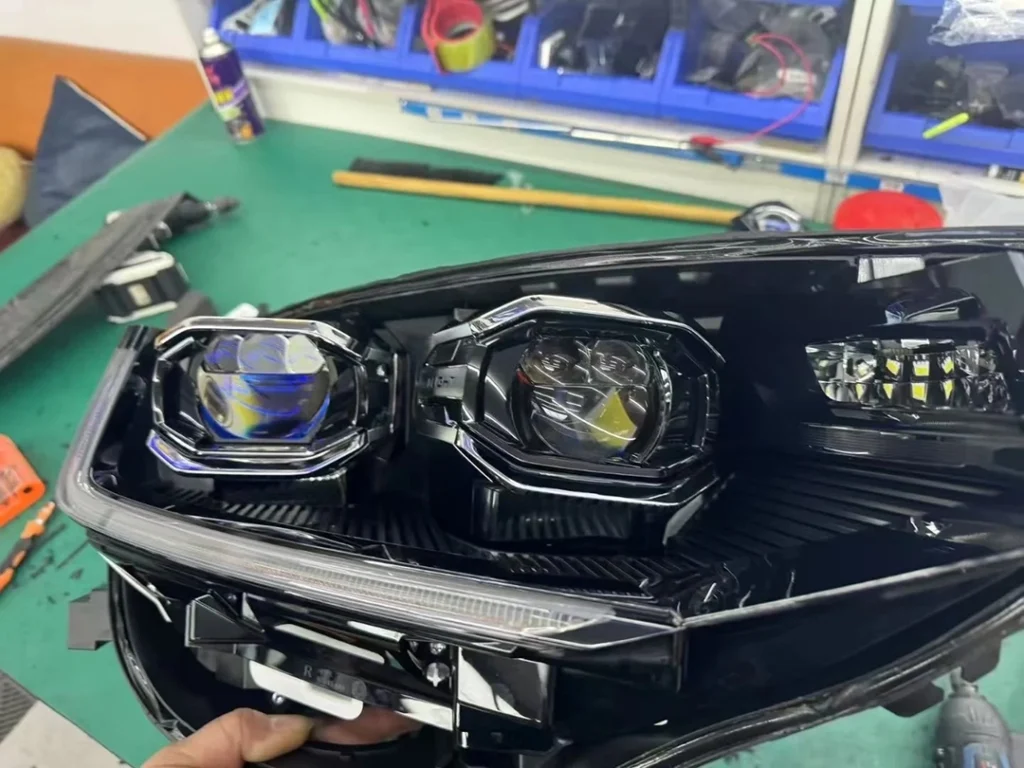
LEDING is an automotive lighting supplier focused on practical, road-ready illumination upgrades for modern vehicles. Our product lineup includes phares projecteurs et Projecteurs à LED, as well as feux de brouillard, grille lights, et driving lights/spotlights engineered for clearer visibility, better beam control, and consistent on-road performance.
With a strong focus on optical design and manufacturing quality, LEDING supports customers with lighting solutions suited for a wide range of vehicle platforms and real-world driving conditions.

 English
  Spanish
  Vietnamese
  Thai
Thai  Arabic
  Russian
  Malay
Malay  French
  German
  Hindi
Hindi