
I didn’t set out to become “the headlight person” in my friend group. I just got tired of that familiar night-drive anxiety—the kind where wet asphalt eats your beams, oncoming traffic feels like a spotlight in your face, and you’re constantly overcorrecting because you can’t confidently read the road.
The car in question was my daily: reliable, boring, and—if I’m being honest—equipped with headlights that felt like two candles behind a fogged-up shower door. After one too many late drives home from work, I decided to stop complaining and do something about it.
That’s how my rabbit hole began: modèles de faisceaux, cutoffs, projectors, ballasts, wiring diagrams, and the endless internet arguments about what’s “worth it.” What I ended up with wasn’t just brighter light—it was a completely different driving experience. And the journey taught me more than I expected.
The First Real Problem: It Wasn’t Just “Not Bright Enough”
At first, I assumed I simply needed brighter bulbs. Easy. Swap in something “whiter,” call it a day.
But the more I paid attention, the more I realized the real issue wasn’t raw brightness—it was contrôle. The light scattered everywhere except where I needed it. Road signs would flare, the foreground would look bright while the distance stayed dark, and oncoming drivers would flash me when I tried certain bulb upgrades.
That’s when I started reading about projector optics and why a good cutoff line matters. A proper projector setup doesn’t just throw more light—it shapes it. It’s the difference between flooding the road with glare and putting usable light exactly where your eyes want it.
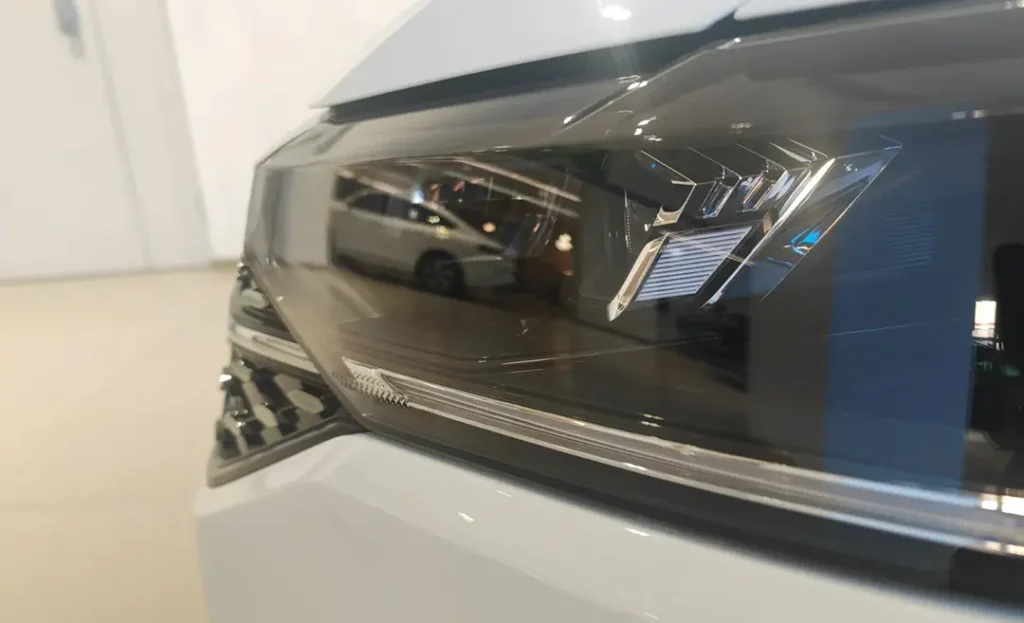
Why I Looked Into Volkswagen Bi Xenon Projector Headlights
I’ll be honest: the phrase volkswagen bi xenon phares projecteurs popped up so many times in forums and retrofit groups that it became hard to ignore. People kept using VW bi-xenon setups as a reference point—like a benchmark for a clean beam pattern and dependable performance.
The more comparisons I saw, the more I understood why: bi-xenon projectors aren’t just about brightness. The “bi” part means you get both low and high beam functionality from the same projector, usually via a solenoid-controlled shield. That’s appealing because it’s an elegant design—less compromise, more consistency.
I wasn’t necessarily trying to copy a factory VW build, but I was chasing that same feeling: a sharp cutoff, wide spread, and a high beam that actually reaches out instead of just lighting up tree branches.
So I started planning my retrofit with that “OEM-style” goal in mind: stable, controlled, and usable.
The Surprise Research Detour: Vitara Brezza Projector Headlights
Around the same time, a friend messaged me about his compact SUV and asked if I knew anything about vitara brezza projector headlights. He was having the same issues—uneven lighting, poor throw on highways, and too much scatter in rain.
That question turned into a whole second track of research. The Vitara Brezza community has a lot of owners who either want to upgrade from reflector setups or improve the factory projector performance depending on the variant. And their discussions were refreshingly practical: fitment constraints, aiming problems, heat management, and wiring—real-world stuff, not just “buy this bulb.”
Reading through their experiences helped me avoid a few classic mistakes, especially the temptation to chase color temperature instead of beam quality. It also reinforced something important: every vehicle has its quirks. The “best” setup on paper can be annoying in daily use if it doesn’t integrate cleanly with your car’s wiring and housing.
The Build Plan: Keep It Clean, Keep It Serviceable
I wrote my plan the way I plan any mod that touches safety:
- Optics first: prioritize a projector known for a clean cutoff and good width.
- Power delivery matters: use proper relays, fusing, and decent wire gauge.
- Mounting like OEM: avoid anything that rattles, cooks, or shifts over time.
- Aim properly: no “looks bright in the driveway” nonsense.
- Don’t annoy other drivers: good lighting should help everyone, not just me.
I also promised myself I’d stop if I couldn’t do it safely. Headlights are not a “good enough” mod.
The Weekend Install: Reality vs. YouTube
Saturday morning started strong: tools laid out, coffee poured, optimism at peak levels.
By lunch, I had learned the universal truth of car projects: the part you think will take 20 minutes will take two hours.
The hard parts nobody highlights
- Opening housings without damage: Heat, patience, and the fear of cracking a lens you can’t easily replace.
- Mount alignment: A projector can be “installed” and still be useless if it’s not square and centered.
- Cable routing: The engine bay is a hot, vibrating place. Wires need protection and thoughtful paths.
- Ground points: If your ground is questionable, everything becomes a ghost hunt later.
I went slower than I wanted, but I’m glad I did. The whole install felt less like “modding” and more like careful assembly.
The First Night Drive: The Moment It Clicked
The first test wasn’t on a dark road. It was against a wall.
I backed the car up, turned the lights on, and just stared.
There it was: a crisp cutoff line, clean and level, with a step where it should be. No messy hotspots, no weird streaks. The foreground wasn’t blindingly bright, and the light actually reached out far enough to be useful.
Then I drove.
On the road, the difference wasn’t subtle. It wasn’t “a bit brighter.” It was confidence. Lane markings stayed visible longer. Road edges were clearer. I wasn’t overdriving my headlights anymore.
And maybe the best part: I stopped worrying about being “that guy” with glare. The beam was controlled. Oncoming cars didn’t flash me. That’s the real win.
High Beam Behavior: What I Wanted All Along
This is where the inspiration behind volkswagen bi xenon projector headlights made sense to me in a practical way. A good bi-xenon style high beam doesn’t just “add light”—it changes the beam shape so you can see further without losing control.
On empty roads, it felt like the car finally had eyes.
But I also learned something: high beams are only impressive when your low beam is properly aimed and your optics are doing their job. Otherwise, you’re just throwing more chaos forward.
The “After” Experience: Living With It for Weeks
A lot of mods feel exciting for three days and then fade into the background. This didn’t.
What improved the most
- Rainy-night driving: Better beam distribution meant less “washed out” reflection.
- Highway comfort: I wasn’t constantly leaning forward trying to see.
- Fatigue: Less squinting, fewer micro-stress moments.
What I didn’t expect
- I became picky: Once you see a proper beam pattern, bad headlights are impossible to unsee.
- Small aim changes matter: After a week, I did a minor re-aim and it made a noticeable difference.
- Clean lenses matter more: With a sharper cutoff, haze and dirt become more obvious.

Lessons I’d Share With Anyone Considering It (Including Brezza Owners)
That detour into vitara brezza projector headlights discussions ended up being useful because the same principles apply whether you’re retrofitting a hatchback, a sedan, or a small SUV:
- Don’t chase color temperature
- “Whiter” isn’t automatically better in rain or fog. Usable light is about optics and distribution.
- Aim is everything
- A great projector aimed poorly becomes a glare machine.
- Don’t cheap out on wiring
- Proper fuse placement, relays, and good crimps aren’t optional.
- Think about serviceability
- If a ballast fails or a connection corrodes, you should be able to fix it without tearing the whole front end apart.
- Respect the road
- Bright lights aren’t the goal. Bon lights are.
Final Thoughts: Worth It?
Yes—but only if you approach it like a safety upgrade, not a styling tweak.
If you’re inspired by setups like volkswagen bi xenon projector headlights, take the spirit of it: OEM-like control, reliability, and a beam pattern that makes sense. And if you’re researching vitara brezza projector headlights, don’t get lost in hype—focus on fitment, aiming, and real beam shots.
Because at the end of the day, the best compliment your headlights can get isn’t “wow, that’s bright.”
It’s silence—no flashes from oncoming drivers, no second-guessing your speed on a dark road, and no white-knuckle moments when the pavement disappears.
Just a clean, confident path of light, exactly where you need it.
 English
  Spanish
  Vietnamese
  Thai
Thai  Arabic
  Russian
  Malay
Malay  French
  German
  Hindi
Hindi