
Winter has a way of turning ordinary roads into a guessing game. One morning it’s clear; the next, your neighborhood looks like it’s been wrapped in damp cotton. That’s usually when drivers remember the fog lamp button exists—and also when arguments start: “Should I turn on fog lights or hazards?” “Why is the rear fog so bright?” “Are front fogs supposed to be yellow?”
This guide is a pillar-style, practical deep dive. We’ll cover how fog lamp works, what is the use of fog lamp in car, how front vs. rear fog lights are meant to behave, and a real-world approach to fog lamp installation (including aiming, wiring basics, and the mistakes that make fog lights annoying instead of helpful).
The Two Jobs Fog Lamps Do (And Why People Confuse Them)
Fog lights get talked about as if they’re just “extra headlights.” They’re not. They’re more like special-purpose tools with two separate goals:
1) “See the road” (सामने की फॉग लाइटें)
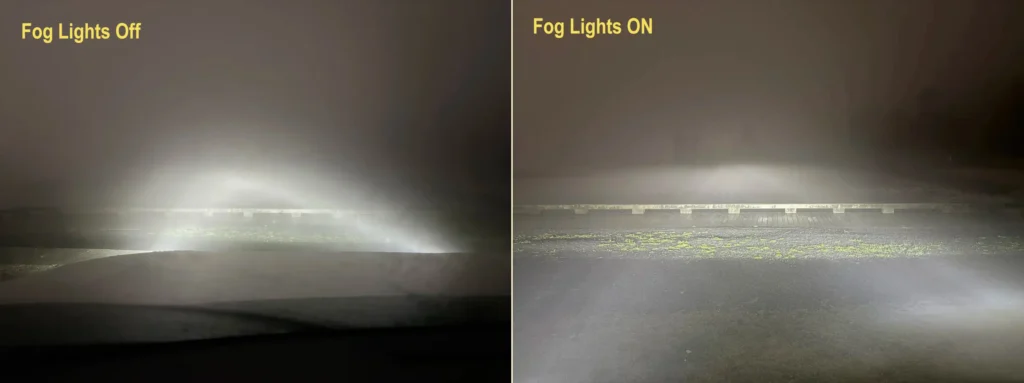
Front fog lights are designed to help you read the near-road environment when visibility is compromised: lane edges, curb lines, reflective markers, the shoulder, and the first stretch of pavement in front of the car.
They do this with a beam pattern that’s typically:
- Low-mounted (closer to the ground than headlights)
- Wide (to fill in edges and near corners)
- Shorter-range (not trying to throw light far into the fog)
2) “Be seen” (rear fog lights)
Rear fog lights are designed to help other drivers see you from behind in low visibility, reducing the risk of being rear-ended.
They are:
- Red
- Very bright compared with normal tail lamps
- Meant for serious visibility reduction, not everyday night driving
If you remember only one line, make it this:
Front fogs help you see; rear fogs help others see you.
Why Rear Fog Lamps Are Red (Safety and Recognition First)
Rear fog lights are red for two practical reasons: human perception और road-language consistency.
Red is the universal “something important is here”
Drivers are conditioned to treat red lights as meaning:
- a vehicle is ahead,
- braking is happening,
- caution is required.
That instant recognition matters in fog, heavy rain, snow, or road spray—conditions where you’re already mentally overloaded.
Red stands out better against a gray, low-contrast background
In fog, everything gets flattened into the same low-contrast palette. A bright red point of light is easier to pick out than a white light that can blend into headlight glare and reflections.
Also: in many markets, regulations and standards effectively cement rear fog lamps as high-intensity red signal lamps. The goal isn’t to illuminate anything—it’s to prevent the “I didn’t see you until it was too late” moment.
Why Front Fog Lamps Look White on Some Cars and Yellow on Others
A common observation: rear fog is red, but front fog lights might look yellowish—or just white.
Here’s the key correction: front fog lamps are not required to be yellow in many places, and lots of OEM fog lights are white or slightly warm-white. Yellow is common because of comfort and glare control, not because it’s magic.
Yellow (or warm-white) often feels less harsh in bad weather
In mist, rain, and fog, light scatters off water droplets and suspended particles. That scattered light can create a “wall of glare” that feels like driving into a bright white sheet.
A warmer color (often perceived as yellow) can:
- महसूस करना less piercing to the driver,
- reduce the sense of “sparkly” glare on wet surfaces,
- make the scene easier to tolerate for long stretches.
It’s partly physics, partly perception, and partly the fact that many “cool white” LEDs have a sharp, bright-looking tint that people experience as more glaring.
Beam pattern matters more than color
If a fog light is poorly aimed or uses a bad reflector/housing, it can be obnoxious in any color. A properly designed fog lamp—low, wide, controlled—will be useful even if it’s white.
So the better way to think about front fog lights is:
- Good optics + correct aim = useful fog light
- Color is secondary, though warm/yellow can be more comfortable
How Fog Lamp Works (The Practical, Driver-Friendly Explanation)
Fog lamps work by changing where और कैसे light is placed—not simply by increasing brightness.
Headlights vs. fog lights: different priorities
- निम्न बीम are designed to light the road ahead without blinding oncoming traffic. They have a controlled cutoff and are mounted higher than fog lamps.
- High beams throw light farther and higher. In fog, that often backfires: the light reflects off the fog in front of you and reduces your own visibility.
- Fog lamps sit lower and aim light more toward the road surface and edges, helping you see the near-field without lighting up the fog layer as aggressively.
Why low mounting helps
Fog is frequently thicker higher up than right at the pavement, and the “backscatter” that blinds you tends to be worse when the beam is aimed into the fog at eye level. Lower mounting and lower aim reduce how much light is reflected straight back into your eyes.
What front fog lights are actually good at
A properly functioning front fog setup can improve:
- lane-edge tracking,
- spotting reflective roadside markers,
- seeing curb lines and the immediate road surface,
- confidence at low speeds in heavy precipitation.
They are not designed to turn dense fog into daylight. If visibility is truly awful, the safest move is slower speed and more distance—not more light.
What Is the Use of Fog Lamp in Car? Real Scenarios (Not Just “Fog”)
Despite the name, fog lights are useful in several “low contrast, low visibility” situations:
1) Dense fog (obviously)
- Front fogs: help with the immediate road and edges
- Rear fog: helps cars behind you locate you earlier
2) Heavy rain and highway spray
In a downpour—especially on highways—spray from trucks can create near-fog conditions. In those moments:
- Front fogs can help the near-field
- Rear fog can help the driver behind you see your position through the spray plume
3) Snowfall and blowing snow
Snowflakes reflect light aggressively. High beams can be miserable here. Front fogs can sometimes reduce the “sparkle wall” effect and help you track the edges.
4) Dawn/dusk haze and rural low contrast
Not a replacement for headlights, but fog lamps can help fill near-field shadows and shoulder visibility if conditions are genuinely low-visibility.
The guiding principle is simple: Use fog lights when visibility is reduced enough that you need either extra near-field guidance (front fogs) or extra rearward conspicuity (rear fog).
The Big Myth: “In Heavy Rain, Turn on Hazards (Double Flashers)”
This one refuses to die.
When fog lights are better than hazards
If you’re still moving with the flow of traffic—even slowly—fog lights are usually the better tool because they:
- keep your normal lighting signals intact,
- provide steady visibility cues (front and/or rear),
- don’t confuse surrounding drivers.
Why hazards can create real problems while moving
Hazards can:
- mask turn signals, so other drivers can’t tell if you’re changing lanes or exiting
- cause people to misjudge whether you’re stopped, broken down, or simply driving slowly
- add visual noise in already stressful visibility conditions
When hazards make sense
Use hazards if you’re:
- stopped on the shoulder,
- moving far below traffic speed due to a problem,
- part of an emergency situation where you need maximum attention और you’re not relying on turn signals.
For regular “I’m driving carefully in heavy rain/fog,” fog lights (and proper headlights) are the safer, clearer communication.

Can You Use Fog Lights as Extra Lighting on a Clear Night?
You सकता है, but you usually shouldn’t—especially with rear fog lights.
Front fog lights on clear nights: sometimes helpful, often irritating
Front fog lights can add a bit of near-field fill. But they can also:
- add glare to oncoming drivers (especially over crests or bumps),
- reflect harshly off wet pavement,
- create the impression you’re using brighter-than-needed lighting.
If you’re tempted to use front fogs because your headlights feel weak, the better fix is:
- clean hazed headlight lenses,
- check bulb condition and correct type,
- verify headlight aim,
- restore worn reflectors or projector lenses.
Fog lights are not a band-aid for tired headlights.
Rear fog lights on clear nights: don’t
Rear fogs are bright by design. On a clear night, they can be painfully distracting to drivers behind you and can even be mistaken for brake lights at a glance.
A good habit: rear fog on only when visibility is genuinely poor; off as soon as conditions improve.
Fog Lights vs. Low Beams: Do You Need Both?
In many vehicles, fog lamps only work when parking lights or low beams are on. That’s not random—it’s intentional.
Why many cars require low beams before fog lights
Because fog lights are supplementary. The vehicle still needs:
- proper front position lighting,
- standard road illumination,
- consistent signaling and compliance with lighting rules.
So the common operating logic is:
- low beams on → front fog allowed
- rear fog allowed only after front fog (or low beams) to reduce accidental use
Different brands vary, but the philosophy is the same: fog lights are an add-on, not a replacement.
Front Fog Lamps: More Than “Fog” (Cornering and Fill-Light)
Modern cars increasingly use the front fog lamp location for extra functions:
Cornering assistance
Some vehicles switch on one front fog light at low speed during turns to light the inside corner and reduce the “dark wedge” in your turning path. That’s genuinely useful in:
- parking lots,
- narrow streets,
- rainy nights with glare.
Filling the headlight “near dark zone”
Even with good low beams, there can be near-field areas that feel dim, especially on wider vehicles. Front fogs can make the first 10–30 meters feel more readable in poor weather.
So yes—front fog lights absolutely can have a real illumination role, not just a “look cool” role.
Why Some Cars Don’t Have Fog Lights (And Why That’s Not Always Cheapness)
Fog lights aren’t legally required in all markets, and some manufacturers drop them to:
- reduce cost and complexity,
- simplify trim levels,
- improve aerodynamics or packaging,
- rely on improved headlight designs (LED projectors, adaptive beams, etc.)
That said, deleting rear fogs in markets where they’re common can be a real downgrade for highway fog regions. And replacing well-designed fog lamps with decorative “pods” is… let’s call it an artistic choice, not a safety upgrade.
Fog Lamp Installation: The Smart, Clean Way (OEM-Style Thinking)
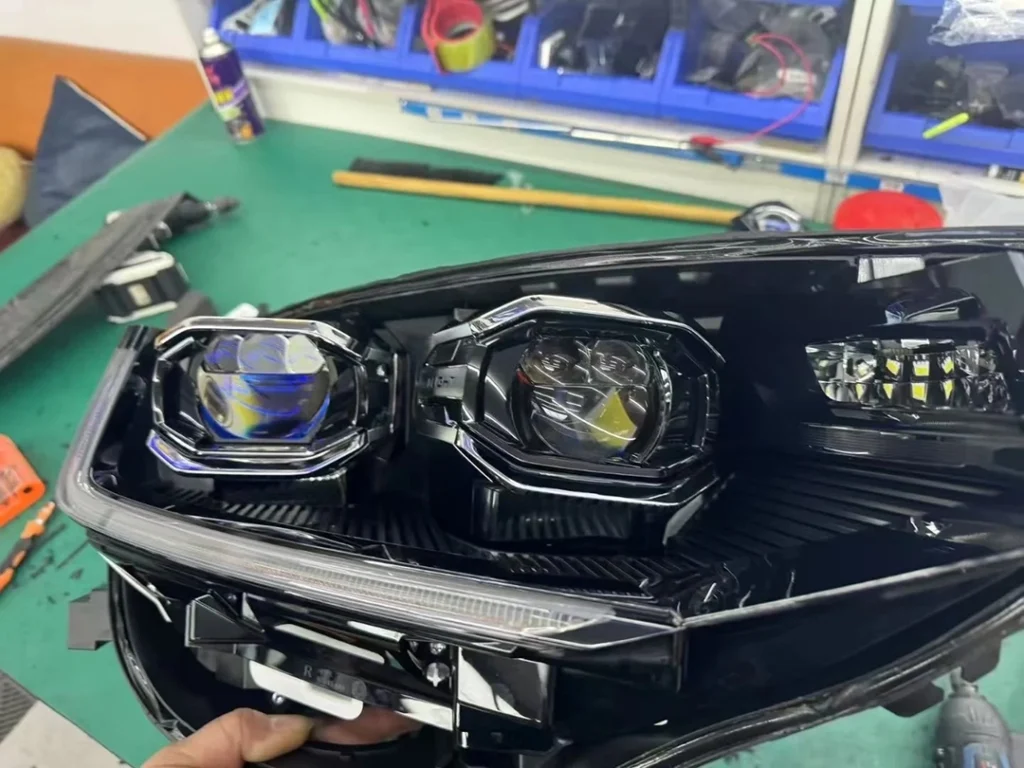
Aftermarket fog lamp installation ranges from excellent to “why is this wired with a twist cap.” The goal is an install that behaves like the factory intended: reliable, safe, properly aimed, and not blinding anyone.
What you need to decide before installing
- Do you want front fogs, rear fog, or both?
- Front fog retrofit is common.
- Rear fog retrofits are possible but require careful legality and wiring choices.
- OEM-style or universal kit?
- OEM-style: better fit, better beam control, cleaner integration.
- Universal: flexible, but quality varies wildly.
- Halogen vs. LED Here’s a grounded comparison:
| Option | फायदे | Cons | के लिए सर्वोत्तम |
|---|---|---|---|
| Halogen fog bulbs | Warm color, predictable optics in many housings, simple | Higher power draw, shorter life, heat | OEM housings designed for halogen |
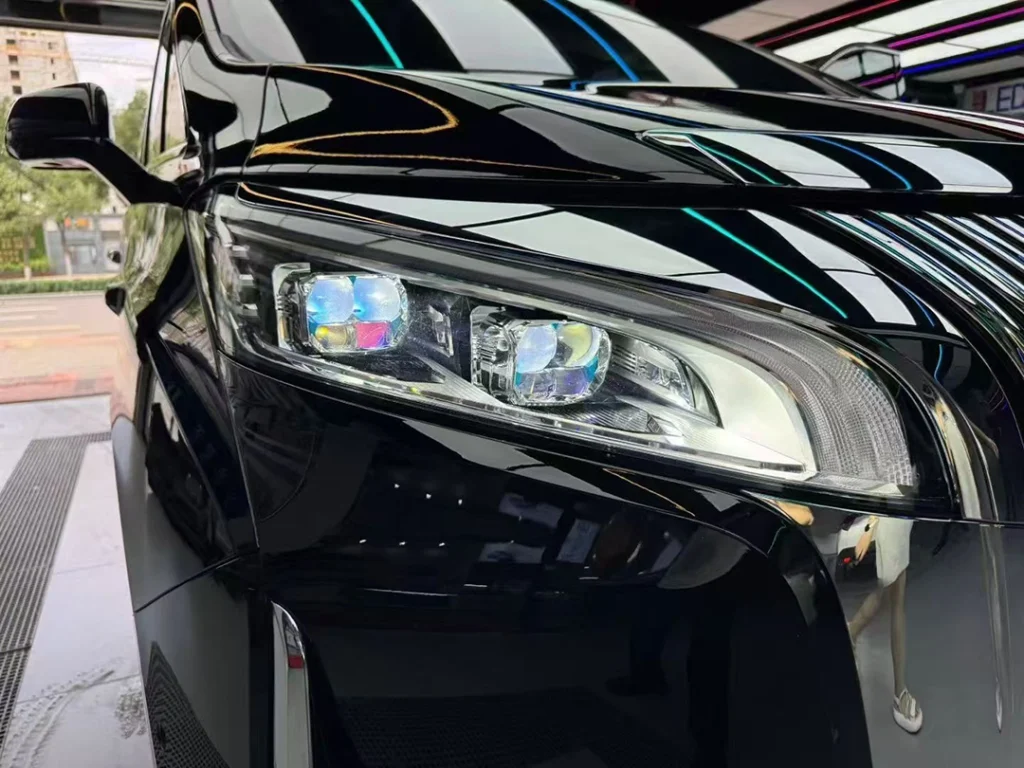
| LED fog units (complete lamp) | Efficient, long life, can be very bright | Cheap units glare badly; color can be harsh | Quality complete assemblies with proper optics |
| LED “bulb swap” in halogen housing | Easy install | Often poor beam pattern and glare | Generally not recommended |
The big takeaway: a complete fog lamp unit with proper optics beats a bulb swap almost every time.
Fog Lamp Installation Hardware: Relay, Fuse, Switch (What “Good” Looks Like)
A safe fog light circuit is boring—in the best way.
The essentials
- Inline fuse close to the power source
- रिले to keep high current out of the cabin switch
- Appropriate wire gauge for the current draw
- Weatherproof connectors in the engine bay
- Proper grounding (clean chassis point, no flaky paint contact)
Switch integration (so it feels factory)
Options include:
- an OEM dash switch (best),
- a clean aftermarket switch in a blank panel,
- steering-column control integration (more complex),
- CAN-bus interfaces on newer cars (only with the right modules).
If your car is modern and sensitive, avoid “mystery wiring” that confuses the body control module. A clean harness and correct integration prevents flicker, warning lights, and electrical gremlins.
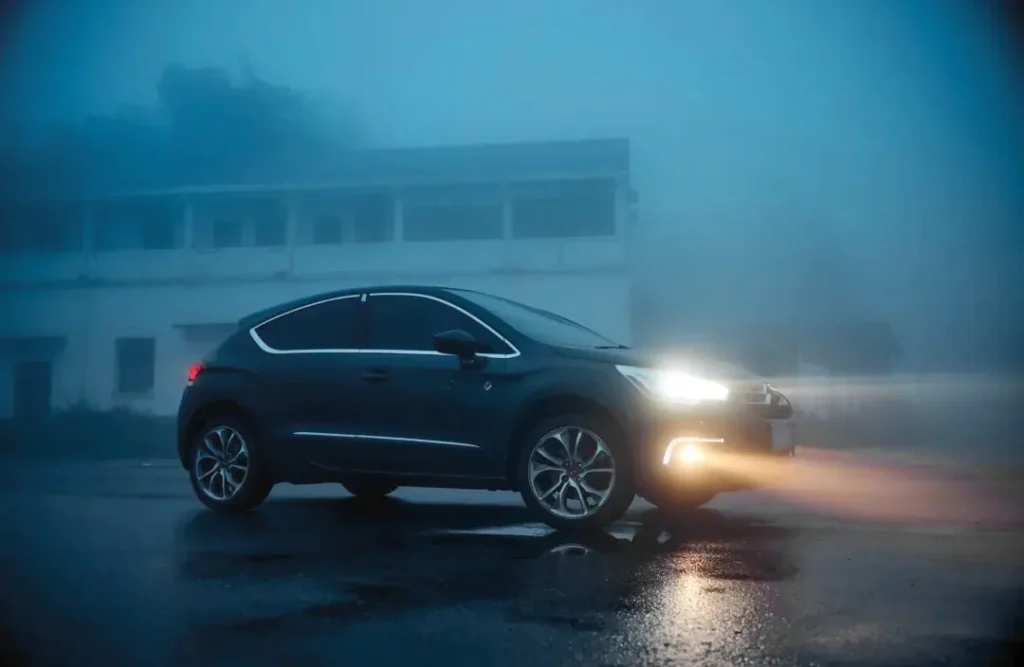
Aiming Fog Lamps: The Part Everyone Skips (And Everyone Else Notices)
Aiming is where good fog lights become great—and bad fog lights become everyone’s least favorite neighbor.
Basic aiming principles
- Fog lamps should sit कम and aim कम.
- You want light on the road surface and edges, not in mirrors and windshields.
A practical at-home aiming method
- Park on level ground facing a wall/garage door.
- Measure the height from ground to fog lamp center.
- Mark that height on the wall with tape.
- Back up a reasonable distance (often 25 ft / ~7.6 m is used for headlight checks; fog lights are typically aimed lower).
- Adjust so the main beam concentration is नीचे the tape line and evenly spread left/right.
Because fog lamp designs differ, there’s no single perfect number here. The rule is: aim low enough to avoid glare, high enough to illuminate the near-field effectively.
If you find yourself thinking, “Wow, these fog lights reach really far,” they’re probably aimed too high.
Common Fog Light Mistakes (That Make People Hate Fog Lights)
1) Using rear fog lights in normal rain or clear nights
Rear fog lights are intense. Overuse trains other drivers to ignore them—and also makes you that car in everyone’s mirror.
2) Installing cheap LEDs that scatter light everywhere
Brightness is not beam control. A glarey fog light reduces safety because:
- it blinds oncoming traffic,
- it increases reflected glare in your own eyes on wet roads,
- it creates visual clutter in fog.
3) Treating fog lights as a substitute for proper headlights
If your low beams are dim, fix the headlight system. Fog lights won’t give you the distance vision you need.
4) Forgetting that fog lights are for low-speed decision-making
Fog lights shine in (pun intended) situations where you should already be driving slower. If you’re trying to use fog lights to go fast in fog, you’re asking them to do the impossible.
When to Turn Fog Lights On (A Simple, Memorable Rule)
Instead of obsessing over “is this officially fog,” use a functional trigger:
Use front fog lights when:
- you can’t clearly see lane edges or road markers,
- spray or mist is reducing near-field contrast,
- your low beams feel like they’re lighting up “nothing” but gray air.
Use rear fog lights when:
- a car behind you would struggle to spot your tail lights in time,
- visibility is genuinely poor (thick fog, heavy spray, blowing snow),
- you’re on faster roads where closing speeds are high.
Turn them off when:
- visibility returns to normal,
- traffic is close behind you in clear conditions,
- you notice drivers flashing you (they might be telling you your rear fog is cooking their retinas).
Quick Checklist: A “Good Fog Light Setup” Looks Like This
- Front fogs: low, wide, controlled beam; aimed correctly; used in poor visibility
- Rear fog: used only when needed; turned off promptly afterward
- No hazards while moving unless you’re in an emergency or abnormal situation
- Installation: fused, relayed, weatherproof, tidy wiring
- कोई चकाचौंध नहीं: because safety tools shouldn’t double as annoyance generators
Closing Thought: Fog Lights Are Communication Tools as Much as Lighting Tools
Fog is stressful because it steals information—distance cues, contrast, and time to react. Fog lights work when they restore just enough of that information to help you drive calmly and predictably: front fogs give you near-road clarity; rear fogs tell the world you’re there.
Get the optics right, aim them properly, and use them with restraint. That’s how fog lights stop being a “feature” and start being a real safety system.
 English
  Spanish
  Vietnamese
  Thai
Thai  Arabic
  Russian
  Malay
Malay  French
  German
  Hindi
Hindi