
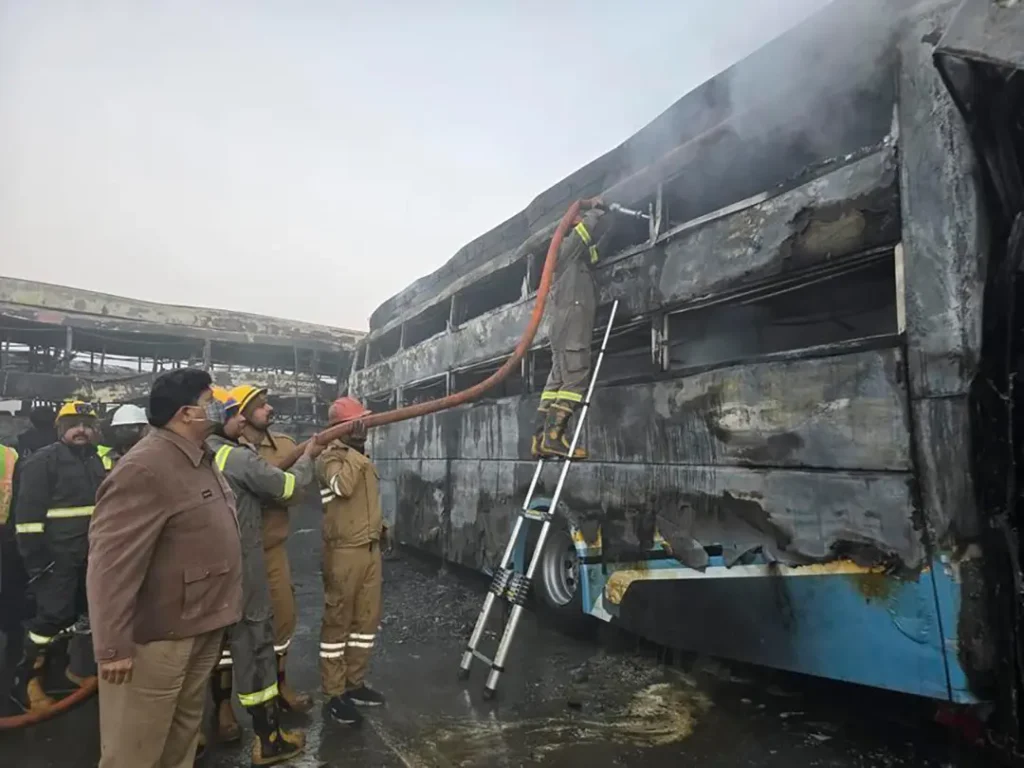
Just before dawn on Dec 16, 2025, India’s Delhi–Agra Expressway—one of the country’s best-known highway corridors—turned into something that reads like fiction and feels like a punch in the chest.
In dense fog, 10 vehicles reportedly collided—seven buses and three cars—and then caught fire. Authorities later said at least four people died dan 25 were injured, with rescue operations largely completed. The numbers are hard enough to absorb on their own. What’s harder is imagining the human reality behind them: passengers asleep, drivers straining to see a few meters ahead, the sudden shock of impact, and then the panic of smoke and heat.
No one boards a bus at night expecting to become a headline.
News links (external):
- NDTV: NDTV report on the Delhi–Agra Expressway fog pileup (Dec 16, 2025)
- Times of India: Times of India coverage of the multi-vehicle crash and fire
- Xinhua: Xinhua report summarizing the incident on the Delhi–Agra Expressway
This article isn’t written to sensationalize tragedy. It’s written because crashes like this expose a pattern we keep seeing worldwide: when visibility collapses, the gap between “a normal trip” and “a mass-casualty event” can be measured in seconds.
What a Fog Pileup Looks Like in Real Life (And Why It Gets So Big So Fast)
The official explanation was straightforward: heavy fog reduced visibility and triggered the crash. That’s true as far as it goes. But anyone who has driven in thick fog knows it doesn’t usually feel dramatic—until it suddenly does.
Fog changes driving into a kind of forced improvisation:
- distance becomes difficult to judge
- taillights appear faint and farther away than they really are
- road edges and lane markings fade in and out
- speed “feels” slower than it is
- reaction time stretches, especially at night or near dawn
Now add buses to the picture. A bus has more mass, longer stopping distance, and carries more people. When multiple buses are traveling in the same corridor at similar times—common on overnight routes—a single sudden brake can ripple backward like a wave. The first impact might be survivable. The second and third impacts are often where things spiral.
And then there’s the detail that changes everything: fire.
Once fire is involved, a crash stops being only about injuries and becomes about escape time. Smoke reduces visibility even further, heat blocks exits, and panic spreads quickly. Even when help arrives fast, a fire in a pileup is brutally difficult to control because vehicles are jammed together and access is limited.
Fog Is Real—But It’s Not the Whole Story
Saying “fog caused low visibility” can become a convenient ending to the conversation. But it shouldn’t be.
Fog is a natural condition. A ten-vehicle crash with fire is not a natural outcome. It’s usually a failure of layers—multiple safeguards that either weren’t present, weren’t enforced, or weren’t followed.
And the uncomfortable question is the one people don’t like asking after tragedy:
If winter fog is common on this route—and in many parts of northern India it is—what systems were in place that morning to prevent exactly this kind of chain reaction?
The safety layers that matter most in fog
In low-visibility conditions, the life-saving “infrastructure” isn’t only asphalt and concrete. It’s also the less visible part of the system:
- variable speed controls during fog events
- active enforcement when visibility drops below safe thresholds
- real-time warnings (message boards, radio, highway alerts)
- lane control and closures when conditions become dangerous
- clear reflective markings and roadside delineators designed for fog/night
- fleet SOPs (standard operating procedures) for drivers: speed caps, following distances, and stop rules
When these layers are strong, fog still slows traffic—but it doesn’t have to create a disaster. When these layers are weak, fog becomes a multiplier: one mistake becomes ten vehicles in seconds.
The Loop People Are Tired Of
There’s a familiar rhythm to major transport accidents in many countries:
- A serious crash happens
- The cause is reduced to weather or a single operator error
- Public grief and anger rise
- Promises of investigation follow
- The story fades—until the next one
This loop isn’t just frustrating. It’s dangerous, because it normalizes preventable risk. Fog becomes an excuse instead of a known hazard that triggers strict controls.
And that’s why this incident hit so hard: it didn’t feel like a once-in-a-lifetime anomaly. It felt grimly believable.
Fog Lights Car: The “Seen First” Problem Most Drivers Underestimate
Most discussions about fog focus on how far you can see. But in multi-vehicle collisions, another question is often more important:
How early can the driver behind you see you?
In dense fog, being visible is not automatic. Tail lamps can be dimmed by mist. Brake lights might only become obvious at the last moment. And if a driver is fatigued—or simply driving too fast for the conditions—those extra meters of early detection can decide whether they stop in time.
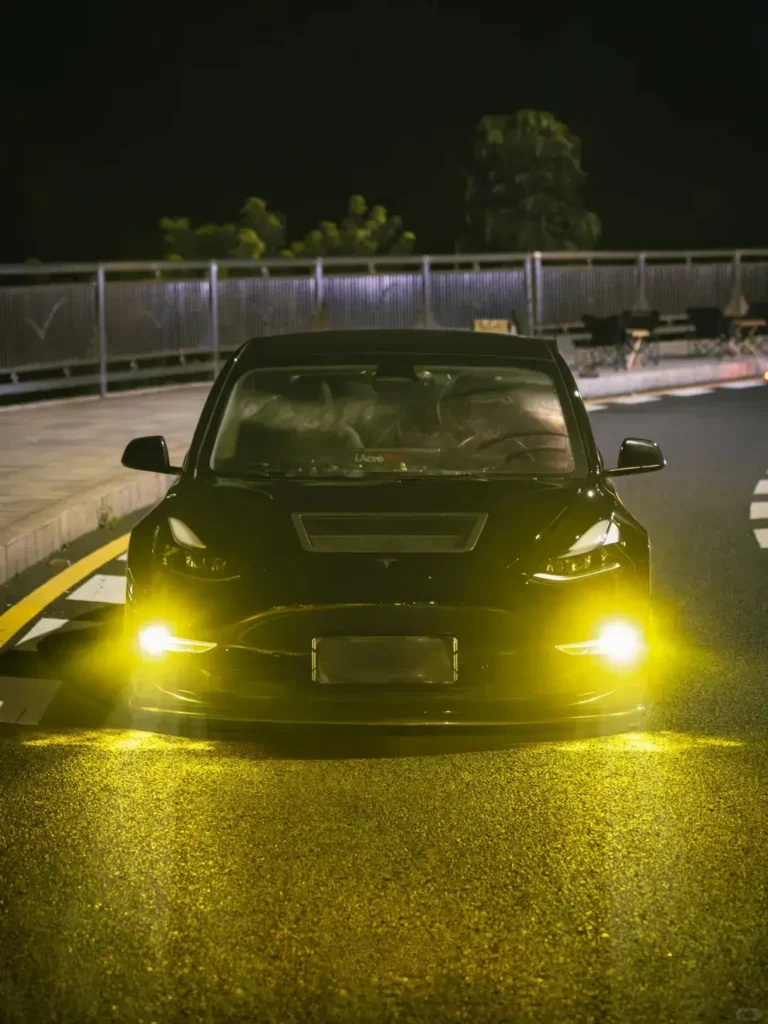
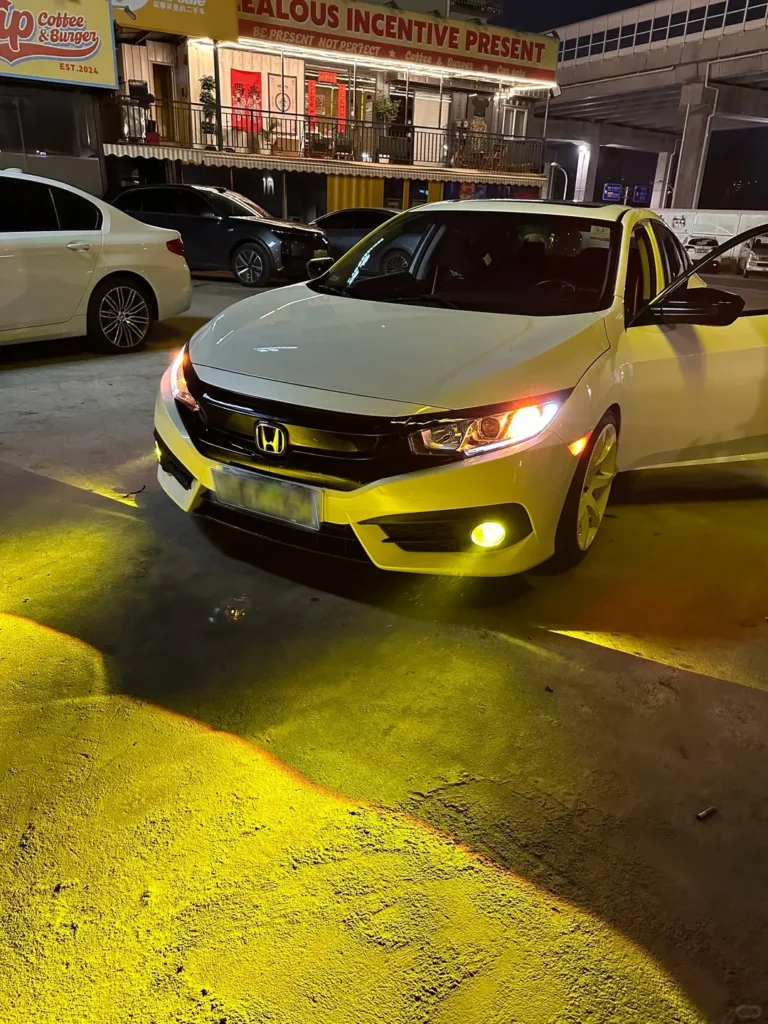
That’s where fog lights car setups become relevant—not as a cosmetic add-on, but as part of a visibility strategy.
Why high beams can backfire in fog
Many drivers instinctively switch to high beams in low visibility. In thick fog, that often makes things worse because light scatters off droplets and reflects back toward the driver’s eyes, creating glare and a “white wall” effect.
What fog lights are supposed to do
Good lampu kabut aren’t just “brighter.” They’re meant to be:
- low-mounted, to light the road surface beneath the densest fog layer
- wide-beam, to reveal lane edges and nearby hazards
- controlled, to reduce glare and backscatter
Used correctly, fog lights can improve near-field visibility and, depending on the full lighting setup, help other drivers understand where your vehicle is sooner. They are not a substitute for safe speed and spacing—but they can add margin where seconds matter.
Lampu Kabut: Common Mistakes That Cancel the Benefit
Fog lights can help, but only if they’re used and maintained properly. The most common problems are simple—and widespread:
1) Drivers don’t use them (or use the wrong lights)
If there’s no driver training or clear policy, lighting becomes personal habit. In fog, habit is not a safety system.
2) Incorrect aiming after installation or repairs
A fog lamp aimed too high creates glare and can reduce visibility for everyone—especially in fog.
3) Dirty or hazed lenses
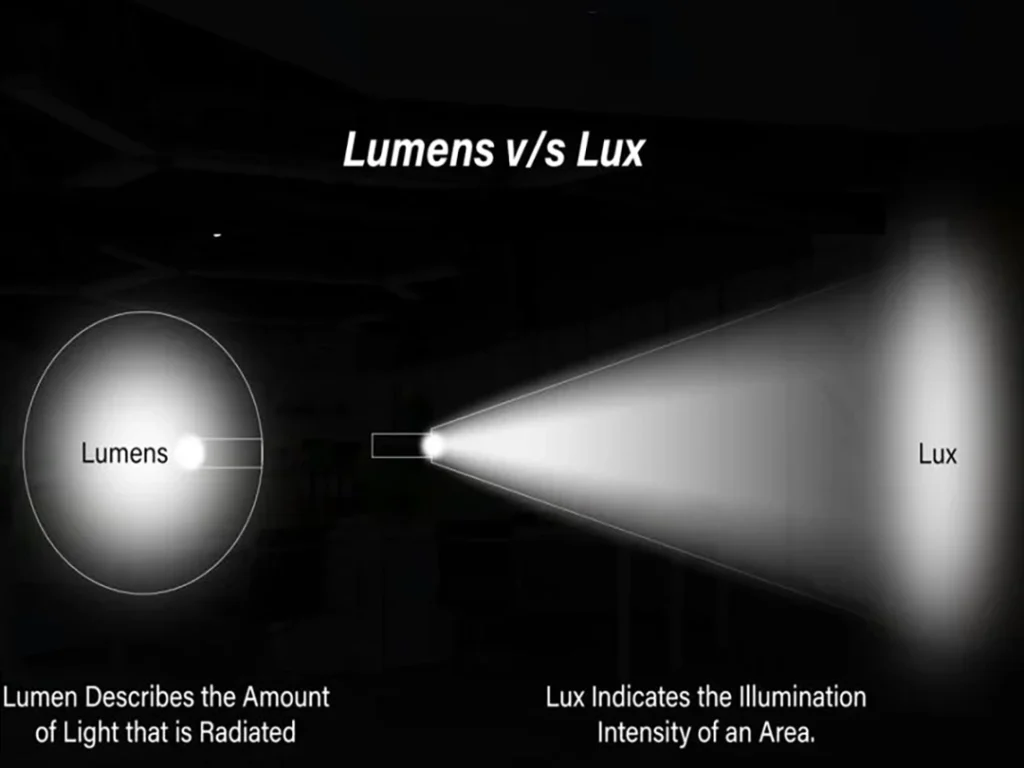
A cloudy lens ruins beam shape and reduces output. In fog, beam control matters as much as brightness.
4) Overconfidence
The biggest risk is psychological: better lighting can make drivers feel safer than they are. In fog, speed still needs to come down and spacing needs to go up.
What Fleets and Operators Can Do (That Doesn’t Require a Mega Project)
Not every improvement requires new highways or expensive tech. Some of the most effective changes are boring, repeatable, and enforceable.
Practical steps that reduce fog risk
- Set a fog-speed policy (a hard cap, not a suggestion)
- Increase minimum following distance in SOPs
- Define “pull over” rules when visibility falls below a threshold
- Standardize lighting checks in daily inspections (including fog lights)
- Train drivers on low-visibility lighting use (high beams vs fog lights)
- Audit aiming and lens condition during routine maintenance
For passenger transport, these steps aren’t only operational—they’re reputational. After a major incident, the public doesn’t just ask what the weather was. They ask what the operator did to prevent the predictable.
Grief Is Part of the Story, Too
It’s easy to turn tragedies into technical lessons and forget the human cost. But the truth is, a crash like this isn’t only a “traffic incident.” It’s a moment that splits lives into before and after.
A report can list numbers—four dead, twenty-five injured—but it can’t describe what it means for families waiting for a call that never comes, or for survivors who carry burns, injuries, and memories long after the roadway is cleared.
If there’s any respectful takeaway, it’s that prevention matters precisely because the loss is real.
Closing Thoughts: Fog Is Natural. Safer Outcomes Are a Choice.
The Delhi–Agra Expressway crash on Dec 16, 2025 is a reminder that fog is a known seasonal risk, not a surprise. Catastrophic pileups usually happen when predictable conditions meet weak controls: inconsistent speed discipline, poor spacing, limited warnings, and visibility systems that aren’t used properly.
We can’t control the weather. But we can control behavior, standards, and enforcement—and we can control whether vehicles are equipped and maintained to be seen in time.
Itu sebabnya lampu kabut dan fog lights car practices deserve more attention: not as marketing accessories, but as part of a broader low-visibility safety culture that helps drivers and passengers get home.
If you operate fleets, maintain vehicles, or supply lighting components, the goal is simple: build layers that hold when visibility doesn’t.
 English
  Español
  Tiếng Việt
  ไทย
ไทย  العربية
  Русский
  Bahasa Melayu
  Français
  Deutsch
  हिन्दी
  Bahasa Indonesia