
Why truck lampu grille are a “system” purchase (not a mood purchase)
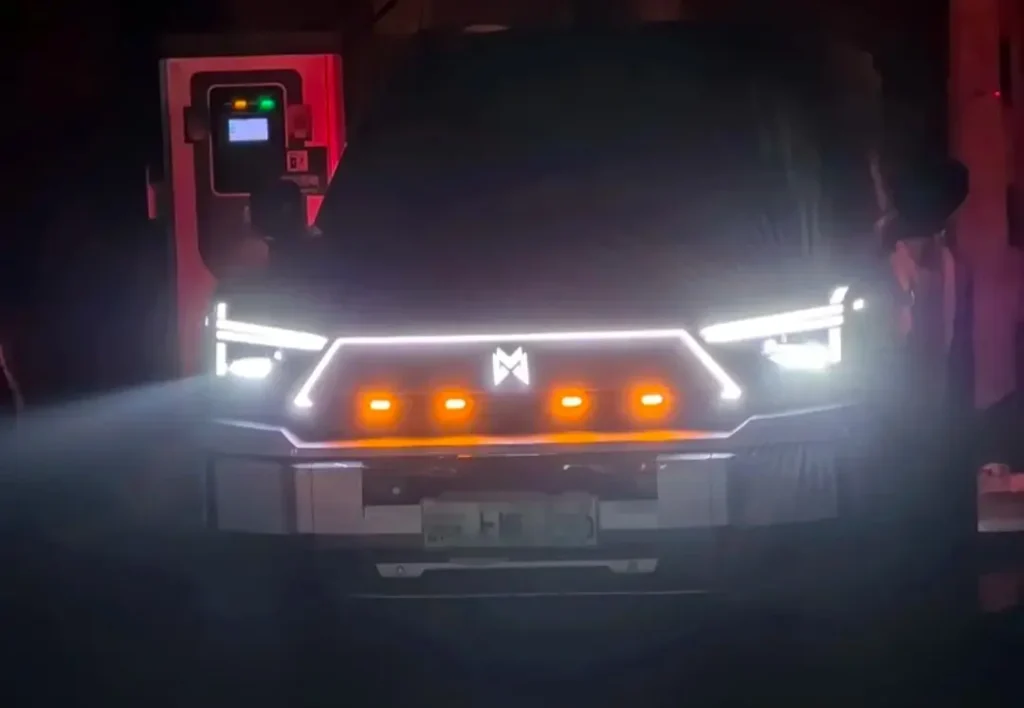
Front grill LED lights for trucks sell with photos—but they succeed or fail in the boring months afterward. Trucks create the perfect stress test: vibration, wash cycles, road spray, temperature swings, and long run times. That’s true for a personal pickup, and it’s especially true for fleets where downtime and callbacks cost real money.
This guide is written for two audiences at once:
- Consumers / truck owners: you want a clean look that stays straight and doesn’t become a maintenance hobby.
- B2B buyers (shops, fleets, procurement): you want a repeatable install, predictable supply, fewer returns, and clear warranty handling.
This is tidak an install tutorial and tidak a troubleshooting flowchart. This one stays in the “spec + standardization + deployment” lane.
Define the job first: three truck use-cases that require different choices
Before comparing products, lock the use-case. Most bad buys come from mismatch.
1) OEM-plus daily signature (personal trucks)
You want a subtle presence that looks intentional:
- steady mode as default
- low glare and clean symmetry
- minimal maintenance
2) Work truck visibility (service fleets, contractors, roadside work)
You want “readable presence” in messy conditions:
- steady modes for normal operation
- optional attention modes for private property/worksite/off-road where permitted
- fast service access and easy replacement
3) Harsh-use / off-road / recovery (private land, convoy)
You want survivability:
- rigid mounts that don’t drift
- connectors routed away from splash pockets
- re-check schedule and serviceability
Procurement shortcut: If drivers will operate the lights daily, prioritize predictable control behavior dan service access over feature count.
What specs actually matter for trucks (and what’s mostly marketing)
Trucks don’t reward “most lumens.” They reward stable systems.
1) Mounting hardware and drift resistance (the #1 real-world failure mode)
On trucks, many “failures” are not electrical—the lights still turn on, but they:
- rotate slightly after vibration
- become uneven (one higher/brighter)
- buzz or resonate at certain RPM
What to require:
- brackets that don’t flex by hand
- two-point anti-rotation mounting where possible
- corrosion-resistant fasteners (or properly coated hardware)
What to avoid:
- long cantilever brackets that turn the light into a lever
- single-bolt “hinge” mounts with no anti-rotation feature
2) Sealing and connector quality (because the grille is a splash zone)
The grille area sees water, salt, and pressure washing. The LED module might be sealed, but connectors and strain relief often decide reliability.
What to require:
- obvious strain relief at wire exit
- connectors with positive retention (not loose friction-fit)
- wiring protection appropriate for chafe points
Fleet reality: intermittent issues (flicker after rain) are the most expensive to support because they waste diagnostic time.
3) Electrical stability (predictable behavior on real trucks)
Modern vehicles can have sensitive circuits; trucks also see voltage variations in real use.
What to require:
- stable driver behavior (no random flicker)
- reasonable current draw per module
- clear guidance for using factory signals as a trigger rather than the primary power source
4) Batch consistency (B2B buyers: this is a deal-breaker)
If you buy multiple sets across months, you need:
- consistent brightness and color across batches
- consistent connector type and bracket revisions
- ability to buy single replacements without changing the whole system
Ask the vendor directly:
- “Will this SKU remain consistent for 6–12 months?”
- “Can we purchase individual replacement modules?”
- “Are brightness/color bins controlled across production?”
Standardized layouts that work on most trucks (and reduce callbacks)
A standard layout prevents the most common visual complaints: crooked rows, uneven spacing, and glare.
The safest standard for fleets: 4 modules, outer-to-mid thirds
Four modules is usually the best compromise:
- symmetrical
- visible without looking like a billboard
- easier to keep aligned than 6+
Placement principle: avoid crowding the center third unless the truck’s grille geometry clearly supports it dan sensors/airflow aren’t a concern.
When 2 modules are better (and look more premium)
Two modules can be the best option when:
- grille openings fragment light output
- the truck has lots of glossy trim that reflects
- you want OEM-plus and minimal attention
When 6 modules are justified (and when they’re not)
Six modules can be appropriate when:
- the grille is wide and uniform
- you have repeatable mounting points
- you can keep height/angle identical across all modules
Six modules is usually tidak justified for fleet standardization because it increases:
- alignment time
- failure points
- variance across truck trims
Serviceability: the hidden KPI for fleets and shops
If you manage vehicles (or you’re the shop that installs them), success isn’t “it works today.” Success is: a tech can inspect and replace a module quickly.
Define service access requirements up front
For a fleet-ready setup, require that:
- a single module can be replaced without removing the bumper
- connectors are reachable for inspection
- wiring can be visually checked without cutting half the zip ties
Place connectors like you expect to maintain them
Not a wiring lesson—just a placement rule:
- don’t park connectors at the lowest point where water collects
- don’t bundle everything into a tight wet “knot”
- keep connections away from obvious heat zones and moving parts
These choices prevent “works fine until rain/wash” support tickets.
Fleet control behavior: keep it predictable and policy-friendly
Feature-rich kits often create operator confusion. For fleets, confusion becomes misuse, and misuse becomes complaints.
Recommended fleet control pattern
- Default: steady mode only
- Activation: simple, repeatable behavior (ignition/parking-light logic per policy)
- Override: one obvious OFF control for inspections/maintenance situations
- Special modes: restricted to off-road/private property/worksite use where permitted and where your policy allows
Procurement checklist (copy/paste for RFQs)
This is the part B2B buyers actually use.
Product requirements
- Module sealing + strain relief appropriate for splash/pressure wash environment
- Brackets that resist vibration drift; anti-rotation mounting preferred
- Corrosion-resistant hardware
- Documented dimensions including rear clearance + connector bend space
- Steady mode as the default operating mode
Supply requirements
- Batch consistency commitment (color/brightness/connector/bracket)
- Replacement module availability (single-unit replacements)
- Lead time and SKU stability for 6–12 months
- Warranty terms and turnaround times in writing
Deployment requirements
- Standard placement template per truck model/trim (photo + measurement reference)
- Post-install inspection checklist (alignment, retention, connector placement)
- Re-check schedule after first week / first wash cycle
Common failure patterns (and how to prevent them at the spec level)
This section is intentionally not troubleshooting—it’s how to avoid those tickets by choosing and specifying better.
“It still works, but it looks crooked now”
Prevention:
- rigid brackets, anti-rotation mounting
- fewer modules (4 > 6 for repeatability)
- standard reference line for height
“Flickers after rain or washing”
Prevention:
- better connector retention and sealing
- connector placement away from water run paths
- strain relief and chafe protection
“Mismatch across vehicles” (fleet embarrassment problem)
Prevention:
- batch consistency requirements
- standard layout template + install QA photo requirement
- single replacement modules that match existing output

FAQ
What’s the best front grill LED light setup for trucks in a fleet?
A 4-module layout with a standardized placement template is usually the best balance of visibility, symmetry, install time, and low callback rate.
What should fleets prioritize over brightness?
Bracket rigidity, connector quality, service access, and batch consistency. Those reduce downtime and support costs.
Do flashing modes belong in fleet trucks?
Only if your policy and local rules permit their use in specific contexts (worksite/private property/off-road). For day-to-day road operation, steady modes are the safest and most predictable.
 English
  Español
  Tiếng Việt
  ไทย
ไทย  العربية
  Русский
  Bahasa Melayu
  Français
  Deutsch
  हिन्दी
  Bahasa Indonesia