
Quick take (for skimmers)
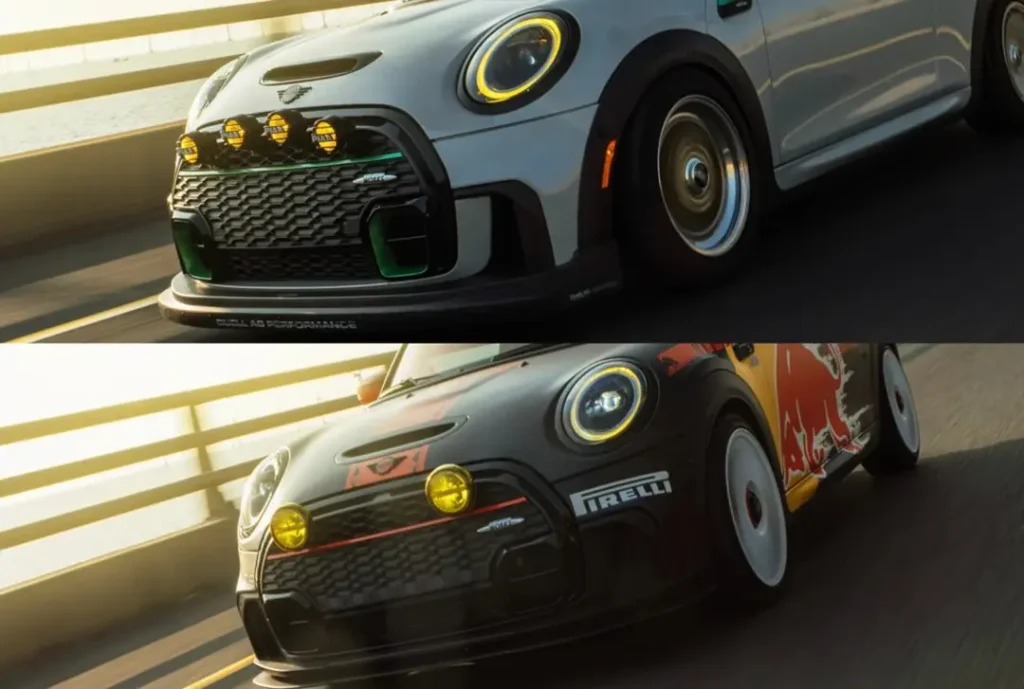
A Mini’s front end has less real estate and more “face.” That means every little LED you add matters more. The best Mini grille-light setups are usually smaller count, cleaner placement, and strict glare control—otherwise it looks busy fast.
Why Mini lampu grille are easy to overdo
On a truck, six modules can disappear into a big grille. On a Mini, even two modules can dominate the look if:
- they’re too bright for the front-end size
- they’re placed where the grille pattern chops the output
- they reflect off chrome rings or glossy trim
- they’re aimed even slightly upward
So the priority stack flips:
- visual integration
- glare/reflection control
- durability and serviceability
- then brightness
This is a placement and layout guide—not a wiring how‑to.

Start with the Mini-friendly placement zones
Mini front ends vary, but the logic stays consistent.
Zone A: Outer openings (most natural)
The outer areas often give you:
- better symmetry options
- less reflection off central badges/trim
- cleaner “accent” look
If you want the lights to feel intentional rather than decorative, start here.
Zone B: Lower grille strip (subtle, modern)
Lower placement can look clean and avoids turning the upper grille into a glowing face. Just don’t block airflow or mount in areas that get hammered by road spray.
Zone C: Center spotlight (high risk)
Center placement on a Mini tends to look like you put a gadget in the middle of its “nose.” It can work, but it’s the easiest way to make the car look busy.
How many lights should a Mini get?
If you want the “not trying too hard” look, this is simple.
2 modules: the premium move
Two modules, placed symmetrically, often look like a factory design detail.
Why it works on a Mini:
- minimal clutter
- less glare risk
- easier to keep perfectly aligned
4 modules: only if the openings support clean output
Four can look good if the grille pattern is consistent and doesn’t fragment the lens.
What makes it look cheap: four lights placed where each one is half-hidden behind bars, creating scattered hotspots at night.
6 modules: almost never worth it
On most Minis, six reads like decoration rather than design. If you’re aiming for tasteful, skip it.
The “expensive” look is mostly spacing and alignment
Mini owners (and Mini styling) are sensitive to small details. If the spacing is off by even a little, it reads immediately.
Alignment rules that keep it classy
- Choose one horizontal reference line and keep every module on it
- Mirror left-right spacing exactly
- Keep modules at a consistent depth (don’t have two sitting deeper than the others)
Simple check: take a straight-on photo, then flip it horizontally. If something feels “off” in the mirrored image, your spacing isn’t truly balanced.
Glare and reflection: Mini’s biggest enemy
Minis often have chrome or gloss elements near the grille, and their lower hood line means light can reflect in ways that don’t show up on taller vehicles.
How to avoid the “harsh points of light” look
- Mount so the lens shines through an opening, not onto trim
- Keep the aim level or slightly down
- Avoid placing modules directly behind chrome rings or glossy edges
If your lights make the chrome glow more than the lens itself, that’s your cue to move them.
Fitment checks on small grilles (where most people get surprised)
Small grille = small space behind it. Before you buy or finalize a spot:
- confirm module depth at the exact mounting point
- confirm connector length and bend radius
- check that the module won’t interfere with the grille’s mounting tabs or clips
- plan access: can you remove one module later without breaking clips?
Most common Mini mistake: picking the prettiest spot visually, then realizing you can’t actually plug the connector in.
Durability without turning your Mini into a maintenance project
Minis aren’t “rugged trucks,” but they still deal with:
- vibration
- rain and washing
- winter salt in many regions
Serviceability matters more than people think
A good Mini install lets you:
- inspect connectors occasionally
- clean behind the grille
- replace a module without snapping plastic tabs
So even though this is a “small mod,” plan like you’ll have to touch it again—because you will.
B2B note: how to sell/install grille lights on Minis without comebacks
If you’re a shop or buyer supplying these:
- keep the recommended layout conservative (2 modules sells well because it looks premium)
- set expectations: “subtle accent,” not “turn night into day”
- standardize a repeatable placement zone so every install looks consistent
- document a simple do/don’t photo guide for techs
Minis are the kind of car where customers will notice a 3mm height mismatch.
FAQ
What’s the best Mini Cooper grille light layout?
Two modules in the outer thirds is the cleanest, most “OEM-plus” look. Four can work if your grille openings don’t fragment the output.
Why do Mini grille lights look too bright even when they aren’t that powerful?
Small front-end area plus reflective trim makes point light sources look harsher. Placement through clean openings and conservative aim matter more than raw brightness.
Should I choose white or amber on a Mini?
White often looks more factory-clean; amber can look purposeful, especially in bad weather. Either way, keep glare under control and avoid shining onto chrome.
 English
  Español
  Tiếng Việt
  ไทย
ไทย  العربية
  Русский
  Bahasa Melayu
  Français
  Deutsch
  हिन्दी
  Bahasa Indonesia