
Headlight styling has become its own language in the car world. Some owners want a cleaner OEM-plus look. Others want something sharper, more aggressive, and unmistakably “built, not bought.” Two of the most common visual upgrades you’ll hear about are angel eye projector headlights dan demon eye projector headlights—both based on a glowing circular “halo” effect, but with very different placement, purpose, and results.
This post breaks down what each style actually is, where it sits inside the headlight, why a projector lens retrofit matters, and what to consider before you spend money on parts that may not even be installable on your current setup.
Angel Eye Projector Headlights: The Classic Halo Look (and Why It Started)
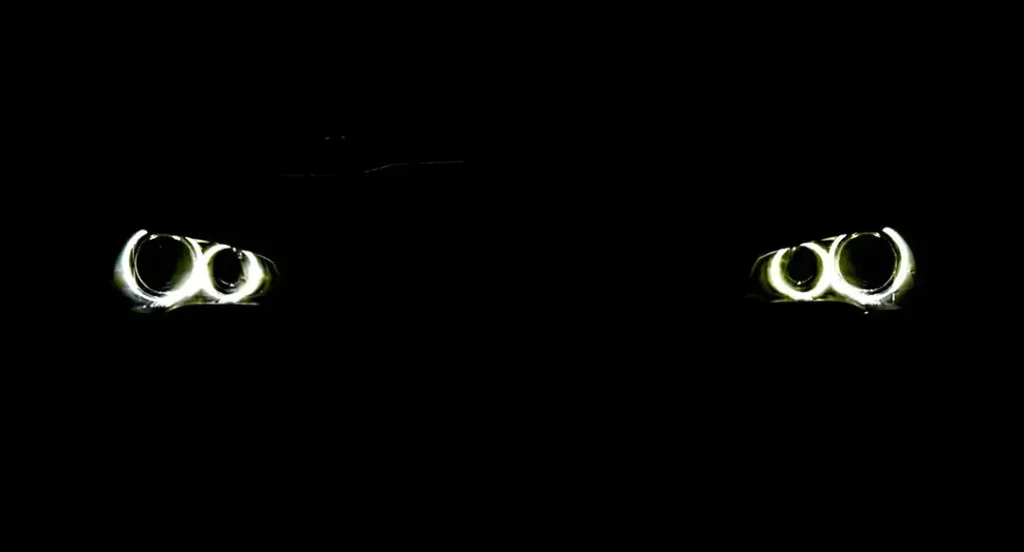
Angel eyes are the original halo trend most people recognize. The design became iconic thanks to early BMW applications, where the halo served as a signature lighting element—clean, upscale, and easy to spot from a distance.
What “Angel Eyes” Really Are
At their core, angel eyes are illuminated rings positioned around the projector area. In many builds, the ring sits on or near the shroud (the decorative cover around the projector) or the front-facing area of the projector assembly.
That placement matters because the light you see is a defined, even ring—more like a “halo” floating inside the headlamp.
Where Angel Eyes Are Installed
- Typical location: around the projector, often on the shroud / decorative cover area
- Visual effect: a full, circular ring (or “U”/partial ring on some designs), clearly visible as a daytime signature
Even when people call them “angel eye projector headlights,” the key point is that angel eyes are usually a signature/position light, not the main headlight beam.
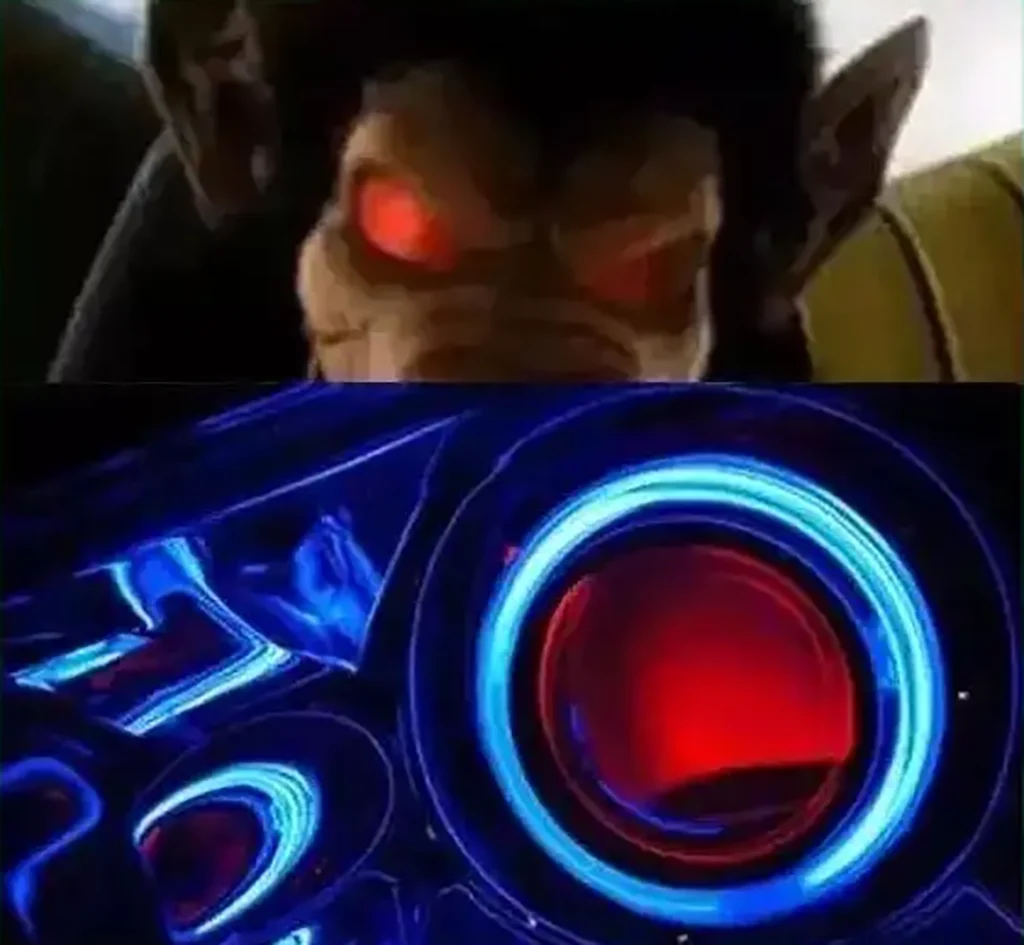
Demon Eye Projector Headlights: The Aggressive “Colored Lens” Effect
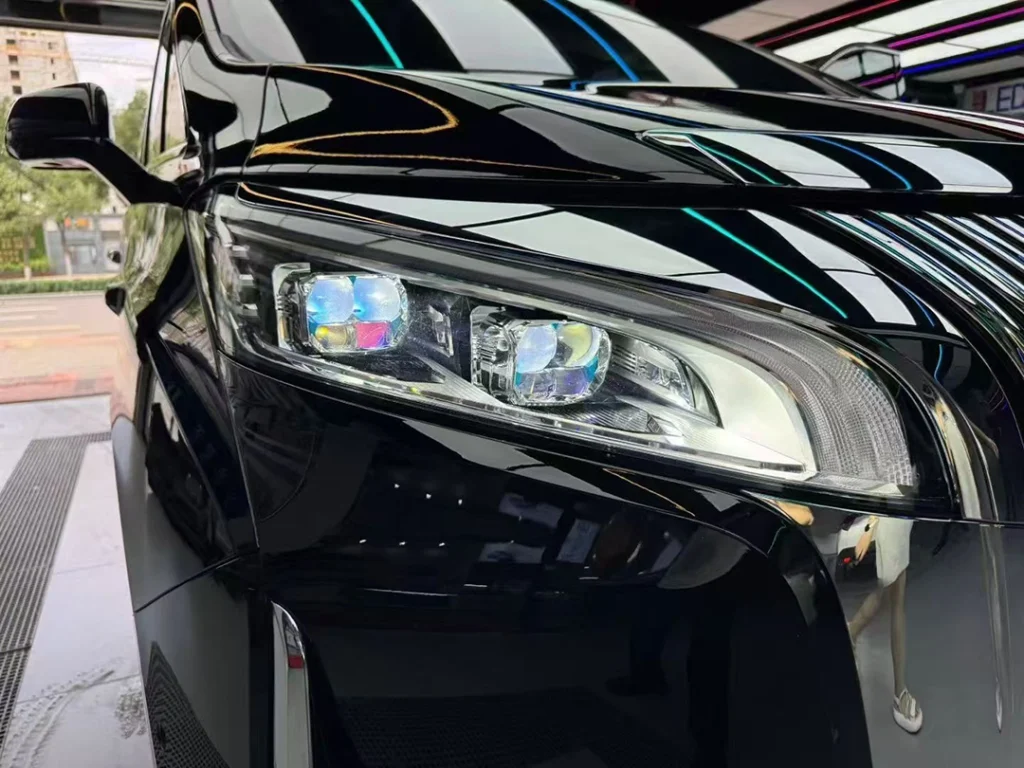
Demon eyes (also commonly called “devil eyes,” “wolf eyes,” or simply “evil eyes” in enthusiast circles) are a different kind of aesthetic. The goal isn’t a clean halo outline. It’s a colored, intense glow that appears to come from inside the projector lens—the “eyeball” effect.
What “Demon Eyes” Really Are
A demon eye setup places a small light source inside the projector lens area, so the projector’s glass and internal surfaces help distribute and reflect color. Instead of a ring floating around the projector, the projector itself looks like it has a lit iris.
Where Demon Eyes Are Installed
- Typical location: inside the projector assembly
- Visual effect: the lens looks tinted or illuminated, giving a more hostile, cold, or “predator eye” feel
This is why demon eyes usually look more dramatic at night and in photos taken head-on. The lens becomes the focal point.
The Most Important Difference: Placement (Outside vs. Inside the Projector)
If you only remember one thing, make it this:
- Angel eyes = halo ring effect around the projector area
- Demon eyes = color/glow effect originating from inside the projector lens
That single difference changes:
- how the light reads from different angles,
- how complex the installation is,
- what parts your headlight must already have.
In practice, angel eyes tend to look more “factory-inspired,” while demon eyes lean more “custom show build.”
Why a Projector Retrofit Comes First (You Can’t Skip the Lens)
A common misunderstanding in the aftermarket goes like this:
“My car doesn’t have projectors, but I want to add angel eyes or demon eyes.”
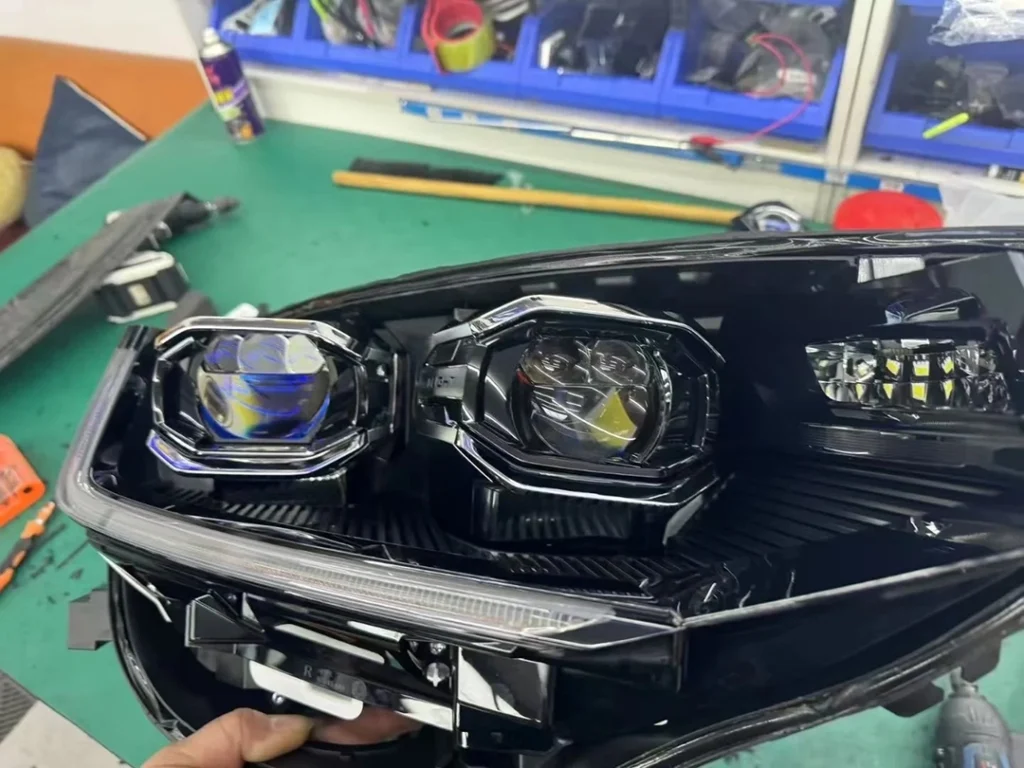
The problem is that both angel eyes and demon eyes are designed around a projector-style headlamp architecture—especially demon eyes.
Projectors Are the “Eyeball”
A car’s headlights are often compared to eyes for a reason:
- the projector lens is the “eyeball”
- the internal housing and shroud frame that “eye”
- angel/demon effects rely on that geometry to look correct
Without a projector assembly, there’s nowhere proper to mount these components, and the final effect usually looks improvised (or simply can’t be installed at all).
Practical Takeaway
If your headlight is a pantul-only design from the factory, you typically need:
- Projector retrofit (lens + bracket + shroud)
- Then add angel eyes (around the projector) and/or demon eyes (inside the projector)
Angel Eye Types (CCFL vs. LED vs. Light-Guide LED)
Angel eyes aren’t one single product. The ring can be built using different light sources, and each comes with tradeoffs in brightness, durability, heat resistance, and long-term consistency.
1) CCFL Angel Eyes (Cold Cathode Fluorescent Lamp)
These are the older-school rings that many enthusiasts still recognize.
- Kelebihan
- Affordable
- Generally decent temperature tolerance (in typical driving environments)
- Cons
- Requires an inverter/driver
- Fragile (glass tube), poor vibration resistance
- Lower brightness compared to modern LED options
- Shorter lifespan and less “crisp” color saturation
CCFL can still look smooth, but it’s less common today because LED options have improved dramatically.
2) Traditional Multi-LED Angel Eyes
This is the mainstream aftermarket solution: many small LED chips arranged around a ring.
- Kelebihan
- Brighter than CCFL
- Better vibration resistance
- More saturated white (or color options depending on spec)
- Cons
- Heat can be a weak point (especially in tight housings)
- If multiple LED beads are used, there’s a risk of individual bead failure over time
- Some designs can show “hot spots” instead of a uniform ring
Good design and thermal management matter here more than people think.
3) Light-Guide (Optical Fiber/Light-Pipe) LED Angel Eyes
Often considered the “third generation” style, these use a couple of high-power LEDs feeding a light-guide ring so the illumination looks more continuous and premium.
- Kelebihan
- Smoother, more uniform ring appearance
- Strong brightness and good saturation
- Fewer LEDs can mean lower failure probability
- Wider viewing angle, more “crystal-like” look
- Cons
- Quality varies widely by manufacturer and material
- Some budget versions use mixed materials that reduce clarity compared with high-end OEM-style light guides
If you’re chasing the most OEM-like halo look, light-guide designs are often the best path—assuming the ring material and LED coupling are done right.
Demon Eyes: What You’re Really Paying For (And Why Labor Is Higher)
Demon eyes are popular partly because the effect is intense, but there’s a reality check: the part cost may be low, but the installation cost usually isn’t.
Why Installation Is More Complex
To install demon eyes properly, a shop generally has to:
- Open the headlamp (remove lens cover)
- Access the projector internals
- Mount and wire the demon eye light source cleanly
- Reseal the headlamp to prevent moisture and fogging
Opening and resealing headlights is skilled work. A poor reseal can create long-term problems: condensation, haze, corrosion, and electrical issues.
Cost Expectations (Realistic, Not “Forum Fantasy”)
Labor varies by region and headlamp design, but it’s common for installation and resealing to be the biggest portion of the bill. Even if the demon eye components are inexpensive, the process is not “quick plug-and-play.”
Angel Eyes vs. Demon Eyes: Side-by-Side Comparison
Below is a practical comparison you can use when deciding which style matches your car and your tolerance for complexity.
| Feature | Angel Eye Projector Headlights | Demon Eye Projector Headlights |
|---|---|---|
| Visual style | Clean halo / signature ring | Aggressive “colored lens” / iris effect |
| Typical mounting | On/around shroud or projector perimeter | Inside the projector lens area |
| Best use | DRL-style signature, OEM-plus look | Show look, strong night presence |
| Install difficulty | Medium (depends on headlamp design) | Higher (often requires opening headlamp) |
| Most common tech | LED ring / light-guide ring | Small internal LED light source |
| Risk factors | Hot spots, LED bead failures (varies) | Reseal quality, moisture risk if poorly installed |
The “Can I Add It to My Stock Headlights?” Reality
Here’s the straight answer many installers give customers:
If your car already has projector headlights
- Demon eyes adalah possible (because there is a projector to work with)
- Angel eyes are often possible, especially if there’s a shroud design that can accept a ring
But “possible” still depends on space, shroud shape, lens clearance, and wiring access.
If your car does NOT have Lampu utama projektor
- Adding demon eyes or angel eyes without a projector retrofit is usually not practical or won’t look right
- The clean approach is: retrofit a projector first, then add the styling elements
This is why retrofit shops often start the consultation by confirming whether your headlamp is reflector or projector.
Style Upgrade Starts with Function: Why Projectors Matter Beyond Looks
A good projector retrofit isn’t only an aesthetic foundation—it can also improve the actual beam pattern. A well-designed projector system provides:
- a clearer cutoff line (helps control glare)
- better foreground and distance distribution (when properly aimed)
- compatibility with modern light sources (depending on projector type)
That said, performance depends on the full system: projector optics, bulbs/LED source, alignment, and heat management.
Legal and Safety Notes (Worth Taking Seriously)
Lighting rules vary by country and even by state/province. Two practical guidelines help avoid headaches:
- Avoid forward-facing colored lights on public roads if your local regulations restrict them. Demon eye colors can easily cross into “non-compliant” territory.
- Never compromise beam aim or glare control for looks. A stylish headlamp that blinds others is the fastest way to turn “cool build” into “unsafe build.”
For show cars, demon eyes can be a great visual signature. For daily driving, many owners choose angel eyes in compliant colors (often white/amber, depending on region) and keep the projector beam strictly functional.
Choosing What Fits Your Build
If your goal is refined styling that still feels close to OEM design language, angel eyes are the safer bet. If you’re building a more aggressive, attention-grabbing front-end—especially for meets, photos, or display—demon eyes deliver that “stare” effect in a way halos can’t.
The key is sequencing: projector first, styling second, and always work with components that are designed to survive heat, vibration, and real-world driving.
Key Takeaways (So You Don’t Waste Money on the Wrong Parts)
- Angel eyes are illuminated rings typically mounted around the projector area—clean, classic, and widely used.
- Demon eyes place light inside the projector lens to create a colored “iris” effect—more aggressive and usually more labor-intensive.
- If your headlamp doesn’t have a projector, you usually need a projector retrofit before either mod makes sense.
- Quality installation (especially resealing) matters as much as the parts.

 English
  Spanish
  Vietnamese
  Thai
Thai  Arabic
  Russian
  Malay
Malay  French
  German
  Hindi
Hindi