
Modern cars make lane changes feel effortless because they whisper warnings before you do something dumb. Older cars? They mostly rely on your neck, your mirrors, and your mood.
If your vehicle doesn’t have factory blind-spot monitoring, you’ve probably wondered: are there add on blind spot lights available for older cars? Yes—there are, and some are genuinely useful. The trick is choosing the right type and installing them in a way that doesn’t become a wiring headache, a leaky mirror, or a dashboard Christmas tree.
This guide focuses on blind spot ไฟ (mirror-based warning or illumination), not forward-facing ไฟสปอตไลท์รถยนต์. Different job, different rules. Think “lane-change helper,” not “turn night into noon.”
What “Blind Spot Lights” Actually Means (And What It Doesn’t)
When people search “can I add blind spot lights to my car mirrors,” they’re usually talking about one of these:
1) Mirror-mounted warning lights (indicator-style)
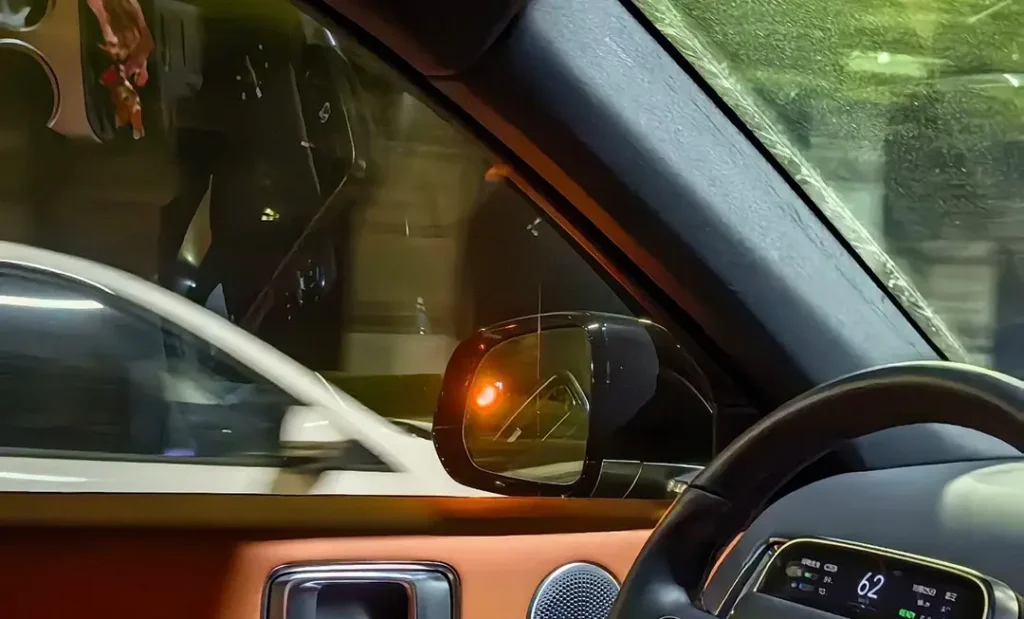
These mimic OEM blind-spot systems visually: a small LED icon or dot lights up on/near the mirror when a sensor thinks something is beside you.
- Pros: Familiar, clean, doesn’t change exterior lighting much
- Cons: Needs sensors + controller; cheapest kits can be flaky
2) Mirror “puddle” or side-illumination lights (visibility-style)
These add light around the side of the car (sometimes down toward the ground). They help you see curbs, cyclists, or puddles, but they do ไม่ detect vehicles.
- Pros: Simple, useful at night, fewer false alarms
- Cons: Not a true blind-spot warning system
3) The “not really it” options
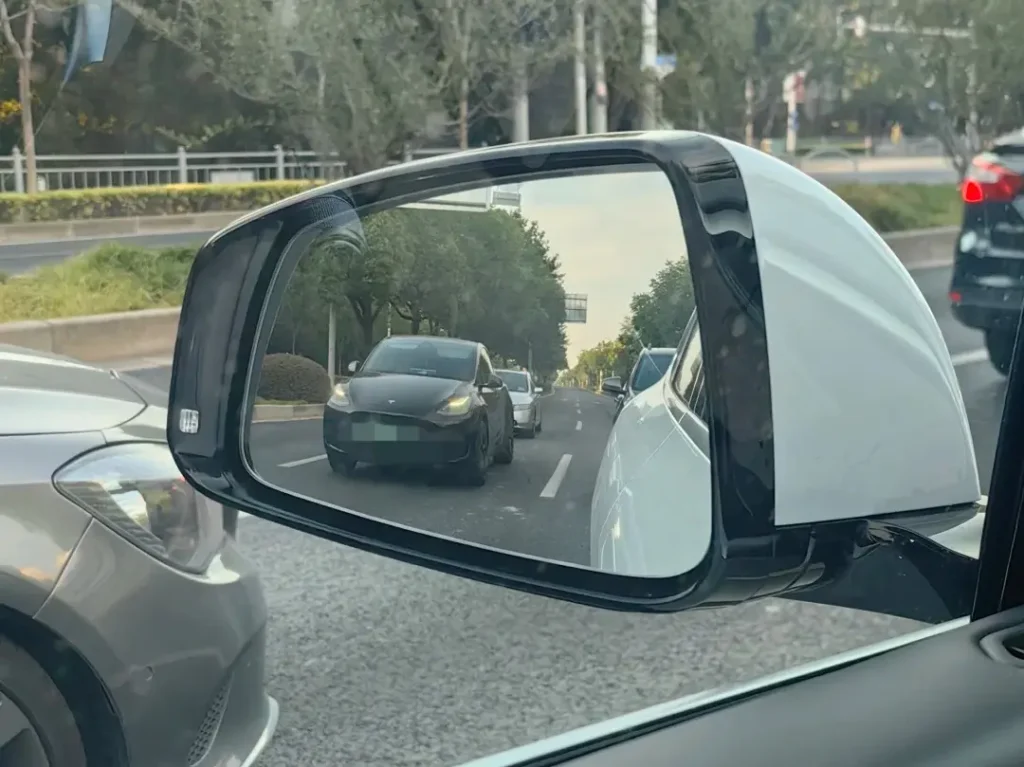
- Stick-on convex mirrors: helpful, cheap, no wiring (but not lights)
- Random LED strips in the mirror housing: can look cool; can also look… very online
So yes, you สามารถ add blind spot lights to your car mirrors—but decide first whether you want detection (warning) or การมองเห็น (illumination).
Are Add-On Blind Spot Lights Available for Older Cars? What to Look For
Aftermarket kits generally fall into two sensor camps:
Radar/microwave-style kits
These mount behind the กันชน and “watch” adjacent lanes.
- Usually better at highway speeds
- Can be sensitive to bumper material/placement
- Quality varies wildly; good ones aren’t bargain-bin cheap
Ultrasonic-style kits
These are common in parking sensors. For blind spots, they can work, but they’re more finicky with mounting angles and real-world noise.
- Often better at low speeds and parking scenarios
- Can be more prone to weird triggers in rain or dirty conditions
Buying checklist (the short, real one):
- Clear kit purpose: “blind spot detection” vs “mirror illumination”
- Weather-rated sensors and connectors (water kills cheap kits)
- A controller that supports stable power (avoid flicker or random resets)
- Mirror indicator design you can actually see in daylight
- A sane install method: minimal cutting, proper grommets, proper connectors
The Biggest Mistake: Mixing Up “Spotlights” With “Blind Spot Lights”
Your earlier content is heavy on ไฟสปอตไลท์รถยนต์ (auxiliary driving lights). Those are forward-facing and usually tied to high-beam behavior. Mirror blind-spot lights are different:
- Spotlights = distance lighting (seeing far ahead)
- Blind spot lights = side awareness (seeing or warning beside you)
If you pitch this article as “safety and awareness for lane changes,” it won’t cannibalize your existing spotlight guides. It complements them.
Can Spot Light in Car Run Down Battery? (And Why Mirror Lights Can Too)
People ask this about spotlights, but the underlying fear is universal: will this drain my battery?
Mirror blind-spot kits typically draw very little, but battery drain can still happen if:
- The kit is connected to a constant 12V feed instead of ignition-switched power
- The controller never truly sleeps (cheap electronics sometimes don’t)
- The wiring is done in a way that backfeeds another circuit
กฎทั่วไป: anything that stays “awake” when the car is off can become a slow battery leak. If your customer base is DIY-heavy, it’s worth stating plainly in product pages: “Use ignition-switched power” and “Confirm standby current.”
A Clean Install Concept (Without Turning This Into a Full Wiring Manual)
You already have a deep wiring article for spotlights. Don’t repeat that. For mirror blind-spot lights, keep it high-level and practical.
Step 1: Choose the mirror approach
- If your mirrors are expensive or hard to replace, avoid kits that require drilling visible mirror parts.
- If you can swap mirror caps easily, indicator integration becomes cleaner.
Step 2: Plan your wire path like a weatherproof person
Mirror areas see moisture, vibration, and door movement.
- Run wires through existing grommets where possible
- If you must pass through metal: use a grommet and seal properly
- Leave slack for door opening/closing without pinching
Step 3: Power source choices (simple hierarchy)
- Best: an ignition-switched circuit that’s designed for accessories
- Good: an ACC circuit that turns off reliably when the car sleeps
- Avoid: constant battery power unless the kit is proven low-standby and fused correctly
Step 4: Placement matters more than people think
If the kit uses bumper sensors:
- Symmetry matters (left and right sensors should match)
- Height matters (too low = ground noise; too high = weird coverage)
- Keep them away from metal reinforcements that block signals (kit-dependent)
Step 5: Validate it in the real world, not just in your driveway
Do a short test loop:
- A passing car in the adjacent lane should trigger consistently
- Lane changes should not produce random false alerts
- Rain and road spray shouldn’t turn it into a casino machine
If a kit can’t pass a simple real-world test, it’s not a “feature.” It’s a stress hobby.
What About Legality? (Where You Can Be Careful Without Writing a Law Essay)
You already have a legality-focused general guide. For this topic, keep it tidy:
- Mirror warning indicators are typically less controversial than forward auxiliary beams because they don’t project glare outward.
- Avoid anything that looks like emergency lighting (blue/red flashing, strobe patterns) on public roads.
- If your kit adds external-facing light, ensure it’s not dazzling and doesn’t mimic restricted signals.
A good line for a product-oriented blog is: “Choose subtle, non-distracting indicators designed for driver awareness, not attention.”
Recommended Setups (By Driver Type)
If you want OEM-like behavior
- Mirror warning indicators + bumper sensors
- Clean integration, factory-ish experience
- Best for highway commuters and multi-lane traffic
If you mostly drive at night in tight areas
- Mirror/side illumination (puddle-style) + good mirror adjustment
- Helps you see cyclists, curb edges, and puddles when turning or parking
- Less complexity, fewer false alarms
If you want the cheapest improvement with zero wiring
- Convex blind-spot mirrors
- Not glamorous, but effective
- Consider pairing with better mirror positioning and a habit of shoulder checks
Where This Fits Into a Car Lights Content Strategy (So SEO Doesn’t Fight Itself)
You now have:
- Forward visibility content: spotlights, beam control, aiming, wiring
- Ownership content: maintenance/troubleshooting
- Buying content: ranking logic
- Legality content: what’s legal and why
- New lane-change safety content: blind spot mirror lights
That’s a clean “lighting ecosystem” rather than five pages competing for the same keyword.
If you want to lightly connect this article to your existing ones (without cannibalizing), link out using broad terms like:
- “car lights safety basics”
- “LED reliability tips” …and avoid reusing “how to wire spotlights…” style anchors, which would compete with your wiring guide.
The Bottom Line
If your car didn’t come with blind-spot monitoring, you’re not stuck in the 2006 lifestyle forever. Add-on blind spot lights for older cars can be a meaningful upgrade—either as a true detection-and-warning system or as simple side illumination that makes night driving calmer.
Just keep the expectations honest:
- Detection kits are only as good as their sensors, placement, and power stability
- Illumination helps visibility, not detection
- The best setup is the one that’s reliable, subtle, and doesn’t create electrical problems later
A well-executed blind-spot mirror upgrade won’t make your car “autonomous.” It will make your lane changes feel less like a coin toss—especially at night, in rain, or in fast traffic. And that’s a very grown-up kind of upgrade.
 English
  Español
  Tiếng Việt
  ไทย
ไทย  العربية
  Русский
  Bahasa Melayu
  Français
  Deutsch
  हिन्दी